
Brand Strategy Tips for New Entrepreneurs
Confused about brand strategy? This article offers easy-to-follow tips for new entrepreneurs to build a memorable brand and win over customers.

Imagine you're in a crowded room, and everyone is shouting to get noticed. That's kind of what it's like for businesses today. To stand out, you need a strong and unique brand, like a special name and logo that people will easily remember. A brand strategy is your plan to create this unique identity and make sure customers like and trust your business.
This article will give you some easy-to-follow tips to build a great brand strategy, even if you're not a marketing expert.
What is a Brand Strategy?
Imagine you're opening a new bakery. Your bakery is special because you use fresh, local ingredients and have a cozy, welcoming atmosphere. But how do you get people to know and love your bakery in a town full of other options? That's where a brand strategy comes in. It's like your bakery's unique recipe for success, with the following key ingredients:
1. Defining Your Core
- Values: What are the most important principles your bakery stands for? Maybe it's using high-quality ingredients, supporting local farmers, or creating a warm and inviting space for customers.
- Mission: What's the purpose of your bakery? Is it to provide delicious and wholesome treats, to be a part of the local community, or to bring the joy of baking to everyone?
- Vision: What do you dream of achieving for your bakery in the future? Do you see it becoming a neighborhood staple, expanding to multiple locations, or being known for using unique and innovative ingredients?
2. Knowing Your Customers
- Target audience: Who are your market customer? Who are you trying to reach with your bakery? Are you targeting families with young children, busy professionals looking for a quick breakfast, or health-conscious individuals seeking gluten-free options? Understanding your ideal customer helps tailor your message and offerings.
3. Crafting Your Message
- Brand message: What's the single most important thing you want people to remember about your bakery? Is it the freshness of your ingredients, the comfortable atmosphere, or the variety of your baked goods?
4. Shaping Your Image
- Brand positioning: How do you want your bakery to be perceived compared to others? Do you want to be seen as the most affordable, the most luxurious, or the most family-friendly option?
- Visual identity: This is the look and feel of your brand, including your logo, color scheme, fonts, and even the design of your bakery itself. All these visual elements should work together to create a recognizable and memorable image for your bakery.

By following this recipe, you can create a strong brand strategy that guides all your bakery's marketing efforts, from social media posts to in-store displays. This consistency will help you build trust and recognition with your target audience, making your bakery the sweetest spot in town.
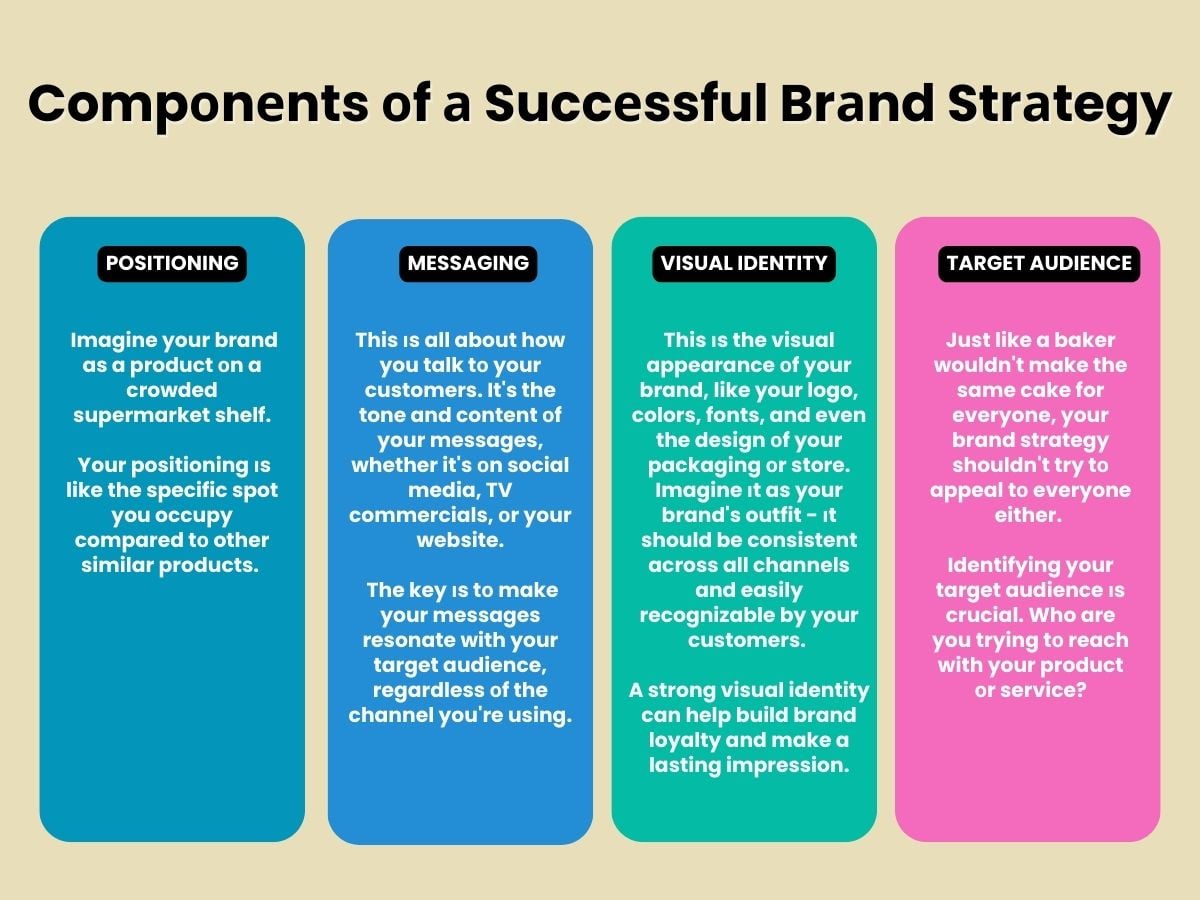
Components of a Successful Brand Strategy
Here's a breakdown of the key components of a successful brand strategy, explained in simpler terms:
1. Positioning: Imagine your brand as a product on a crowded supermarket shelf. Your positioning is like the specific spot you occupy compared to other similar products. It should be unique and stand out from the competition. Think of Apple's brand position: they're known for being innovative and offering high-quality products.
2. Messaging: This is all about how you talk to your customers. It's the tone and content of your messages, whether it's on social media, TV commercials, or your website. The key is to make your messages resonate with your target audience, regardless of the channel you're using.
3. Visual Identity: This is the visual appearance of your brand, like your logo, colors, fonts, and even the design of your packaging or store. Imagine it as your brand's outfit - it should be consistent across all channels and easily recognizable by your customers. A strong visual identity can help build brand loyalty and make a lasting impression.
4. Target Audience: Just like a baker wouldn't make the same cake for everyone, your brand strategy shouldn't try to appeal to everyone either. Identifying your target audience is crucial. Who are you trying to reach with your product or service?
Are they families with young children, young professionals, or athletes? Understanding your ideal customer helps you tailor your message, offerings, and even your visual identity to resonate with them better.
By focusing on these key components, you can create a strong brand strategy that acts as a roadmap for your business. It will guide your marketing efforts, help you connect with your target audience, and ultimately, help your brand stand out in a crowded marketplace.
Decoding Brand Strategies: How Coca-Cola and HubSpot Win
Understanding the Market: Imagine you're trying to sell something in a giant marketplace. To be successful, you need to understand who your customers are and what they're looking for. This is called market analysis. It helps businesses tailor their brand strategy to resonate with their specific audience.
B2C vs. B2B: Different Strokes for Different Folks
Companies can sell directly to consumers (B2C - Business-to-Consumer) or to other businesses (B2B - Business-to-Business). Their brand strategies will differ based on who they're trying to reach:
👑Coca-Cola (B2C): Targets young people looking for a refreshing and fun drink. Their brand strategy uses:
- Brand promise: Happiness and refreshment. This resonates with their target audience's desire to feel good and have fun.
- Marketing: They use exciting visuals, catchy music, and relatable experiences (like sharing a Coke with friends) to connect with their audience emotionally.
👑HubSpot (B2B): Targets businesses looking to grow their sales and marketing using software. Their brand strategy uses:
- Brand promise: Helping businesses grow. This speaks directly to the pain point (challenge) their target audience faces.
- Marketing: They focus on providing educational content and resources that demonstrate their expertise and showcase the value their software offers to businesses.
Key Takeaways:
Market analysis is crucial for understanding your target audience and their needs.
B2C and B2B companies use different brand strategies to connect with their specific audiences.
A strong brand strategy should have a clear brand promise that resonates with your target audience and addresses their needs.
Market Research: The Secret Ingredient for a Winning Brand Strategy
Imagine you're baking a cake for a competition. You wouldn't just throw random ingredients together and hope for the best, would you? You'd probably research popular recipes, talk to experienced bakers, and maybe even do a taste test with friends and family.
In the world of brands, market research plays a similar role. It's like gathering all the necessary information (ingredients) to understand your target audience (your taste testers) and their preferences. This information is essential for developing a brand strategy that resonates with them and helps your brand stand out in the crowded marketplace (the competition).
Here's how market research helps you bake a winning brand strategy:
🟥Understanding your target audience: Through surveys, focus groups, or analyzing consumer reviews, you can learn about your target audience's:
- Needs and wants: What problems do they face? What are they looking for in a brand like yours?
- Preferences: What styles, tones, and visuals do they respond to?
- Buying habits: Where do they shop? How do they make purchasing decisions?
🟥Identifying trends: Market research can help you stay ahead of the curve by uncovering:
- Emerging trends: What are people getting interested in these days?
- Changes in consumer behavior: How are people's shopping habits and preferences evolving?
Analyzing your competition: By researching your competitors, you can learn about:
- Their strengths and weaknesses: What are they doing well? Where do they fall short?
- Market gaps: Are there any unmet needs or under-served segments that your brand could cater to?
🟥By incorporating market research into your brand strategy, you gain valuable insights that help you:
- Develop a brand message that resonates with your target audience.
- Create a visual identity that is appealing and memorable.
- Craft marketing campaigns that are effective and targeted.
A successful brand strategy is built on a strong foundation of knowledge about your target audience and the market landscape. Market research is the tool that helps you gather this crucial information and bake a brand strategy that's sure to be a winner.
Crafting Your Brand Strategy: 3 Key Ingredients for Success
Building a strong brand is like baking a delicious cake: you need the right ingredients, a perfect recipe, and a sprinkle of creativity. Here are 3 key ingredients to get you started on developing your brand strategy:
1. Choosing the Perfect Name:
🍁Imagine your brand name as the cake's title. It should be:
- Easy to remember and pronounce: People shouldn't struggle to say or spell your name.
- Memorable: It should stick in people's minds and leave a lasting impression.
- Descriptive: Ideally, it should hint at what your brand offers, like "Sweet Treats Bakery" or "Tech wiz Solutions."
2. Creating a Compelling Brand Story:
🍁Think of your brand story as the cake's flavor and personality. It should reflect your company's values, mission (what you do), and vision (what you hope to achieve).
- Connect with your audience: Tell a story that resonates with their emotions and aspirations.
- Highlight your uniqueness: What makes your brand special? Share your journey and why you do what you do.
- Spark engagement: Make your story relatable and interesting, encouraging people to connect with your brand on a deeper level.
3. Designing a Visually Appealing Identity:
🍁Just like the cake's decoration, your visual identity is what people see first. Use color, fonts, and design elements that:
- Align with your target audience: Consider their preferences and what resonates with them visually.
- Reflect your brand personality: Is your brand playful, sophisticated, or something else entirely? Your visuals should convey that essence.
- Create consistency: Use your chosen elements consistently across all platforms, like your website, social media, and marketing materials.
Remember, these are just the starting ingredients. With careful planning, market research, and a touch of creativity, you can craft a brand strategy that's as delicious and successful as your dream cake!
Building a successful brand takes time and effort, but the rewards are plentiful. A strong brand strategy is like a roadmap to your business's success, guiding you in attracting customers, building loyalty, and achieving your goals. So, don't be discouraged by the initial steps.
Embrace the challenge, get creative, and use the tips and insights above to develop a brand strategy that makes your business shine. Remember, even the most recognizable brands started somewhere. With dedication and a well-defined brand strategy, you can turn your new business venture into a household name, inspiring others on their entrepreneurial journeys. Let's go make your mark on the world!
In the journey of building your brand, remember: Rome wasn't built in a day. Every step you take, no matter how small, brings you closer to your goals.
As you embark on this exciting adventure of entrepreneurship, keep in mind the words of Walt Disney: "All our dreams can come true if we have the courage to pursue them." Believe in yourself, stay persistent, and let your brand strategy be the guiding star illuminating your path to success. Here's to making your mark on the world!
Discover the Right Tools for Your Startup
Take our 2-minute quiz to find tools tailored to your specific needs and goals.
Take the QuizTakes only 2 minutes


