
Business Operations Examples for Startups & Small Businesses
Discover how startups and small businesses in the general industry can optimize efficiency through strategic business operations examples in production, supply chain management, customer service, financial management, and human resources.

Effective business operations are crucial for startups and small businesses in the general industry. These enterprises often face unique challenges that can hinder their growth and success. But by implementing strategic operations, entrepreneurs can overcome these obstacles and propel their businesses forward. This article will explore various examples of business operations within this industry and demonstrate their significance and practical applications for startups and small businesses.
Understanding Business Operations: The Foundation of Startup Growth
In the fast-moving world of startups, it's important to remember the everyday tasks that keep a business running smoothly. While coming up with new ideas and thinking quickly are crucial for success, neglecting the daily operations can have serious consequences. If you don't take care of these important tasks, your business could start to slow down, stop growing, or even shut down completely.

What are Business Operations?
Business operations encompass the day-to-day activities and processes that keep a company running smoothly. They involve a wide range of functions, including:
1️. Production: Production is the process of transforming raw materials into finished products or services. This can involve a wide range of activities, such as manufacturing, assembly, packaging, and testing. The goal of production is to create products or services that meet the needs of customers and are profitable for the company.
❶ Supply Chain Management: Supply chain management is the process of overseeing the flow of goods from suppliers to customers. This involves a wide range of tasks, such as sourcing raw materials, managing inventory, and coordinating transportation. The goal of supply chain management is to ensure that products are delivered to customers in a timely and cost-effective manner.
❷ Inventory Management: Inventory management is the process of ensuring that the right amount of stock is available to meet customer demand. This involves a wide range of tasks, such as tracking stock levels, forecasting demand, and ordering new supplies. The goal of inventory management is to avoid stockouts and overstocking, which can both be costly for businesses.
❸ Customer Service: Customer service is the process of handling customer inquiries, complaints, and feedback. This involves a wide range of tasks, such as answering questions, resolving problems, and providing support. The goal of customer service is to create a positive customer experience that will encourage customers to do business with the company again.
❹ Human Resources: Human resources is the process of managing employees. This involves a wide range of tasks, such as hiring, training, payroll, and performance management. The goal of human resources is to attract, develop, and retain talented employees who can help the company achieve its goals.
❺ Finance and Accounting: Finance and accounting is the process of managing the company's finances. This involves a wide range of tasks, such as budgeting, forecasting, reporting, and tax compliance. The goal of finance and accounting is to ensure that the company is financially sound and can meet its financial obligations.
Why are Effective Business Operations Important for Startups?
Effective business operations are the backbone of a successful startup. They provide the foundation for growth by:
✔ Enhancing Efficiency: Streamlined operations reduce waste, optimize resource utilization, and improve overall productivity.
✔ Reducing Costs: Efficient operations minimize unnecessary expenses, allowing startups to conserve resources and invest in growth initiatives.
✔ Improving Customer Satisfaction: Well-managed operations ensure timely product delivery, prompt customer service response, and overall satisfaction with the brand.
✔ Enabling Scalability: As a startup grows, its operations must adapt to support increased demand and expanding customer base. Effective operations provide the flexibility to scale efficiently.
Business Operations Examples for Startups
Here are some specific examples of how business operations play a crucial role in the success of startups:
✳ A food delivery startup: Efficient operations ensure timely order processing, accurate deliveries, and positive customer experiences, leading to customer retention and growth.
✳ An e-commerce clothing store: Effective inventory management ensures the right products are available in the right quantities, preventing stockouts and customer dissatisfaction.
✳ A software development company: Well-defined project management processes streamline development, minimize delays, and ensure timely delivery of high-quality products to clients.
Managing Business Operations in a Startup
Managing business operations in a startup requires a combination of strategic planning, adaptability, and resourcefulness. Here are some key tips:
💡 Start Early: When starting a new business, it is crucial to establish clear operating procedures from the beginning. This could involve creating documentation or guidelines for processes such as inventory management, order fulfillment, or customer service.
By having these procedures in place early on, startups can prevent inefficiencies and confusion as they scale up. For example, a startup in the e-commerce industry establishes a streamlined order fulfillment process, including standardized picking and packing procedures, to ensure efficient product delivery from day one.
💡 Be Adaptable: Startups operate in a dynamic and ever-changing business environment. It is essential to be adaptable and willing to adjust operations as needed. This may involve adapting production processes, modifying marketing strategies, or introducing new product features based on changing market conditions or customer preferences. For instance, a software startup continuously updates its application based on user feedback and emerging industry trends to stay competitive and meet customer demands.
💡 Embrace Technology: Technology plays a crucial role in optimizing operations and improving overall efficiency. Startups should leverage tools and software that automate tasks, enhance communication, and streamline processes.
This means using special software to keep track of what needs to be done and when, using systems to talk to customers in a quick and easy way, or using online tools to work together as a team, even when you're not in the same place. For example, a food delivery startup might use a phone app with GPS tracking and online payment options to make it easier to order and deliver food.
💡 Seek Expert Guidance: Startups can greatly benefit from seeking advice and guidance from experienced business professionals or mentors. These individuals can provide valuable insights, offer industry-specific expertise, and help navigate challenges that arise in managing operations.
They can share best practices and help startups identify opportunities for improvement. For instance, a tech startup seeks advice from a seasoned entrepreneur in their industry who provides guidance on strategic partnerships, supply chain management, and operational efficiency.
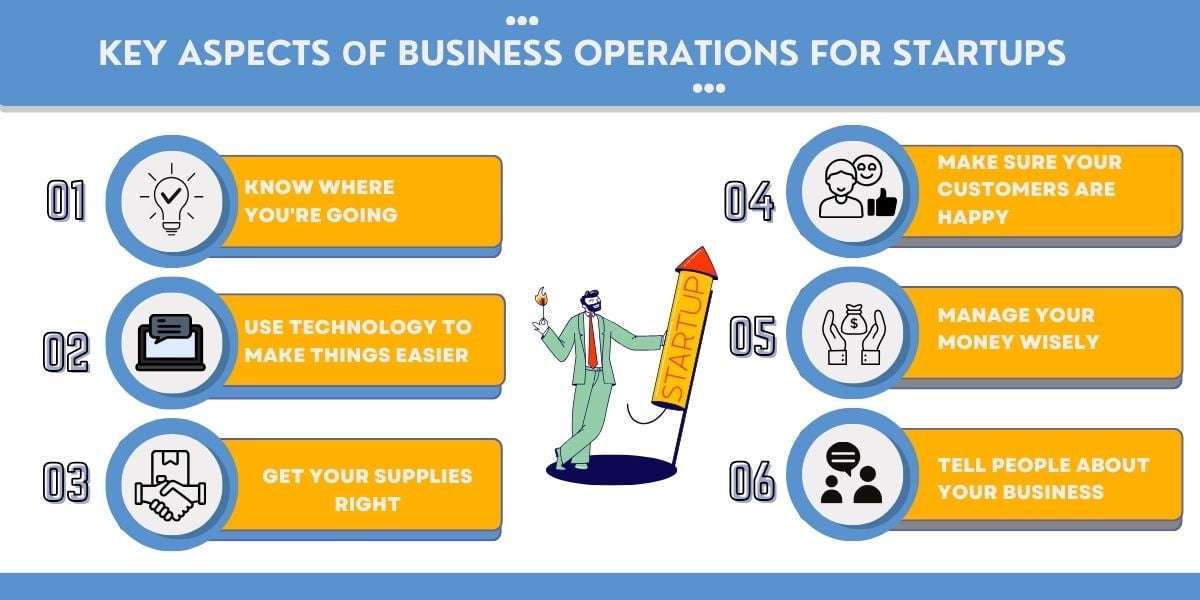
Key Aspects of Business Operations for Startups and Small Businesses
Starting and managing your own business can be a lot of work, especially for startups and small businesses. It is like trying to find your way through a big, confusing maze. But if you can figure out how to handle the day-to-day tasks of running a business, you'll be on your way to success.
Here are some of the most important things to think about when you're running a startup or small business:
• Know Where You're Going: Before you start doing all the things you need to do every day, it's important to figure out what you want your business to achieve in the long run. This will help you make decisions about all the other parts of your business.
• Use Technology to Make Things Easier: Technology can be a huge help for startups and small businesses. There are all sorts of tools that can help you do things like managing your customers, planning projects, and keeping track of your money.
• Get Your Supplies Right: If you're selling something, you need to make sure you can always get the things you need to make it. This means finding reliable suppliers who can deliver your products on time.
• Make Sure Your Customers Are Happy: Your customers are the reason your business exists, so you need to make sure they're happy. This means providing good customer service and taking their feedback seriously.
• Manage Your Money Wisely: It's important to keep track of your money so you know where it's all going. This means having a good accounting system and making sure you're not spending more than you're making.
• Tell People About Your Business: If you want people to buy your products or services, you need to let them know about your business. This means developing a marketing plan and using all the different ways you can to reach your customers.
Real-World Operational Success Examples:
Have you ever wondered how some companies just seem to run smoothly while others struggle to keep up? The secret often lies in their operational management, the way they handle their day-to-day activities.
Imagine you're running a lemonade stand. You need to make sure you have enough lemons, cups, and ice, and that you're using your time wisely to make and sell your drinks. This is kind of like how businesses manage their operations.
Here are some real-world examples of startups and small businesses that have achieved success through effective operational management:
🍕 Dominos Pizza: Once known for its slow delivery times, Domino's turned things around by implementing a new tracking system and delivery guarantee. This improved efficiency and customer satisfaction, leading to a surge in sales.
👠 👕 Zappos: This online shoe and clothing retailer is famous for its exceptional customer service. By putting customers first and using technology to streamline processes, Zappos has built a loyal customer base and a reputation for excellence.
🏘️ Airbnb: This home-sharing platform has revolutionized the travel industry by creating a seamless and affordable way for people to find and book accommodations. Their efficient operations and focus on user experience have made it a global success.
👓 Warby Parker: This online eyeglasses retailer has disrupted the eyewear industry by offering stylish and affordable glasses. Their efficient supply chain and direct-to-consumer approach have made them a popular choice for many.
📱 Square: This mobile payment processing company has made it easy for small businesses to accept credit card payments. Their innovative technology and user-friendly platform have made them a leader in the industry.
Actionable Strategies for Enhancing Operational Efficiency
✅ Streamline Processes: Identify Inefficiencies and Eliminate WasteTake a deep dive into your current processes, identifying areas of redundancy, bottlenecks, and unnecessary steps. Eliminate these inefficiencies to streamline workflows, reduce time consumption, and free up resources for more value-adding activities.
✅ Leverage Technology: Embrace Automation and Data-Driven Insights
Technology has become an indispensable tool for enhancing operational efficiency. Explore automation opportunities, such as using software for task management, accounting, and customer relationship management (CRM). Utilize data analytics to gain insights into customer behavior, supplier performance, and internal processes.
✅ Foster a Culture of Collaboration and Communication
Break down silos between departments and encourage open communication. Create a collaborative environment where employees feel empowered to share ideas, identify problems, and contribute to process improvements.
✅ Implement Effective Inventory Management
Optimize inventory levels to avoid stockouts and excessive carrying costs. Use inventory management software to track stock levels, forecast demand, and automate procurement processes.
✅ Prioritize Customer Service: Make Every Interaction Count
Invest in customer service training and empower employees to resolve issues promptly and effectively. Implement customer feedback mechanisms to identify areas for improvement and enhance overall customer satisfaction.
✅ Continuously Evaluate and Adapt
Always be ready to review and adjust your processes in response to changing market trends, customer expectations, and internal dynamics. Regularly reviewing Key Performance Indicators (KPIs) can help you track your progress and readjust your strategic plans as required. Use business analytics tools like Tableau or Power BI to monitor your KPIs in real-time. Regularly reviewing these metrics ensures your business maintains its operational efficiency, even in an ever-evolving environment.
Operational Brilliance: How Startups Turn Simple Processes into Powerful Engines of Growth
Operational brilliance is not about making things complicated. It's about making things clear and easy to understand. It's about harnessing the power of simplicity to streamline operations, enhance efficiency, and create a seamless customer experience.
Here are some key characteristics of operational brilliance:
☑ Simplicity: Focus on clear, easy-to-follow processes that eliminate unnecessary complexity and reduce the risk of errors.
☑ Standardization: Establish consistent standards and procedures across departments and operations, ensuring uniformity and efficiency.
☑ Continuous Process Improvement: Embrace a culture of continuous improvement, constantly refining processes based on data, feedback, and industry best practices.
☑ Employee Empowerment: Empower employees to identify inefficiencies and contribute to process improvements, fostering a sense of ownership and engagement.
Transforming Simple Processes into Growth Drivers
Let's explore how startups can transform seemingly simple processes into powerful engines of growth:
✱ Order Processing: Streamline order processing by automating data entry, integrating systems, and establishing clear escalation procedures. This can significantly reduce order fulfillment times, enhance customer satisfaction, and minimize errors.
✱ Inventory Management: Implement an efficient inventory management system to track stock levels, forecast demand, and optimize procurement. This can prevent stockouts, reduce carrying costs, and ensure product availability to meet customer demand.

✱ Customer Service: Foster a customer-centric culture by providing comprehensive training, empowering employees to resolve issues promptly, and implementing a feedback loop to continuously improve the customer experience.
✱ Project Management: Utilize project management techniques to plan, execute, and track projects effectively. This can ensure timely completion, resource optimization, and clear communication among stakeholders.
✱ Communication and Collaboration: Break down silos between departments and encourage open communication. Create a collaborative environment where employees feel empowered to share ideas, identify problems, and contribute to process improvements.
The Power of Simplicity in a Complex World
In the ever - evolving landscape of startups, where innovation and complexity often take center stage, it's easy to underestimate the power of simplicity. Operational brilliance lies in mastering the art of doing things the right way, the smart way. By transforming seemingly mundane processes into powerful engines of growth, startups can achieve remarkable success, leaving a lasting mark on their respective industries.
Remember, simplicity is not about doing less; it's about doing things better, with clarity, efficiency, and a customer-centric focus. Embrace operational brilliance, and watch your startup soar to new heights.
Discover the Right Tools for Your Startup
Take our 2-minute quiz to find tools tailored to your specific needs and goals.
Take the QuizTakes only 2 minutes


