
Creating an Effective Marketing Plan Template
Learn how to craft an effective marketing plan with our step-by-step guide. Maximize your business growth with thorough market research, strategic planning, and focused budgeting.

Whether you're an entrepreneur gearing up to launch a new business or a seasoned business owner wishing to propel your business to new heights, a strong and actionable marketing plan is indispensable. This guide will walk you through the critical steps to create a highly effective marketing plan template. As we delve into this topic, we'll cover key elements such as the marketing strategy, market research, identifying target customers, and the importance of a high-level business planning format, among others.
Why Do You Need a Marketing Plan?
Simply put, a marketing plan is your strategic roadmap to achieving your business goals. It helps you understand your market, identify your target customers, and outline strategies to reach them effectively. Such a blueprint ensures that all your marketing efforts align with your overall business objectives.
A well-thought-out marketing plan can:
- Provide clarity and focus on marketing objectives
- Enable better resource allocation
- Facilitate effective communication and coordination
- Offer insights on customer needs and preferences
- Improve decision-making

Breaking Down a Marketing Plan Template
The diverse components of a marketing plan template may vary based on the specific needs of a business. However, there are several key sections that should form part of any robust marketing plan:
✅ Executive Summary: This high-level overview of your marketing plan paints a broad picture of your marketing strategy and primary objectives.
✅Business Overview: A detailed description of your business, its mission and vision, products or services offered, and the competitive landscape within your industry.
✅ Market Research: An in-depth analysis of the marketplace and your competitors, providing insights into market trends, customer behavior, and competitive offerings.
✅ Target Customers: A clear definition of the customer persona, including their demographics, psychographics, and their behavior that influences purchasing decisions.
✅ SWOT Analysis: Examine your business's strengths, weaknesses, opportunities, and threats. This provides insights into your firm's internal and external environment to fine-tune your marketing strategy.
✅ Marketing Goals and Objectives: Outline measurable, achievable, and specific marketing goals anchored on your business objectives.
✅ Marketing Strategy: This section delves into the approaches you'll employ to reach your target customers, including product, price, place, and promotion (the 4Ps of marketing).
✅ Budget: A detailed outline of the marketing expenditures along with an estimated return on investment.
✅ Implementation Plan: Details on how you plan to execute on your strategies, including timelines, tasks, and responsible parties.
✅ Monitoring and Evaluation: The metrics you'll use to measure the success of your marketing plan and the steps for adjusting the plan to increase performance.
Steps to Customizing an Effective Marketing Plan Template
Here's a detailed step-by-step guide on how to create and customize your marketing plan:
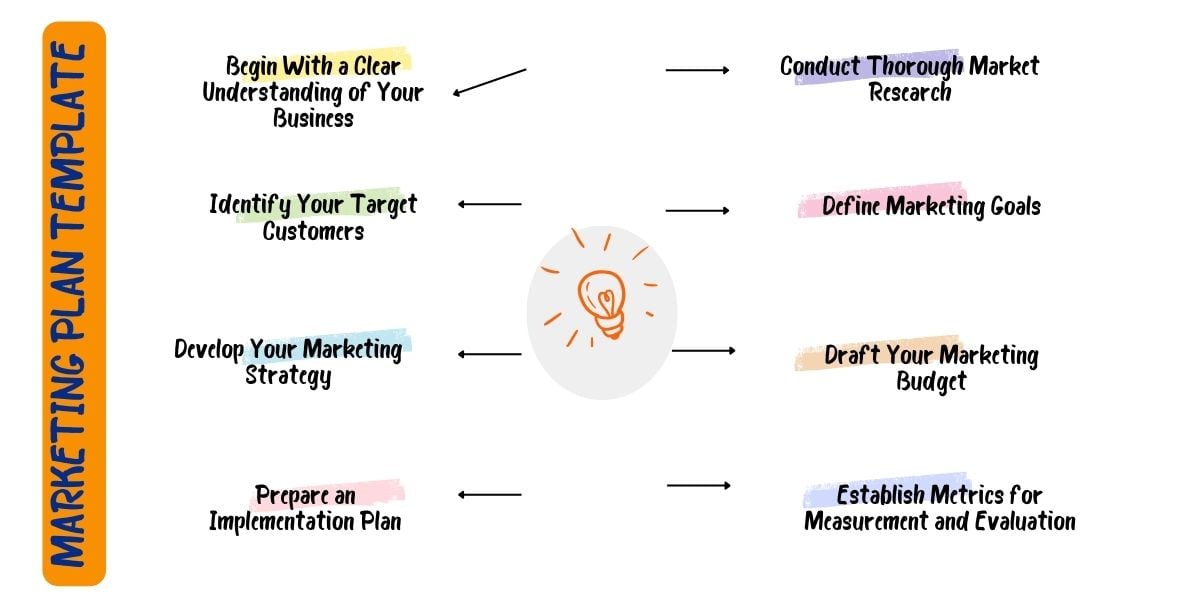
- Begin With a Clear Understanding of Your Business
Before diving into a marketing plan, ensure you have a comprehensive understanding of your business, your vision, mission, values, the products or services you offer, and your brand's unique attributes. While drafting a business plan, this understanding helps formulate marketing goals that perfectly align with the company's overarching objectives.
✨Conduct a business analysis. Detail your vision and mission, analyze your products or services, and clarify what makes your brand unique.
- Conduct Thorough Market Research
Surveil your business's market landscape, including competitor analysis, emerging industry trends, and market demand for your product or service. Unearthing these insights during your market research will guide you in tailoring a marketing plan that resonates deeply with your audience and gives you a competitive edge.
✨Use tools and methods like PESTLE and SWOT analysis, consumer surveys, competitor research, and industry reports to collect valuable market insights.
- Identify Your Target Customers
Understanding your target market forms the linchpin of an effective marketing plan. Identify their demographics, psychographics, preferences, and needs. This will allow your marketing efforts to hit the bull's eye and make your campaigns more potent.
✨Develop detailed buyer personas, conduct surveys, leverage analytic tools, and engage with your prospective customers on social media platforms.
- Define Marketing Goals
Your marketing goals should be concise, realistic, and align well with your business objectives. From increasing brand awareness to generating leads or driving sales, each goal should pave the way for business growth.
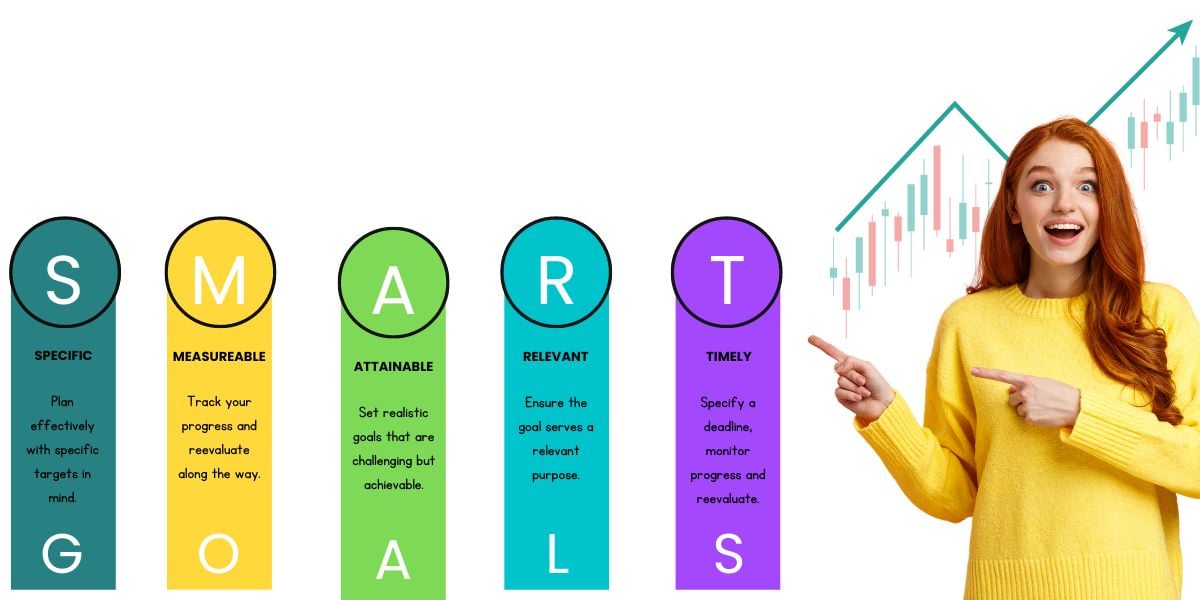
✨Use the SMART goal-setting framework (Specific, Measurable, Achievable, Relevant, Time-Bound) to guide your marketing goal-setting process.
- Develop Your Marketing Strategy:
Your marketing strategy should be a concoction of tactics and actions based on your market research, marketing goals, and understanding of target customers. This strategy will become your roadmap to attract and engage your target audience effectively.
✨Revise your 4Ps (Product, Price, Place, Promotion), identify your marketing channels, and create a content calendar.
- Draft Your Marketing Budget:
Estimate the financial resources needed for your marketing efforts. It should be detailed, providing clear segmentation of resources for different marketing activities. An accurate marketing budget helps avoid overspending and ensures ROI.
✨ Review past marketing expenses, account for channels chosen, factor in resources needed for content creation, and design a cost-effective budget.
- Prepare an Implementation Plan:
Develop a detailed plan for execution that outlines roles, responsibilities, and timelines. This step is critical to ensuring that the marketing strategy translates into action and results.
✨Create a schedule detailing the who, what, and when for each task, and use a project management tool to streamline the process.
- Establish Metrics for Measurement and Evaluation:
In order to assess the effectiveness of your marketing plan and modify it for better performance, you need to identify relevant Key Performance Indicators (KPIs).
✨Define and monitor KPIs such as lead conversion rate, organic website traffic etc., and use analytics tools like Google Analytics, Hubspot, or Tableau to analyze their performance periodically.
This detailed roadmap will lead you through the process of crafting a marketing plan that is dynamic, actionable, and a perfect fit for your business. Allowing you to realize your business goal with precision.
Mistakes to Avoid When Building a Marketing Plan
Avoiding common pitfalls can make the process of creating your marketing plan more efficient and result in a more effective outcome. Here are some common mistakes you'll definitely want to steer clear of:
1. Lack of Market Research:
A classic example of this mistake can be drawn from the story of New Coke. In 1985, The Coca-Cola Company decided to change its age-old recipe based on blind taste tests - however, the decision didn't factor in customers' emotional attachment to the original product. This led to a massive consumer backlash. The lesson here? Don't underestimate the importance of comprehensive market research and analysis.
Market analysis isn't merely a quick check on Google Search. It's a thorough investigation of market trends, customer habits, and competition. It provides insights into how well your product or service might fare in the existing market, guiding your marketing plan towards success.
2. Setting Vague Objectives:
A common mistake entrepreneurs often make is defining their marketing objectives in hazy terms like "increase brand awareness" or "boost sales". While these are indeed marketing objectives, they lack specificity, making it difficult to measure success.
A crucial part of your marketing research should involve setting SMART (Specific, Measurable, Achievable, Relevant, and Time-Based) goals. Instead of "increase brand awareness", consider an objective like "Increase website traffic by 30% over the next quarter". This gives you a clear, measurable goal to work towards.
3. Inadequate Budgeting:
Many startups or small businesses make the mistake of under-budgeting their marketing efforts. While it's true that spending excitingly on advertising isn't necessarily a guarantor for success, inadequate budgeting can impede your marketing efforts.
For instance, if you only allocate budget for social media advertising but neglect content creation, customer acquisition costs could skyrocket since you're only reaching out to potential customers but not nourishing them along the customer journey. A balanced budget that caters to all areas of your marketing plan can offer better returns on investment.
4. Ignoring Metrics:
Measuring the effectiveness of your marketing plan is paramount. Ignoring metrics is akin to flying a plane without any instruments – you are navigating blind, with no definitive way to tell if you’re heading towards success or failure.
A case in point is the Gap logo redesign fiasco in 2010. Gap replaced its iconic logo with a new version, only to face outrage from customers and eventually revert to the old logo. Had Gap tested the new logo and used the metric of customer feedback, they could have saved time, effort, and brand reputation.
To avoid such blunders, establish metrics as an integral part of your marketing plan. Monitor these metrics frequently to understand your plan's effectiveness. If the results aren’t as expected, don't shy away from pivoting and optimizing your strategies.
Understanding these potential pitfalls and avoiding them will ensure that your marketing plan and efforts directed towards attracting your target customers possess the stout strategic backbone they need to succeed.
Take Charge of Your Business Growth with a Robust Marketing Plan Template
Keep in mind that developing a marketing plan is more than just a one-time exercise. It is an ongoing process that requires regular updates and adaptations to stay relevant in a constantly evolving business environment. A well-crafted marketing plan template enables you to identify and capitalize on your competitive advantage, refine your marketing strategy, and boost your chances of long-term success in any type of business.
As you embark on this journey, don't forget that the marketing plan is not merely a document but a powerful strategic instrument. It offers invaluable guidance, clarity, and focus to help your business reach its full potential.
By combining the essential components of the marketing plan, such as setting SMART goals, conducting thorough marketing research, understanding your target customers, and incorporating a comprehensive marketing strategy, you'll find yourself well-positioned to thrive in your chosen field. Moreover, knowing how to avoid common pitfalls, such as neglecting market research or setting vague objectives, can save you valuable time and effort while ensuring that your plan stays on track.
So, set your sights high and harness the power of a comprehensive marketing plan template that lays the foundation for your business's success. After all, in the dynamic world of entrepreneurship, your marketing plan, coupled with your vision and courage to execute, will serve as your compass, guiding you through the exciting yet unpredictable journey towards sustained growth and profitability. Embrace the challenge, and let an effective marketing plan be your ally in carving a path that distinguishes your business from the competition and propels it forward.
Discover the Right Tools for Your Startup
Take our 2-minute quiz to find tools tailored to your specific needs and goals.
Take the QuizTakes only 2 minutes


