
Launch Ready: Master Startup Risk Management
Master the art of startup risk management! Learn best practices for predicting, mitigating, and responding to risks to help your startup launch successfully.

Launching your startup is a thrilling adventure, but it's also full of unknowns. That's where mastering risk management for project planning comes in. This means being smart about how you handle all the things that could go wrong along the way.
Here's why it's so important:
📚Passion and Innovation: Starting a new business is all about following your passion and coming up with new ideas. But to turn those ideas into reality, you need to know how to deal with the risks that come with them.
📚Effective Management: Managing risks isn't just about being careful; it's about being strategic. It's about figuring out what could go wrong and coming up with plans to deal with it before it happens. This way, you can keep your project on track and increase your chances of success.
📚Uncertainties: Every startup faces uncertainties. Whether it's changes in the market, unexpected problems, or just not knowing what's going to happen next, being able to manage these uncertainties is key to making your project a success.
By learning practical tips, understanding key terms, and tackling startup-specific challenges head-on, you can minimize the risks and maximize your chances of success. So, launch your startup with confidence and take on the unknown like a pro!
Demystifying the Essentials:
Let's dive deeper into these concepts with simple explanations:
✔️Risk Management: This is all about being ready for anything that might go wrong with your project. It means figuring out what could go awry, how bad it could be, and what you can do to fix it if it happens. It's like having a backup plan for your backup plan.
✔️Project Planning: This is the process of mapping out everything that needs to happen for your project to succeed. It's like drawing a roadmap that shows where you're going, when you'll get there, who's doing what, and what tools and resources you'll need along the way.
✔️Project Management Plan (PMP): This is a formal document that lays out all the details of your project. It's like a playbook that outlines the goals, tasks, and responsibilities of everyone involved. It also covers how you'll handle risks to make sure your project stays on track no matter what.
Laying the Foundation:
Effective risk management is all about having a clear plan and structure.
🟦Defining the Project Scope
This is all about understanding exactly what your project is supposed to accomplish. You need to be clear about what your goals are, what you'll be delivering, and what boundaries or limits there might be. When you have a clear picture of what your project entails, it's easier to see any potential risks that might pop up along the way and address them before they become a problem.
🟦Establishing Start and End Dates
This step is about setting realistic timeframes for your project. You need to figure out when your project will start and when it will finish. It's also important to include some extra time in your schedule to account for any unexpected delays that might happen because of risks. This way, if things take longer than expected, you won't be caught off guard and your project can still stay on track.
🟦Allocating Roles and Responsibilities
Make sure everyone on your team knows what they're responsible for when it comes to managing risks. This includes identifying risks, assessing how serious they are, and figuring out how to deal with them. When everyone knows what they need to do, it's easier to work together to tackle any risks that come up.
Integrating Risk Management into your Process:
☑️Embrace Project Plan Templates
Using templates for your project plans can save you a lot of time and effort. These templates are like pre-made outlines that include sections for different aspects of your project, including risk management. By using a template, you're reminded to think about risks right from the start.
This helps you spot potential problems early on, before they become bigger issues. Plus, having a structured template makes it easier to organize your thoughts and come up with strategies to deal with risks.
☑️Start with High-Level Planning
When you're just getting started with your project, it's important to focus on the big picture. Think about the major risks that could impact your project's success. These could be things like changes in market conditions, technical challenges, or unexpected delays. By identifying these high-level risks early on, you can start to develop strategies to mitigate them.
Then, as you dive deeper into the details of your project, you can get more specific about the risks and how to address them. This approach ensures that you're covering all your bases and preparing for whatever challenges may come your way.
Identifying and Assessing Risks:
☑️Conducting Risk Assessments
Regularly checking for potential risks is essential. This means taking a close look at all aspects of your project, like the technology you're using, how much money you have, how things are running day-to-day, and what's going on in the world around you. By doing this regularly, you can spot potential problems early and come up with plans to deal with them.
☑️Identifying Risks at Different Stages
Risks can show up at different points in your project. Some might appear when you're just starting to plan things out, while others might pop up while you're in the middle of getting things done. There can even be risks that only show up right at the end when you're finishing up. By keeping an eye out for risks at each stage, you can stay ahead of potential problems and be ready to handle them as they come u
Startup Specific Challenges
Startups have their own set of tricky challenges when it comes to managing risks.
✴️Limited Resources: Startups often don't have a lot of money to throw around, so they've got to be smart about how they deal with risks. They need to figure out which risks are the most important and come up with clever ways to deal with them.
✴️Rapid Growth: Sometimes, when a startup starts doing really well, it can grow super fast. But that can also mean new problems pop up out of nowhere. It's important for startups to keep an eye on things and check in regularly to see if there are any new risks they need to deal with.
✴️Lack of Experience: Lots of times, the people starting a new business haven't been around the block too many times when it comes to managing risks. That's where mentors, advisors, and the internet can come in handy. They can give advice and help point out things to watch out for.
The Power of Proactive Risk Management:
Let's take a closer look at a real-life example:
📌Imagine a startup working on a cool new app. They were excited about their idea but soon realized there was a big potential problem: regulatory changes. These changes could mess up how they could run their app or even market it. So, they knew they had to be smart about it.
📌To tackle this risk, they didn't just cross their fingers and hope for the best. Instead, they got proactive. That means they kept a close watch on what was happening and stayed up-to-date with any new rules or laws that could affect them. They also got involved in lobbying efforts, which means they spoke up to lawmakers and government officials to make sure they understood their concerns.
📌Their hard work paid off. Despite all the changes happening around them, they were ready. They adjusted their plans and made sure they could still launch their app smoothly. This proactive approach helped them deal with the uncertainty and succeed in the end.
📌By doing simple business planning and SWOT analysis, they were able to spot the risks early on and come up with a smart strategy to handle them. It's a great example of how being prepared and taking action can make all the difference for a startup.
Lack of Experience: Lots of times, the people starting a new business haven't been around the block too many times when it comes to managing risks. That's where mentors, advisors, and the internet can come in handy. They can give advice and help point out things to watch out for.

The Art of Risk Management in Entrepreneurship
In the world of starting your own business, it's a bit like sailing into unknown waters. While it's exciting to begin something new, there's always a bit of uncertainty and risk involved. But for smart business owners, managing risks isn't just about ticking off items on a list—it's about having the right mindset and taking proactive steps to navigate through challenges.
Key points to keep in mind as you start your own business
☝️Starting a business is like setting sail: It's an adventure into the unknown, where anything can happen.
☝️Risk management is more than just checkboxes: It's about being proactive and taking charge of your journey.
☝️Remember the saying, 'Fortune favors the bold': Success often comes to those who aren't afraid to take risks and face challenges head-on.
Every successful business is built on calculated risks: It's about making smart decisions, planning ahead, and staying determined even when things get tough.
Navigating Entrepreneurial Risks: A Guide to Project Success
Incorporating the insights shared here can help you turn risks from potential roadblocks into stepping stones towards success in your projects.
📝Define Your Project Scope: Start by clearly outlining the scope of your project. Be meticulous in detailing what needs to be done, when it needs to be done by, and who is responsible for each task. This clarity will set the foundation for effective project management.
📝Craft a Comprehensive Project Management Plan: A well-crafted project management plan is like your project's compass, guiding you through execution while minimizing risks. Make sure to include detailed timelines, milestones, and contingency plans to address any potential challenges that may arise along the way.
📝Embrace Risk as Opportunities: While the path to entrepreneurial success is filled with challenges, it's also ripe with opportunities for growth and innovation. By adopting a proactive mindset and embracing risk, you can navigate the uncertainties of entrepreneurship with confidence and resilience.
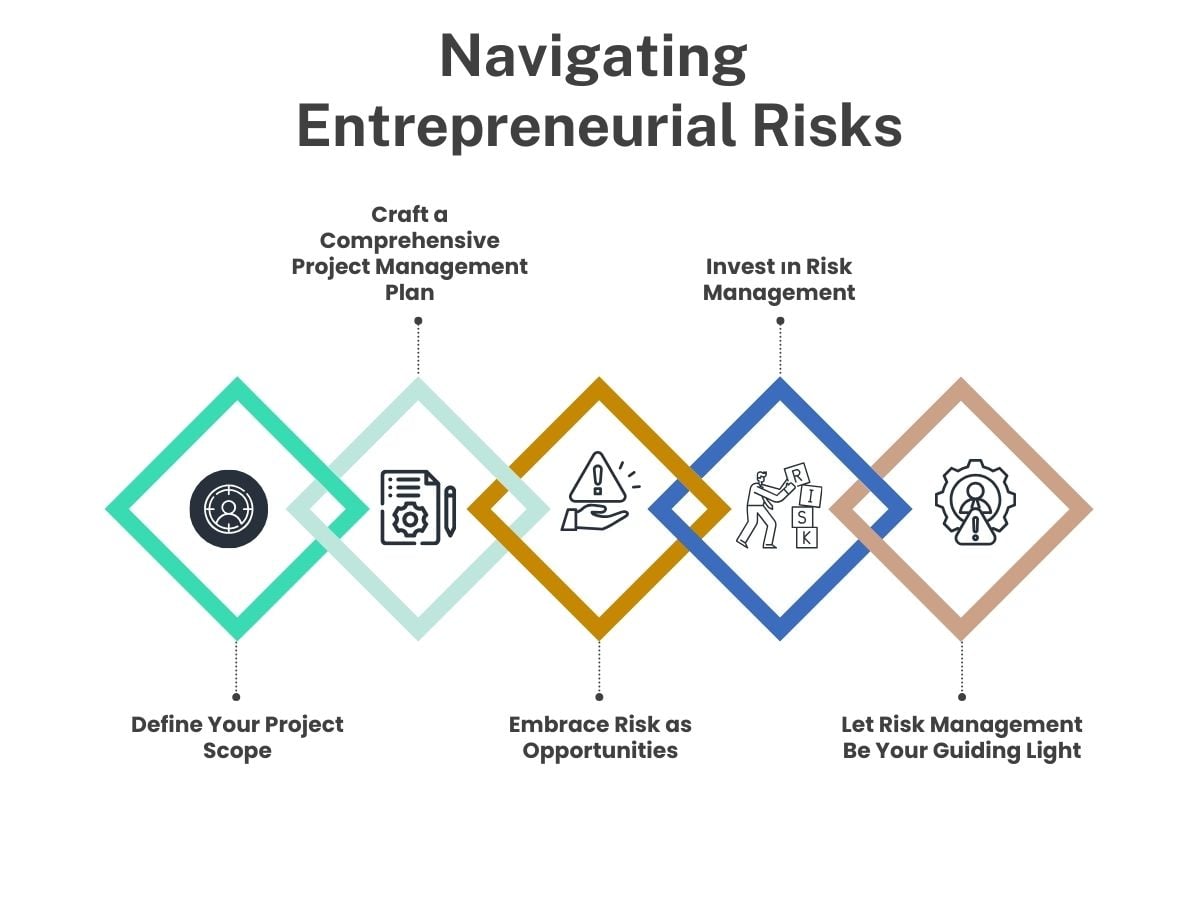
📝Invest in Risk Management: The time and effort you put into risk management is a wise investment in the future success of your venture. It's not just a task to check off—it's a strategic decision that safeguards your business against future challenges and paves the way for long-term prosperity.
📝Let Risk Management Be Your Guiding Light: As you embark on your entrepreneurial journey, let risk management serve as your guiding light. It's a beacon of hope that illuminates the path to business growth and success, helping you navigate through rough waters with determination and foresight.
"The biggest risk is not taking any risk... In a world that's changing really quickly, the only strategy that is guaranteed to fail is not taking risks." - Mark Zuckerberg, CEO of Facebook
Discover the Right Tools for Your Startup
Take our 2-minute quiz to find tools tailored to your specific needs and goals.
Take the QuizTakes only 2 minutes


