
Marketing Definition: Key for Startups
Unlock success! Explore the vital role of marketing definitions for startups. Build a strong foundation for your business journey

In today's competitive business landscape, startups and entrepreneurs face numerous challenges. One crucial aspect that can make or break their success is marketing. By grasping the definition of marketing, startups and entrepreneurs can lay a solid foundation for their business development, customer engagement, and overall growth.
In this article, we will delve into the significance of understanding marketing principles for startups and highlight the advantages it offers.
Definition of Marketing
Marketing isn't just about flashy commercials or social media posts. It's the whole shebang of understanding your customers and getting them interested in what you have to offer. Here's a breakdown of what marketing really means:
- Identifying Customer Needs and Wants: This is all about figuring out what makes your customers tick. What problems do they face? What are their desires? By understanding their needs and wants, you can tailor your products or services to fit them perfectly.
Imagine yourself trying to win over a friend. You'd first want to know what they like and dislike, right?
- Anticipating Needs: Sometimes, customers don't even know what they need yet! A good marketer can predict future needs and wants by staying on top of trends and innovations.
Think about how phones used to just make calls? Now they take pictures, play music, and even help us order food! Great marketers are like fortune tellers for customer needs.
- Satisfying Needs and Wants Profitably: In the end, it's all about making your customers happy while making your business profitable. Marketing helps you find the right balance between giving customers what they want and running a successful business. It's like that sweet spot between deliciousness and affordability when you're picking out dessert!
By understanding these core concepts of marketing, startups can:
- Position Themselves Effectively: Imagine a crowded marketplace. Marketing helps your business stand out from the competition and show customers why they should choose you.
- Attract Customers: Marketing is like a giant welcome sign for your business. It grabs the attention of potential customers and lets them know you exist.
- Drive Revenue: Ultimately, you want customers to buy your products or services. Marketing helps you convert that interest into sales and keep your business growing.
Key Advantages
One of the biggest advantages of understanding marketing is that it helps startups pinpoint exactly who their market customers. This is like finding your perfect audience for a play you just wrote. You wouldn't want to invite everyone in town, right? You'd want the people who would enjoy the story the most.
Here's how marketing helps startups find their perfect audience:
- Understanding Needs and Wants: Remember, marketing is about figuring out what makes your customers tick. By researching your market, you can identify the specific groups of people who would benefit most from what you offer.
- Laser Focus: Once you know your target market, you can focus your resources and marketing efforts like a laser beam. Imagine having a limited budget for advertising. Marketing helps you target those ads to the people most likely to buy your product, not wasting money on people who wouldn't be interested.
- Increased Success: By targeting the right audience, you're setting yourself up for success. People who need and want what you offer are more likely to become loyal customers, which means more sales and a thriving business!
Effective Marketing Strategies
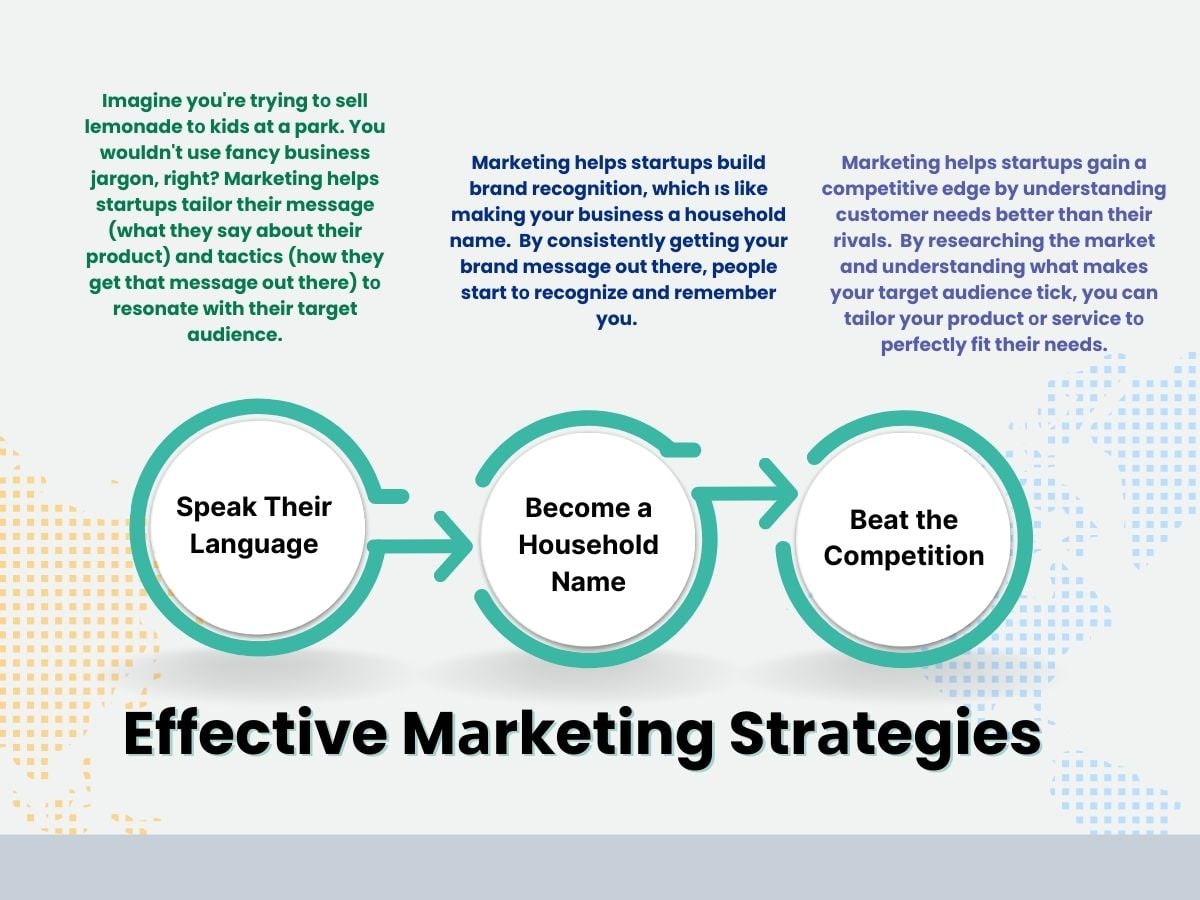
When startups understand marketing, they can craft winning marketing strategies that are like magic tricks, pulling in customers and building a loyal fan base. Here's how:
✨Speak Their Language: Imagine you're trying to sell lemonade to kids at a park. You wouldn't use fancy business jargon, right? Marketing helps startups tailor their message (what they say about their product) and tactics (how they get that message out there) to resonate with their target audience.
This means using language their ideal customer understands and communicating through channels they frequent, like social media or local events. By speaking their language, startups can grab attention, generate interest, and turn clicks into conversions (customers who buy something).
✨Become a Household Name: Remember how everyone knows the name of that restaurant with the delicious fries? Marketing helps startups build brand recognition, which is like making your business a household name. By consistently getting your brand message out there, people start to recognize and remember you.
This can involve things like creating a catchy logo, using consistent colors and fonts across your marketing materials, and even running effective advertising campaigns. Strong brand recognition leads to brand loyalty, where customers keep coming back for more because they trust and recognize your brand.
✨Beat the Competition: In today's business world, it's like a race to the finish line! Marketing helps startups gain a competitive edge by understanding customer needs better than their rivals. By researching the market and understanding what makes your target audience tick, you can tailor your product or service to perfectly fit their needs.
With an effective marketing plan, you stand out as the preferred choice for customers, outshining competitors. It also uncovers competitors' weaknesses, enabling you to enhance solutions for your target market.
Tailoring Marketing to Resources
Here's a breakdown on how startups can tailor their marketing efforts to their resources:
Making the Most of Limited Resources:
Let's face it, startups don't always have piles of cash for fancy marketing campaigns. But that doesn't mean they can't compete! By understanding marketing principles, startups can find clever ways to reach their target audience without breaking the bank. Here are some cost-effective strategies:
- Social Media Savvy: Social media platforms like Facebook, Instagram, and Twitter are goldmines for startups. They're free to use (unless you choose to pay for advertising) and allow you to connect directly with your target audience. Share engaging content, participate in conversations, and run contests to build a following and spread brand awareness.
- Content is King (or Queen): Creating high-quality content like blog posts, infographics, or videos is a fantastic way to attract customers. Share your knowledge, offer helpful tips related to your product or service, and establish yourself as an industry expert. The good news? Most content creation tools are free or affordable, and the content you create can live on your website or social media channels, attracting potential customers for months to come.
- Influencer Collaborations: Partnering with influencers in your niche can give your brand a big boost. Influencers are people with established credibility and a dedicated following on social media. By collaborating with them, you can tap into their audience and reach a wider range of potential customers. While some influencers may charge a fee, many are happy to collaborate with startups in exchange for free products or services.
Remember: The key is to be creative and strategic with your marketing efforts. There are many free and low-cost ways to connect with your target audience and build a successful brand.
Target Market Analysis
Got it! Here's a breakdown of how marketing helps startups analyze their target market like a detective cracking a case:
Marketing: The Ultimate Target Market Detective
Understanding marketing principles turns startups into target market analysis ninjas. Here's how:
- Knowing Your Audience: Imagine you're throwing a party. You wouldn't invite everyone you know, right? You'd invite the people who would enjoy it the most. Marketing helps startups define their target audience, which is basically their ideal customer.
This involves considering factors like age, interests, location, and even income. By knowing exactly who they're trying to reach, startups can tailor their message and products to resonate with that specific group.
- Customer CSI: Marketing helps startups become customer behavior detectives. By using research methods like surveys, interviews, and even social media listening, startups can gather clues about what their target audience needs, wants, and how they behave. This might involve understanding their buying habits, what problems they face, and what influences their decisions.
- Informed Decisions, Happy Customers: The information gathered through target market analysis becomes the golden ticket for startups. With this knowledge, they can make informed marketing decisions that are more likely to convert (turn) potential customers into actual paying customers. Imagine creating an ad campaign for a new fitness tracker. By understanding your target market's fitness goals and preferred features, you can design an ad that directly addresses their needs and desires, leading to a happy and engaged customer base.

In short, marketing empowers startups to truly understand their target market, which is the foundation for building a successful and sustainable business..
Leveraging Digital Channels
In today's digital age, startups must embrace digital marketing channels to reach their target audience effectively. This includes developing a professional website, engaging on social media platforms, utilizing email marketing, and investing in online advertising. Startups that understand the definition of marketing can leverage these digital channels strategically to maximize their reach, engage with customers, and drive conversions. Successful digital marketing campaigns, such as Airbnb's viral referral program, showcase the impact of utilizing these channels effectively.
Building a Strong Brand Branding plays a crucial role in a startup's success. By understanding marketing principles, startups can define their brand identity, communicate their unique value proposition, and differentiate themselves from their competitors. By consistently delivering on their brand promise and offering superior customer experiences, startups can build a strong brand that resonates with their target audience and fosters loyalty.
Measuring Success Effective
marketing requires constant monitoring and measurement of key metrics. By understanding marketing principles, startups can track the effectiveness of their marketing efforts and make data-backed decisions. Metrics such as customer acquisition cost, customer lifetime value, and conversion rates provide valuable insights into the success of marketing campaigns and help in refining strategies for better results.
How to Market Your Business Like a Pro: A Guide for Startups
Marketing isn't just about flashy ads or social media posts. It's the key to understanding your customers and attracting them to your fantastic business. But for startups, it's crucial to take a smart approach, not a dive into the deep end.
Here's how understanding marketing can turn you into a marketing whiz:
🍁Know Your Ideal Customer: Before you shout your message to the world, figure out who you're trying to reach. Imagine creating a party - you'd invite the people who would enjoy it most, right? Marketing helps you define your target market, like your ideal party guests. This involves considering factors like age, interests, and what problems they face.
By knowing exactly who your rockstar customer is, you can tailor everything from your products to your marketing messages to resonate with them perfectly.

🍁Become a Customer Whisperer: Marketing equips you with detective skills to understand your target market. Through research (surveys, interviews, social media listening), you can gather intel on their needs, wants, and how they behave. This is like figuring out your party guests' favorite music and games! By understanding their buying habits and what makes them tick, you can create marketing campaigns that are like irresistible invitations they can't refuse.
🍁Craft a Winning Marketing Strategy: With your target market knowledge in hand, you can create a marketing strategy that's like a battle plan for success. This plan will outline how you'll reach your ideal customers, what message you'll convey, and the channels you'll use (website, social media, events, etc.).
By understanding marketing principles, you can choose cost-effective strategies like social media marketing or content creation to reach your target audience without breaking the bank.
🍁Track Your Progress and Adapt: Marketing isn't a set-it-and-forget-it strategy. Just like you wouldn't train for a marathon without tracking your runs, you need to measure your marketing efforts. By using metrics like customer acquisition cost and conversion rates, you can see what's working and what's not.
Maybe your social media posts aren't converting many visitors into customers? Use this data to refine your approach and become a marketing master!
Marketing is a journey, not a destination. By understanding these core concepts, you can embark on this journey with confidence, knowing you have the tools to attract customers, build brand recognition, and achieve long-term success for your business.
Discover the Right Tools for Your Startup
Take our 2-minute quiz to find tools tailored to your specific needs and goals.
Take the QuizTakes only 2 minutes


