
Mastering Client Management: The Key to Business Success
This article explores how mastering client management can unlock opportunities for business success. Learn strategies for building strong relationships and achieving customer satisfaction.

Launching a new business venture is exhilarating, but success hinges on mastering the art of client management. Client management plays a vital role in the success of any business. It involves building strong relationships, understanding client needs, managing expectations, and effectively communicating throughout the client lifecycle.
In this article, we will explore client management's significance and its impact on both customer satisfaction and business performance.
Understanding Client Management
Before we explore the nuances, let's establish a clear understanding of client management.
Client management is the process of overseeing and nurturing relationships with clients to ensure their satisfaction and mutual growth. It involves implementing strategies to understand customer needs, communicating effectively, managing expectations, and addressing concerns and feedback. By providing exceptional client management, businesses can build trust, foster loyalty, and create long-lasting partnerships with their clients. It's a multifaceted discipline that involves various aspects, including:
Client Acquisition: Attracting and winning new clients or customers for your business. Businesses can provide personalized attention and meet their needs and expectations. This leads to higher levels of customer satisfaction, which in turn enhances brand loyalty and encourages repeat business.
Client Retention: Keeping existing clients satisfied, engaged, and loyal to your brand.
Relationship Building: Cultivating meaningful and long-lasting connections with clients.
Communication: Effective communication is vital in understanding and meeting client needs and expectations.
Problem Resolution: Addressing client issues promptly and professionally to ensure their satisfaction.

Key Components of Effective Client Management
A. Organizing and Collaborating with Clients: Clear communication channels are essential for successful client management. Regular meetings and timely updates help create collaboration opportunities by aligning businesses with clients' goals and objectives. Client management software also enhances organization and streamlines communication, enabling efficient collaboration.
B. Building Strong Client Relationships: Understanding clients' needs and expectations is crucial for building strong relationships. By actively listening and engaging with clients, businesses can gain insights into their pain points, preferences, and goals. Regular feedback and progress updates also help in maintaining transparency and ensure that clients feel involved and valued.
C. Managing Client Expectations: Setting realistic goals and timelines is vital in managing client expectations. It is essential to have open and honest conversations with clients to determine achievable outcomes. Providing transparent reporting and performance metrics helps clients understand the progress made, instilling confidence and trust in the business.
D. Addressing Client Concerns and Feedback: Effective client management involves promptly addressing and resolving client concerns and feedback. Businesses should be proactive in addressing any issues that may arise. They will improve their services and offerings by listening to client feedback.
Benefits of Effective Client Management
A. Enhanced Collaboration and Efficiency:
Effective client management promotes streamlined communication and collaboration, leading to increased efficiency. Timely responses, clear expectations, and efficient task allocation contribute to improved project management and overall productivity, enabling businesses to deliver exceptional results.
B. Improved Client Satisfaction and Retention:
Organizations can foster long-term relationships with clients by treating them well and meeting their needs. Satisfied clients are more likely to become loyal advocates, leading to increased client retention and referrals.
C. Higher Success Rates in Business Endeavors:
Understanding clients' goals and target audience enables businesses to develop tailored strategies that align with client-specific needs. By aligning strategies with clients' objectives, businesses can increase the success of their endeavors. This will result in improved business performance and growth.
D. Increased Revenue and Profitability:
Effective client management enables businesses to attract and retain high-value clients, resulting in increased revenue and profitability. Personalized service and client satisfaction are keys to business longevity.
E. Stronger Brand Image and Reputation:
When clients are pleased with the level of service they receive, they are more likely to speak positively about the business. Word of mouth is one of the most powerful tools in marketing. It can attract new clients and enhance the overall perception of your business within the industry.
F. Better Risk Management:
Effective client management involves regularly assessing and addressing client risks. By envisioning risks and planning for them, businesses can minimize the impact of potential problems and avoid losses. This proactive approach to risk management contributes to overall business stability and longevity.
Best Practices for Implementing Client Management
To implement effective client management, businesses should follow these best practices:
☑️ Choose the right tools and software: Select client management tools and software that align with your business needs and goals. Look for tools that will help you streamline client interactions, make processes more efficient and improve communication with clients.
☑️ Define communication protocols: Establish clear communication protocols to ensure a smooth flow of information between your team and clients. Determine preferred communication channels, response times, and escalation procedures to avoid any communication gaps or delays.
☑️ Define roles and responsibilities: Clearly define the roles and responsibilities of team members involved in client management. This ensures that everyone knows their tasks and accountabilities, preventing confusion or overlap in client interactions.
☑️ Consistently evaluate and improve: Regularly monitor client satisfaction by gathering feedback through customer surveys, meetings, or customer reviews. Use this feedback to identify areas for improvement and make necessary adjustments to your client management strategies.
☑️ Personalize client interactions: Take the time to understand each client's unique needs, preferences, and objectives. Tailor your communication and strategies to align with their specific requirements, showcasing your commitment to providing personalized solutions and services.
☑️ Foster a customer-centric culture: Ensure that your entire team understands the importance of client management and is committed to delivering exceptional customer experiences. Instill a customer-centric mindset and empower employees to go above and beyond in meeting client expectations.
☑️ Establish clear service level agreements (SLAs): Set clear expectations with clients by defining service level agreements (SLAs). Detail the scope of services, deliverables, timelines, and any metrics to measure performance. This helps manage client expectations and provides a basis for accountability.
☑️ Implement regular progress updates: Keep clients informed about the progress of their projects or campaigns. Provide regular updates on milestones achieved, goals met, and any challenges faced. This transparent approach enhances trust and reinforces the value of your services.
☑️ Proactively address concerns and feedback: Actively listen to client concerns and feedback and address them promptly and effectively. Resolve conflicts with clients by finding solutions that satisfy them while maintaining a positive business relationship.
☑️ Foster long-term relationships: Client management is not just about short-term success but building long-term relationships. Consistently nurture client relationships by staying in touch, providing additional support and value-added services, and seeking opportunities for upselling or cross-selling.
Real-World Examples of Effective Client Management
Let's examine two real-world examples to understand how businesses have successfully implemented client management strategies.
Example 1: Apple - Exceptional Customer Service Apple is renowned for its exceptional customer service. Key elements of their client management approach include:
Swift issue resolution:Apple provides timely solutions to customer problems, enhancing satisfaction.
Personalized assistance: An Apple store's staff offer personalized support to customers, making them feel valued.
Consistent brand experience: Apple ensures a consistent brand experience across all touchpoints, fostering loyalty.
Example 2: Salesforce - CRM Excellence Salesforce, a global CRM software company, exemplifies effective client management through its products:
DetailedCRM solutions: Salesforce offers a suite of tools to help businesses manage client relationships efficiently.
Customization: Their software allows businesses to tailor client management processes to their unique needs. Analytics and insights: Salesforce provides valuable data and insights to inform client management strategies.
Implementing Effective Client Management
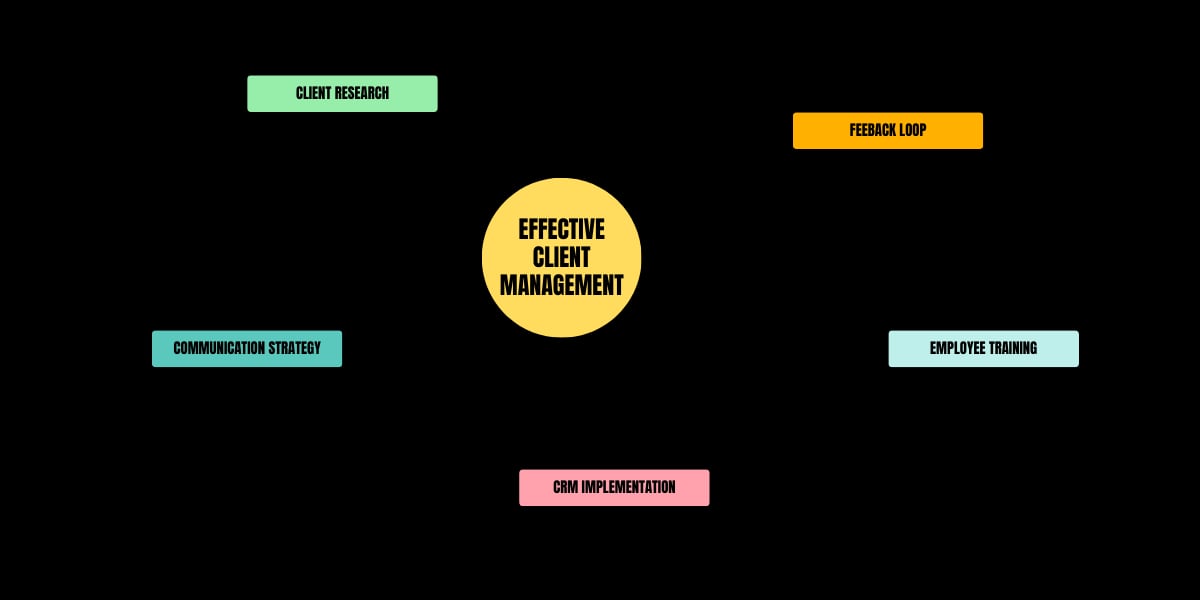
Mastering client management is non-negotiable for business success. It's the art of building strong, lasting relationships with your clients, fostering satisfaction, loyalty, and growth. Follow the steps outlined in this guide, and you'll have all the tools you need to manage client-side intricacies with confidence.
Client Research: Invest time in understanding your client's needs, expectations, and pain points.
Communication Strategy: Develop a clear communication plan to keep clients informed and engaged.
CRM Implementation: Invest in a CRM system that suits your business's needs to streamline client management.
Feedback Loop: Regularly seek feedback from clients and use it to enhance your services.
Employee Training: Train your team in client management best practices to ensure a consistent client experience.
Handling Challenges in Client Management
Embrace a problem-solving mindset: Challenges are inevitable in client management. Entrepreneurs should approach these challenges with a problem-solving mindset, viewing them as opportunities to learn, adapt, and innovate. If you're in business and you get a problem, treat it like a challenge and solve it. You will be the best at helping people.
Focus on building resilience: Client management can be demanding, with unexpected hurdles and setbacks. Having a resilient mindset is critical to stay motivated and overcome challenges. Entrepreneurs should develop the ability to bounce back from setbacks, stay determined, and demonstrate perseverance even during difficult times.
Celebrate small victories: Recognizing and celebrating small victories along the way can boost motivation. By acknowledging progress, entrepreneurs can maintain their enthusiasm and drive in the face of challenges. Make your employees feel appreciated and watch how hard they work for you.
Seek support and mentorship: The best way to get advice for entrepreneurs is from other entrepreneurs. Learning from others who have successfully navigated client management challenges can inspire entrepreneurs to persevere and find effective solutions.
Continuous learning and improvement: When you are an entrepreneur, you should learn new stuff so that you can meet your clients' needs. The more you learn, the smarter you will be.
Emphasize the impact on business success: Clients are essential to any business. They allow the business to grow and flourish. If you want clients, treat them well.
Motivation is key in handling challenges in client management. Entrepreneurs should adopt a problem-solving mindset and focus on the impact of their actions on business success. By building resilience and celebrating small victories, they can stay motivated and overcome obstacles.
Discover the Right Tools for Your Startup
Take our 2-minute quiz to find tools tailored to your specific needs and goals.
Take the QuizTakes only 2 minutes


