
Operations Workflow: The Pathway to Business Success
Discover how an efficient operations workflow can boost your business's success by optimizing processes, empowering productivity, and more.

In today's dynamic business landscape, entrepreneurs and individuals interested in starting a new venture face numerous challenges. From navigating through business planning to achieving operational excellence, the journey requires a well-structured and efficient operations workflow. This article aims to shed light on the significance of operations workflow in a business setting, emphasizing its crucial role in process optimization, lean manufacturing, and ultimately, business success.
Understanding Operations Workflow and its Importance
The operations workflow is the lifeblood of your business, the meticulously crafted symphony that transforms raw materials into customer satisfaction. It's more than just a sequence of tasks; it's the DNA of your operations, woven with the threads of Business Process Management (BPM) and workflow automation. Think of it as the detailed blueprint in your business planning format, orchestrating how every team, tool, and resource harmonizes to deliver on your brand's promise.
Imagine each task as a musical note, playing its part in the grand composition of your production, sales, or service delivery. Every step – from sourcing, manufacturing, and marketing to customer support and feedback – is meticulously mapped, ensuring a seamless flow from inputs to outputs – the tangible or intangible products that delight your customers.

But this blueprint isn't static. Workflow automation injects agility into the symphony, using technology to streamline repetitive tasks, optimize resource allocation, and minimize bottlenecks. It's like a maestro wielding a magical baton, ensuring each instrument gets its cue at the right time, maximizing efficiency and minimizing friction.
By optimizing your operations workflow, you unlock the true potential of your business. It's the key to reducing costs, boosting productivity, and exceeding customer expectations. It's the difference between a discordant cacophony and a captivating performance, leaving your audience (your customers) wanting more.
So, don't underestimate the power of this operational tapestry. Invest time in meticulously weaving its threads, embrace the potential of automation, and watch your business transform into a harmonious masterpiece of operational excellence.
Key Role in Business Planning
A powerful business planning format includes all facets of a venture — from how to protect your intellectual property to the fine details of your marketing strategy. The operations workflow is an integral part of this plan, creating an organized model of your day-to-day processes.
It outlines what your business does, who does it, and how. By mapping out your operations, the workflow can help to prevent misunderstandings around roles and responsibilities, minimize risk, and optimize your resources.
Path to Operational Excellence
Within your journey to operational excellence, Business Process Management (BPM) should be something you must consider. It manages and improves your business processes, and significantly, assists you in refining your operations workflow. BPM software can simplify the process of analyzing and optimizing your workflow, making continuous improvement an ingrained part of your business.
Advantages of an Effective Operations Workflow
- Process Optimization
Identifying potential inefficiencies and bottlenecks through a meticulously planned workflow aids in better resource distribution and goal-oriented tasks. Workflow automation adds to this, and can reduce the reliance in manual, time-consuming activities by automating rote tasks.
- Lean Manufacturing & BPM
Manufacturing companies particularly benefit from this. But even if you're not in manufacturing, adopting lean principles — reducing waste and focusing on tasks that add value for customers — can uncover efficiencies in your operations. The BPM then supports this by providing the tools to monitor and tweak your processes continuously.
The Integration of Operations Workflow, Business Plan, and Marketing Strategy
All successful entrepreneurs know these components are interlinked. Let's explain this with a short guide:
- Business Planning: Use a business planning format that encompasses all key elements of your venture, from marketing strategies to the finer details of operations and management.
- Operations Workflow: This should align with your overall business objectives, streamlining processes where needed, indicating clear roles and responsibilities, and enabling effective business process management.
- Marketing Communication: Ensure your operations workflow provides the vital support your marketing team needs to execute strategies, from nurturing leads to servicing customers.
Embracing Technology
Finally, leveraging technology can navigate a smoother path to successful operations management. Workflow automation software can increase efficiency by minimizing the time spent on manual tasks, while project management platforms foster better team collaboration.
Consider technologies that protect your intellectual property as well, such as digital rights management software. And don’t overlook the innovative marketing tools available that allow for targeted and customer-satisfying strategies, helping to make your venture a success story.

By taking these steps, business owners can capitalize on a well-devised operations workflow, contributing significantly to the success of their venture. Remember, success not only lies in a killer product or service but also efficient processes that allow continuous improvement.
Real-Life Case Studies
To illustrate the successful implementation of operations workflow in different industries, let us explore three case studies:
A. Case Study 1: Manufacturing Industry
XYZ Manufacturing, a leading player in the automotive industry, implemented an effective operations workflow that incorporated lean manufacturing principles and process optimization. By streamlining their assembly line and adopting standardized work procedures, they reduced waste, eliminated bottlenecks, and improved the overall production cycle.
As a result, XYZ Manufacturing was able to deliver products faster and with higher quality, leading to increased customer satisfaction and market share.
B. Case Study 2: Retail Industry
ABC Retail, a fast-growing e-commerce company, faced challenges with order fulfillment and customer support due to an inefficient operations workflow. By implementing automation and integrating their order management system with their inventory and shipping systems, ABC Retail achieved seamless order processing, reduced errors, and improved shipping times.
The optimized workflow allowed the company to scale rapidly and provide an excellent customer experience.
C. Case Study 3: Service Industry
DEF Consulting, a management consulting firm, recognized the need for an efficient operations workflow to enhance project delivery and client satisfaction. By adopting elements of six sigma and lean methodologies, DEF Consulting minimized waste, improved project management, and refined communication processes. This resulted in timely project completion, heightened client satisfaction, and repeat business opportunities.
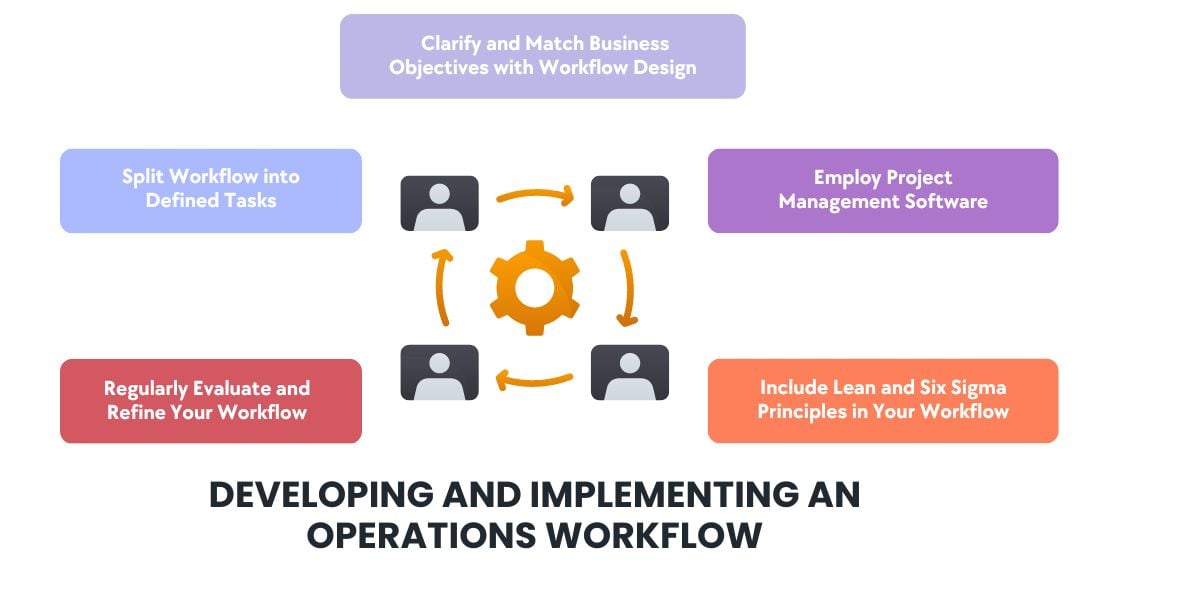
Developing and Implementing an Operations Workflow
For entrepreneurs looking to develop and implement their own operations workflow, the following actionable steps can guide them towards success:
1. Clarify and Match Business Objectives with Workflow Design
Establish clear goals and align them with your workflow design. The objectives should align with your overall business strategy. For instance, if your key objective is to increase customer satisfaction, your workflow should be designed in a way that minimizes errors and speeds up service delivery.
2. Split Workflow into Defined Tasks
Break down your overall workflow into small, manageable tasks that make up the whole. Define who is responsible for each task and its dependencies. This will help to clearly distribute responsibilities among your team and reveal any potential bottlenecks in the process. This is an essential part of effective business process management (BPM).
3. Employ Project Management Software
Use project management software to organize tasks, deadlines, and manage team collaboration effectively. Tools like Trello, Asana, or Monday.com can help you stay on top of your workflow and monitor progress. This kind of digital tool can also help to automate parts of your workflow, making your operations more streamlined.
4. Include Lean and Six Sigma Principles in Your Workflow
Incorporate lean manufacturing principles to minimize waste and increase productivity, these principles help you focus on the value-added elements of your operation. Moreover, consider using Six Sigma methodologies to reduce errors and ensure quality in your workflow. These principles and methodologies work together to boost efficiency and quality.
5. Regularly Evaluate and Refine Your Workflow
Keep an eye on how your workflow is performing. Regular feedback from stakeholders, including employees and customers, is vital for this. Use their feedback to identify problems and areas of improvement. Workflow automation tools can provide useful data for this kind of analysis.
By following these steps, budding entrepreneurs can craft an efficient workflow that aligns with their business goals and sets the stage for their venture's success. Remember, the blend of business process management (BPM) and workflow automation is a potent recipe for operational excellence.
Overcoming Challenges and Mistakes
Implementing operations workflow is not without its challenges. Some common obstacles include resistance to change, inadequate training, and insufficient communication. To overcome these hurdles, entrepreneurs can:
✔️ Invest in comprehensive training programs to ensure employees are equipped to adapt to new workflows.
✔️ Communicate openly with the workforce regarding the benefits and purpose of the operations workflow.
✔️ Seek feedback from employees and stakeholders to address any bottlenecks or issues with the workflow.
✔️ Regularly review and refine the operations workflow to adapt to changing business needs.
In the bustling landscape of entrepreneurship, where distinct ideas burgeon into innovative ventures, the significance of operations workflow is not something that can be regarded lightly. For aspiring young entrepreneurs and fresh new startups, an optimized operations workflow is like the backbone of your venture — it's the orchestrator coordinating the symphony of your business operations.
A well-designed operations workflow can help map out your entire enterprise landscape passion project — from the high-stakes playing ground of product strategy and research and development to the step-by-step mechanics of your overall business operations. By doing so, it can boost efficiency, productivity, and ultimately, user satisfaction.
Your Secret Ingredient: The Operations Workflow
Imagine running a business without a roadmap or steering a ship without a compass. Sounds daunting, right? That's exactly how a business operates without an effective operations workflow.
To put it simply, operations workflow is your secret ingredient. It's a powerful tool that keeps the wheels of your business turning smoothly, guiding you through your entrepreneurial journey to success.
Beyond Ordinary: Achieving Lean Manufacturing and Operational Excellence
Next, let's talk about lean manufacturing and operational excellence – two pivotal objectives of smart business operations. They might sound like a tall order, but with the right operations workflow, they are definitely within reach. By investing in the continual enhancement of operations workflow, you can reduce waste, improve processes, and ultimately cultivate a fertile ground for your venture to thrive.
Powering Up Business with Technology
To truly up the ante, consider optimizing your operations workflow with modern technology. Harnessing the power of technology can make your processes more efficient and your workflow more robust – giving you an undeniable edge over your competitors.
By leveraging technology, you can speed up the mundane aspects of your business operations, freeing up time to focus on important aspects like research and development and pioneering new strategies.
Keeping the Eyes on the Prize
Dear young entrepreneur, let the success stories of those before you serve as a motivation. The path to entrepreneurship may appear intimidating with its share of challenges. Yet, as you venture forward, remember, success lies in taking a step back, studying the terrain, and orchestrating your journey – just as an effective operations workflow would.
You'll encounter hurdles in areas like research and development or product strategy, but these are precisely the junctures where you can demonstrate your resilience. With perseverance and a reliable operations workflow by your side, there's no stopping you from achieving your business dreams.
Embrace the journey, leverage the power of a robust operations workflow, and step into building an extraordinary enterprise. Your business odyssey begins now, and the opportunity for sustained growth, improved productivity, and long-term success reverberates with every decision you make.
Discover the Right Tools for Your Startup
Take our 2-minute quiz to find tools tailored to your specific needs and goals.
Take the QuizTakes only 2 minutes


