
Opportunity SWOT Analysis: For Business Success
Unlock business growth with Opportunity SWOT Analysis. Learn how to identify opportunities, leverage strengths, and overcome threats to achieve success.

As an entrepreneur or individual seeking to start a new business, it’s vital to have a solid understanding of your business’s internal and external environment. One of the most effective ways to achieve this is through SWOT Analysis, and more specifically, Opportunity SWOT Analysis.
By utilizing this technique, entrepreneurs can make informed decisions and maximize their business’s potential. In this article, we’ll explore what Opportunity SWOT Analysis is, how it works, and provide examples of its successful implementation, along with tips and recommendations on how to apply it in your own business.
Understanding SWOT Analysis: Your Key to Business Growth
SWOT analysis stands for Strengths, Weaknesses, Opportunities, and Threats. It's a powerful tool that helps businesses gain a clear understanding of their internal capabilities and external environment, ultimately supporting informed decision-making.

⏺Internally:
- Strengths: Identify your organization's resources, competencies, and unique selling points (USPs). This could include a strong brand reputation, innovative technology, or a skilled workforce.
- Weaknesses: Acknowledge internal limitations and areas for improvement. Are there inefficiencies in your operations? Do you lack specific skills or resources?
⏺Externally:
- Opportunities: Explore potential growth avenues presented by market trends, emerging technologies, or changing customer needs. Could you expand to new markets, offer new products, or leverage strategic partnerships?
- Threats: Anticipate potential challenges posed by competition, economic downturns, regulatory changes, or technological disruptions. How can you mitigate these risks and prepare for the future?
⏺Beyond identification:
SWOT analysis is a powerful tool, but it's only the first step. To truly unlock its potential, you need to transform analysis into action. Here's how to breathe life into your SWOT with actionable strategies:
📚Match strengths to opportunities
- Don't just list: Dig deeper and identify specific strengths that perfectly align with each promising opportunity. For example, if your strength is innovative technology and a market gap emerges for smart home devices, leverage that strength to develop and launch a cutting-edge product.
- Craft a winning plan: Develop a detailed plan outlining how you'll exploit your strengths. This could involve leveraging existing technology, building a team with relevant expertise, or forging strategic partnerships to complement your capabilities.
- Track and measure: Monitor your progress and measure the impact of your strategy. Are you effectively capitalizing on your strength to capture the opportunity? Adapt and refine your approach as needed.
📚Improve weaknesses to address threats
- Go beyond acknowledgment: Identify the root causes of your weaknesses and understand how they might leave you vulnerable to specific threats. For instance, a weak brand presence could hinder your ability to compete effectively during an economic downturn.
- Develop targeted solutions: Create a concrete action plan to address each weakness. This could involve investing in training programs, revamping your marketing strategy, or diversifying your product offerings to mitigate risk.
- Monitor and mitigate: Proactively track the potential threats and the effectiveness of your mitigation efforts. Be prepared to adjust your strategies as the situation evolves.
⏺Remember:
- Dynamic SWOT: Regularly revisit your analysis, at least annually or more frequently depending on your industry's pace. Stay updated on market trends, competitor moves, and internal changes that might impact your strengths, weaknesses, opportunities, and threats.
- Collaboration is key: Involve diverse perspectives from different departments and stakeholders to gain a holistic view and develop comprehensive strategies. Marketing, finance, operations, and even customer service can offer valuable insights.
- Action is essential: Don't let your SWOT analysis gather dust! Translate your insights into concrete plans, initiatives, and measurable goals. Remember, execution is key to unlocking the true power of SWOT.
By going beyond identification and developing actionable strategies, you transform SWOT from a static analysis into a dynamic tool for driving growth and navigating the ever-changing business landscape. So, take the next step, breathe life into your SWOT, and watch your business thrive!
Dive Deeper into Growth: Opportunity SWOT Analysis Explained
Opportunity SWOT Analysis takes traditional SWOT a step further, focusing specifically on evaluating potential opportunities and how to leverage them for success.
▶️Here's the core idea:
- Identify promising opportunities: Go beyond just listing them. Analyze their size, potential impact, and alignment with your overall goals.
- Assess your strengths: What internal capabilities can you use to seize these opportunities? Are there specific resources, expertise, or brand strengths that give you an edge?
- Confront your weaknesses: Acknowledge any limitations that could hinder your ability to capitalize on the opportunity. Can you address these weaknesses through development, partnerships, or resource acquisition?
- Anticipate threats: What external challenges might arise as you pursue this opportunity? Can you proactively mitigate these threats by diversifying, building resilience, or forming strategic alliances?
▶️Why it matters:
- Go beyond potential: Opportunity SWOT helps you move from identifying possibilities to crafting actionable strategies. By analyzing strengths and weaknesses in relation to specific opportunities, you develop a clear roadmap for success.
- Sharpen your competitive edge: This analysis allows you to leverage your unique strengths to gain an advantage over competitors. By understanding how your strengths align with specific opportunities, you can differentiate yourself in the market.
- Make informed decisions: Opportunity SWOT equips you with the information needed to assess the feasibility and potential risks of pursuing an opportunity. This allows you to make strategic choices that align with your overall business goals and risk tolerance.
▶️Remember:
- Tailor the analysis: Focus on opportunities directly relevant to your business and industry.
- Stay dynamic: Regularly revisit and update your analysis as the market and your business evolve.
- Take action: Don't just identify, capitalize! Use your insights to develop concrete plans and execute strategies for achieving your growth goals.
With expertise in Opportunity SWOT Analysis, you can turn potential into reality, driving your business towards sustainable success with insights from your business plan appendices.
Real-World Wins: Opportunity SWOT in Action
Opportunity SWOT Analysis transcends mere identification of possibilities, driving businesses towards concrete growth strategies. Let's explore how real-world companies leveraged it to craft winning marketing plans:
Uber's Rise to Ride-Sharing Dominance:
- Strengths: Technology, strong brand, global reach.
- Weaknesses: High pricing, limited service areas.
- Opportunity: Expanding into new markets and demographics, diversifying pricing models.
- Threat: Regulatory hurdles, competition from local players.
- Develop budget-friendly fare options for budget-conscious customers.
- Partner with local businesses and organizations to expand service areas.
- Utilize data-driven marketing to target specific demographics and personalize offers.
- Proactively address regulatory concerns and build strong community relationships.
By leveraging their strengths to address weaknesses and capitalize on growth opportunities, Uber transformed the transportation landscape.
Starbucks' Mobile Magic:
- Strengths: Strong brand loyalty, global presence, diverse product offerings.
- Weaknesses: Slow ordering process, limited customization options.
- Opportunity: Enhancing customer convenience, personalizing the coffee experience.
- Threat: Competition from fast-casual chains, changing consumer preferences.
Marketing Plan:
- Launch a mobile app for streamlined ordering and payment.
- Develop a loyalty program with personalized rewards and offers.
- Introduce customization options and limited-edition menu items.
- Emphasize convenience and personalization in marketing campaigns.
Starbucks' Opportunity SWOT analysis fueled the development of a mobile-centric strategy, boosting customer satisfaction and revenue.
Remember:
☝️Focus on relevant opportunities: Tailor your analysis to your industry and target audience.
☝️Action is key: Translate insights into actionable marketing strategies and tactics.
☝️Adapt and evolve: Regularly revisit your SWOT analysis to reflect changing market dynamics.
By incorporating Opportunity SWOT Analysis into your marketing planning process, you can unlock valuable insights and craft strategies that propel your business forward.
Empower Your Entrepreneurial Journey: Tips for Mastering Opportunity SWOT Analysis
Having explored the power of Opportunity SWOT Analysis, let's equip aspiring entrepreneurs with practical tips to wield this tool effectively in their business planning endeavors. Remember, business planning is the process of defining your business goals, outlining strategies, and crafting a roadmap to achieve them.
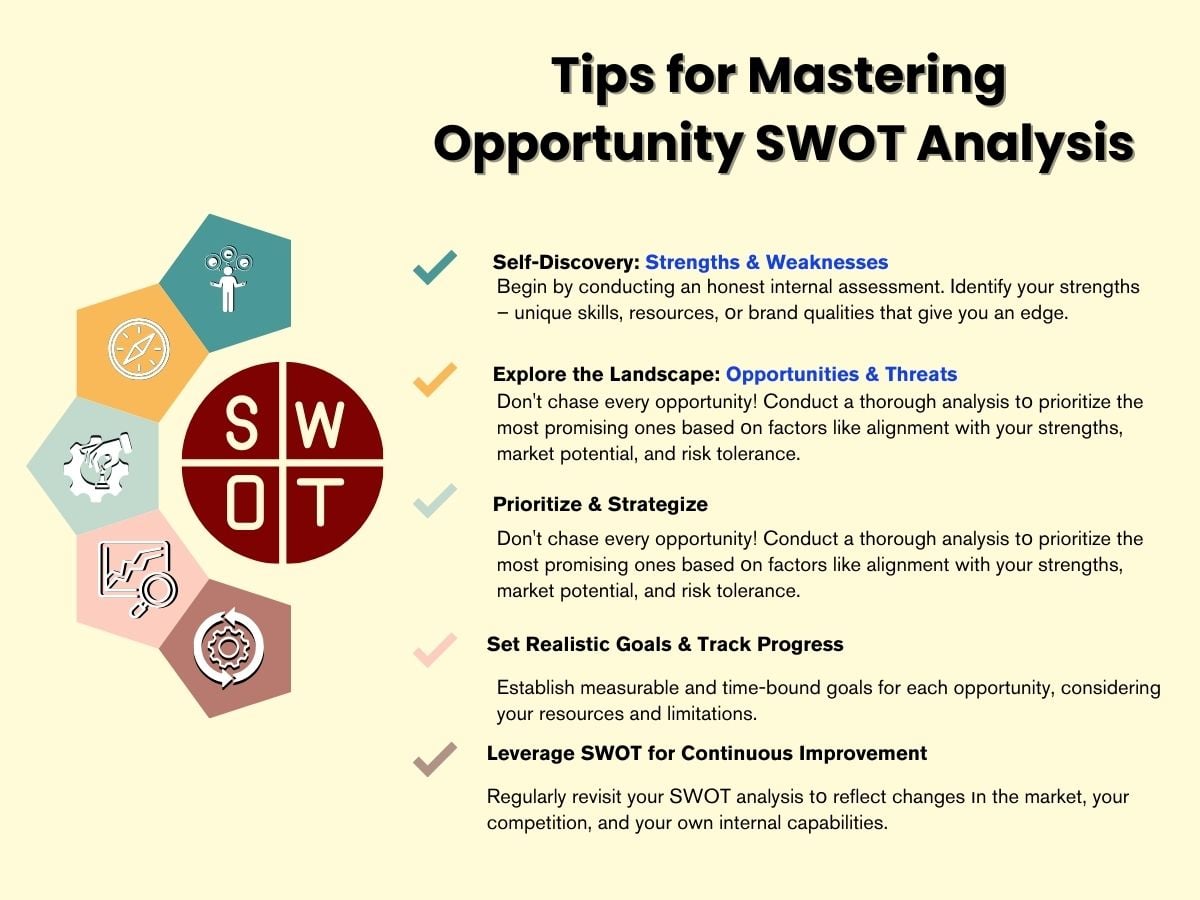
1. Self-Discovery: Strengths & Weaknesses
Begin by conducting an honest internal assessment. Identify your strengths – unique skills, resources, or brand qualities that give you an edge. Acknowledge your weaknesses – areas where you might lack expertise, resources, or operational efficiency.
2. Explore the Landscape: Opportunities & Threats
Turn your gaze outward, analyzing the market and business environment. Identify opportunities – emerging trends, unmet customer needs, or potential market gaps where your business can thrive. Don't overlook threats – potential challenges posed by competition, shifting regulations, or economic downturns.
3. Prioritize & Strategize:
Don't chase every opportunity! Conduct a thorough analysis to prioritize the most promising ones based on factors like alignment with your strengths, market potential, and risk tolerance. For each prioritized opportunity, develop a clear action plan outlining the steps you'll take to capitalize on it.
4. Set Realistic Goals & Track Progress:
Remember, ambitious goals are great, but realistic ones are achievable. Establish measurable and time-bound goals for each opportunity, considering your resources and limitations. Regularly track your progress and adjust your strategies as needed.
5. Leverage SWOT for Continuous Improvement:
Your business environment is dynamic. Regularly revisit your SWOT analysis to reflect changes in the market, your competition, and your own internal capabilities. This continuous evaluation ensures your business planning stays relevant and adapts to evolving opportunities and threats.
By incorporating these tips and integrating Opportunity SWOT Analysis into your business planning process, you'll gain a deeper understanding of your competitive landscape, identify your most promising growth avenues, and develop actionable strategies to turn your entrepreneurial dreams into reality.
Remember, planning empowers, so it is important to know the business planning definition and Opportunity SWOT Analysis is your key to unlocking informed decision-making and driving sustainable success.
Opportunity SWOT: Your Compass to Business Growth
Imagine navigating a vast ocean of possibilities without a compass. That's where Opportunity SWOT Analysis comes in, offering new business owners a strategic tool to chart their course towards success. It goes beyond simply identifying strengths and weaknesses; it delves deeper, helping you exploit opportunities and overcome threats by leveraging your unique strengths.
"The greatest danger for most of us is not that our aim is too high and we miss it, but that it is too low and we reach it." - Michelangelo
Don't settle for mediocrity. Use Opportunity SWOT to:
💎Uncover hidden gems: Go beyond the obvious and identify fresh market opportunities aligned with your strengths. Perhaps it's a niche service your competitors miss or a technological innovation you can pioneer.
💎Turn weaknesses into strengths: Does your limited budget seem like a hurdle? Analyze it as an opportunity to get creative with marketing or develop a lean, efficient operation. Remember, resourcefulness can be your biggest asset.
💎Anticipate the storm clouds: Identify potential threats before they loom large. By understanding your vulnerabilities and the competitive landscape, you can proactively develop strategies to mitigate risks.
💎Craft winning strategies: Don't just list opportunities; develop concrete plans to capitalize on them. Leverage your strengths, address weaknesses, and prepare for potential challenges. Remember, action is key!
Opportunity SWOT is not just a one-time exercise. As your business evolves and the market shifts, revisit and update your analysis regularly. This ensures you stay agile, adaptable, and constantly moving towards your goals.
Embrace the power of Opportunity SWOT. It's your compass, your roadmap, and your key to unlocking the full potential of your entrepreneurial journey. Start charting your course today, and watch your business blossom into a force to be reckoned with!
Discover the Right Tools for Your Startup
Take our 2-minute quiz to find tools tailored to your specific needs and goals.
Take the QuizTakes only 2 minutes


