
Scale Business Operations: Strategies for Growth and Success
Unlock the secrets to successful business scaling! Discover strategies for growth, financial management, systems optimization, and more. Scaling business graph with arrows pointing upwards, signifying growth and success.

Scaling business operations is crucial for entrepreneurs and individuals starting a new business. This article provides practical advice and actionable insights for successfully expanding and streamlining business operations. It explores the importance of scalability, discusses various strategies, highlights the significance of creating scalable systems, addresses common challenges, and discusses financial aspects and customer experience. This guide aims to equip readers with the knowledge to effectively scale their operations.

Planning for Growth
Scaling a business requires careful planning and strategic decision-making. One crucial aspect for planning for growth is defining clear goals and objectives. Without a clear vision, it becomes challenging to determine the path and strategies needed to achieve sustainable growth and success. In this article, we will discuss the importance of setting clear goals and objectives, conducting market research to identify growth opportunities, and developing a comprehensive business plan.
Defining Clear Goals and Objectives:
Setting clear goals and objectives lays the foundation for scaling business operations. These goals provide a roadmap and direction for the entire organization, helping stakeholders align their efforts towards a common vision.
Goals should be specific, measurable, attainable, relevant, and time-bound (SMART). For example, a goal could be to increase revenue by 20% within the next year or expand into two new geographic regions. Clear goals help to keep everyone focused, motivated, and accountable for their actions.
Conducting Market Research and Identifying Growth Opportunities:
Successful growth relies on a deep understanding of the market landscape. Conducting thorough market research is crucial to identify growth opportunities and stay ahead of market trends. This research includes analyzing customer preferences, studying competitors, and identifying gaps in the market that your business can fill.
By understanding your target market and their needs, you can tailor your products, services, and marketing strategies to effectively meet their demands. Furthermore, market research helps identify customer pain points and areas where your business can excel, giving you a competitive advantage.
Developing a Comprehensive Business Plan:
A comprehensive business plan is an essential tool for scaling business operations. It outlines the strategies, actions, and expectations for achieving growth. A well-developed business plan includes market analysis, financial projections, marketing strategies, operational plans, and a risk management strategy. It serves as a roadmap that provides clarity to stakeholders and helps secure financing if needed.
A business plan allows you to evaluate the feasibility of your growth plans, identify potential challenges, and create contingency plans. It also acts as a guide for decision-making and provides a benchmark against which you can measure your progress.
Importance of Scalability in Business Operations
In today's competitive business landscape, it is essential for companies to have the vision and capabilities to scale their operations effectively. Scaling allows businesses to handle increased demand, expand into new markets, and achieve long-term success. This article will explore the significance of scaling business operations and why it should be a strategic priority for organizations of all sizes.
🟪 Meeting Growing Customer Demands:
One of the primary reasons for scaling business operations is to meet the increasing demands of customers. As a company grows, so does its customer base, and it becomes crucial to ensure that operations can handle the rising influx of orders, inquiries, and requests. Scaling enables businesses to maintain customer satisfaction by providing timely and efficient services.
🟪 Expanding into New Markets:
Scaling is a fundamental element to consider when a business plans to expand into new markets. Successfully penetrating new regions or reaching a wider audience requires a scalable operational infrastructure that can support increased production, supply chain management, and customer service. Without scaling, expansion efforts may become chaotic and hindered, resulting in missed growth opportunities.
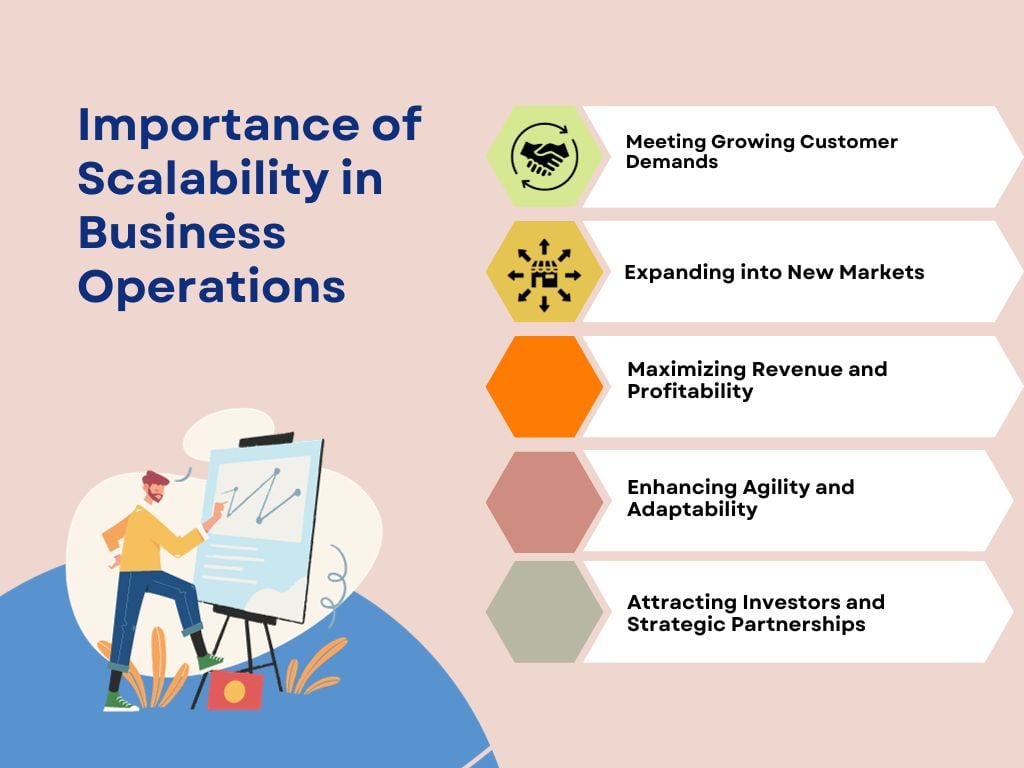
🟪 Maximizing Revenue and Profitability:
Scaling business operations can have a direct impact on revenue growth and profitability. By increasing production capacity, streamlining processes, and adopting cost-effective technology solutions, businesses can optimize efficiency and reduce operational expenses. This enables companies to maximize their revenue potential and achieve sustainable profitability, even in highly competitive markets.
🟪 Enhancing Agility and Adaptability:
In an ever-changing business environment, agility and adaptability are crucial for survival. Scaling business operations allows companies to respond swiftly to market trends, customer preferences, and industry shifts. By developing a scalable infrastructure, businesses can stay agile, flexibly accommodate changes, and embrace new opportunities without disruption.
🟪 Attracting Investors and Strategic Partnerships:
Investors and strategic partners seek businesses with substantial growth potential and scalability. A well-designed scaling strategy demonstrates a company's ability to expand its operations efficiently, making it an attractive prospect for potential investors or partners. Scaling business operations instills confidence in stakeholders and enhances the chances of securing funding or establishing valuable collaborations.
Scalability is a critical factor for long-term growth and success. Businesses that fail to scale their operations often struggle to accommodate increased demand, leading to missed opportunities and potential customer dissatisfaction. Scalability allows businesses to adapt to market changes, enter new markets, and maintain a competitive edge. By leveraging effective strategies and creating scalable systems early on, businesses can position themselves for sustained growth and profitability.
Strategies for Scaling Business Operations
1. Developing a Skilled Workforce:
A key aspect of scaling is ensuring that the workforce is properly equipped to handle increasing demands. Investing in employee training and development programs can enhance productivity and efficiency. Additionally, hiring strategically and leveraging freelancers, consultants, or outsourcing when necessary can help balance workloads and optimize operations.
2. Efficient Processes:
Streamlining and automating processes is crucial for ensuring scalability. Businesses should regularly evaluate their operational procedures to identify inefficiencies and implement improvements. By utilizing technology and software solutions, such as project management tools, inventory management systems, and CRM software, businesses can automate routine tasks and streamline operations.
3. Leveraging Technology:
Embracing technology can significantly contribute to scaling business operations. Cloud-based solutions offer flexibility, scalability, and cost savings. By adopting cloud computing services, businesses can scale their storage, processing power, and software applications as needed. Additionally, integrating data analytics tools enables businesses to gain valuable insights and make data-driven decisions to drive growth.
Creating Scalable Systems
🔹 Production:
Scaling production requires aligning production capabilities with market demand. This can be achieved by investing in advanced production technology, optimizing workflows, and establishing relationships with reliable suppliers. Businesses should also consider implementing just-in-time inventory management techniques to minimize excess inventory and associated costs.
🔹 Supply Chain:
Ensuring a smooth and efficient supply chain is crucial for scaling operations. Collaborating closely with suppliers, implementing systems for demand forecasting, and optimizing logistics can reduce lead times, minimize costs, and improve overall service levels. Additionally, diversifying supplier relationships can mitigate risks and provide flexibility during periods of growth.
Maintaining excellent customer service standards during expansion is essential. Scaling customer service operations can be achieved by investing in customer relationship management tools, ensuring clear communication channels, and empowering employees to handle customer inquiries efficiently. Leveraging self-service options and chatbots can also enhance customer satisfaction and reduce response times.
🔹 Marketing:
Scaling marketing efforts requires a strategic approach. Implementing digital marketing techniques, such as search engine optimization (SEO), pay-per-click advertising, and social media marketing, can help businesses attract a broader audience. Investing in marketing automation tools can streamline campaigns, track metrics, and personalize communications to nurture leads and retain existing customers.
Real-Life Examples and Case Studies
Highlighting successful businesses that have successfully scaled their operations can provide inspiration and insights. For instance, Company X, an e-commerce platform, effectively scaled its operations by investing in cloud infrastructure, implementing robust inventory management systems, and providing exceptional customer service.
Similarly, Company Y, a manufacturing firm, scaled its production by adopting advanced machinery, optimizing workflows, and building strong supplier relationships. These examples illustrate the diverse strategies businesses can employ to achieve scalability in different industries.
Challenges and Best Practices
Scaling operations can present challenges, such as managing increased complexity, maintaining quality standards, and navigating regulatory compliance. To mitigate these challenges, businesses should invest in robust systems, prioritize employee training and development, implement effective quality control measures, and engage in continuous process improvement.
Here are ways to seek guidance from industry experts and network with other entrepreneurs who have experienced similar challenges:
✅ Seeking guidance from industry experts and networking with other entrepreneurs who have experienced similar challenges can also provide valuable insights and support.
✅ Attend industry events and conferences. This is a great way to meet experts in your field, learn about the latest trends, and connect with other entrepreneurs.
✅ Join online communities and forums. There are many online communities and forums where you can connect with other entrepreneurs and seek advice from industry experts.
✅ Online communities and forums
✅ Find a mentor. A mentor can provide you with invaluable guidance and support as you grow your business.
✅ Be prepared to give as well as receive. Networking is a two-way street. Be willing to share your own experiences and insights with others.
✅ Follow up after you meet someone. Send a thank-you note or email to the people you meet.
✅ Don't be afraid to ask for help. There is no shame in asking for help when you need it.
Financial Aspects of Scaling
Growing a business costs money. Businesses should make a plan for how they will pay for their growth. This plan should include how much they will spend on new employees, marketing, and technology. Businesses may need to borrow money or raise money from investors to pay for their growth. They should also make sure they have enough cash flow to pay their bills as they grow.
Financing Growth:
For businesses aiming to scale their operations, financing growth is often a critical requirement. It involves exploring various options, creating a comprehensive business plan and financial projections, and considering strategic partnerships or collaborations to secure the necessary funding.
Exploring Financing Options for Scaling Operations:
When embarking on the journey of business scaling, a thorough evaluation of available financing options is crucial. Traditional avenues such as bank loans, lines of credit, and government grants can provide access to capital. Additionally, alternative funding sources such as venture capital, angel investors, and crowdfunding platforms have emerged as viable options.
It is important to carefully consider all the factors involved in each financing option, such as interest rates, repayment terms, and potential ownership dilution, to choose the one that best fits the business's growth plans and long-term goals.
Creating a Comprehensive Business Plan and Financial Projections:
Successfully securing financing for growth often requires a well-prepared business plan and accurate financial projections. A comprehensive business plan provides a roadmap for potential investors or lenders, offering an understanding of the business's mission
Emphasizing the Customer Experience
Throughout the scaling process, maintaining and enhancing the customer experience is crucial. Businesses should proactively communicate with customers, set realistic expectations, and display transparency to foster trust. Continuously soliciting feedback, measuring customer satisfaction, and implementing improvements based on customer insights contribute to maintaining high service standards and customer loyalty. By focusing on delivering exceptional experiences, businesses can successfully scale while delighting their customer base.

✔ Strong customer relationships are important for businesses to grow and succeed. Businesses can strengthen customer relationships by making sure customers are happy, getting feedback from customers, and using customer data to make their products and services better.
✔ Focusing on customer satisfaction and delivering exceptional service is crucial for businesses. By providing quick and helpful assistance and constantly striving to make customers happy, businesses can build strong relationships. This can result in repeat business and positive word-of-mouth.
✔ Talk to your customers to find out how you can make your products or services better. Ask them what they like and dislike about your business. You can also read their online reviews or gather feedback through focus groups.
✔Listening to your customers shows you care about their needs. Use their feedback to fix problems and make your business stand out from the crowd. Involving your customers in the feedback process makes them feel valued and appreciated.
✔ Businesses can use customer data to get to know their customers better. They can see what customers like, how they shop, and what they buy. This information can help businesses create special offers and experiences for each customer. This makes customers feel like the business cares about them and can help them buy more things.
✔ Building strong customer relationships is good for business. Loyal customers tell others about your business, write good reviews, and buy more from you. They also help you test new products and services.
Embrace Challenges as Stepping Stones to Growth
When you're growing your business, it's like climbing a mountain. There will be bumps and challenges along the way, but with the right mindset and tools, you can reach the top!
Instead of seeing obstacles as roadblocks, think of them as stepping stones. They can help you learn and improve your business. When you face a hurdle, don't just try to get over it. Think about what caused it and how you can prevent it from happening again. This will make your business stronger in the long run.
Think about what your customers want and need. Make sure your products and services are high-quality and that your customer service is excellent. This will help you keep your existing customers happy and attract new ones.
Scaling your business can be complicated, but it's definitely possible. By following the tips in this article, you can navigate the challenges and build a successful business.
Here are some key takeaways:
▪️ See challenges as opportunities to learn and grow.
▪️ Manage your finances carefully and invest wisely.
▪️ Build a strong foundation for your business.
▪️ Focus on the customer experience.
▪️ Embrace technology and automation.
By following these tips, you can ensure a smooth and successful scaling process and achieve long-term business prosperity!
Discover the Right Tools for Your Startup
Take our 2-minute quiz to find tools tailored to your specific needs and goals.
Take the QuizTakes only 2 minutes


