
Budget-Friendly Marketing Strategies for Small Business
Learn how to create an effective small business marketing plan on a budget. Discover cost-effective strategies for startups and new business owners.

So you're starting your own business? That's fantastic! You're full of dreams and ideas. But here's the thing: even the most amazing products or services need a plan to reach the people who want them. That's where a marketing plan comes in.
This article will explain why a marketing plan is essential for small businesses. We'll also show you some affordable ways to market your business without spending a fortune. Plus, we'll talk about how to do some research called a market analysis to find out who your ideal customers are and what they need.
The Significance of a Small Business Marketing Plan
Before we delve into the specifics of cost-effective marketing strategies, let's highlight why having a marketing plan is crucial for small businesses. A well-defined marketing plan serves as a roadmap, guiding your business towards its goals. Here are some key reasons why it's indispensable:
Clear Direction: A marketing plan outlines your business's objectives, target audience, and strategies for reaching them.
Example: Imagine you're the owner of a small fitness studio, and your goal is to attract more local clients. Your marketing plan outlines specific objectives, such as increasing membership by 20% within the next six months, targeting local residents aged 25-45, and utilizing social media and community events for promotion.
Cost Control: Without a plan, you may end up spending valuable resources on marketing tactics that don't yield results.

Example: Suppose you own a small online fashion boutique. With a marketing plan in place, you allocate a budget for Facebook ads. After running campaigns for a month, you analyze the results and find that Instagram ads are performing better in terms of conversion rates and cost per click. By adjusting your plan, you redirect resources to Instagram advertising, optimizing your budget allocation.
Competitive Advantage: In a competitive marketplace, having a well-thought-out marketing plan can set your small business apart from the competition.
Example: Consider a local coffee shop facing competition from multiple chain coffee stores. Your marketing plan emphasizes your unique selling points, such as sourcing coffee beans from local farmers and offering personalized customer experiences. This sets your business apart and helps you connect with the community.
Adaptability: A marketing plan is not set in stone. It allows for adjustments and refinements as you gather data and learn what works best for your business.
Example: Suppose you own a small tech startup selling productivity software. Your initial marketing plan includes content marketing and Google Ads. After a few months, you notice that content marketing is driving more organic traffic and conversions. You adapt your plan by allocating more resources to content creation and optimizing SEO strategies.
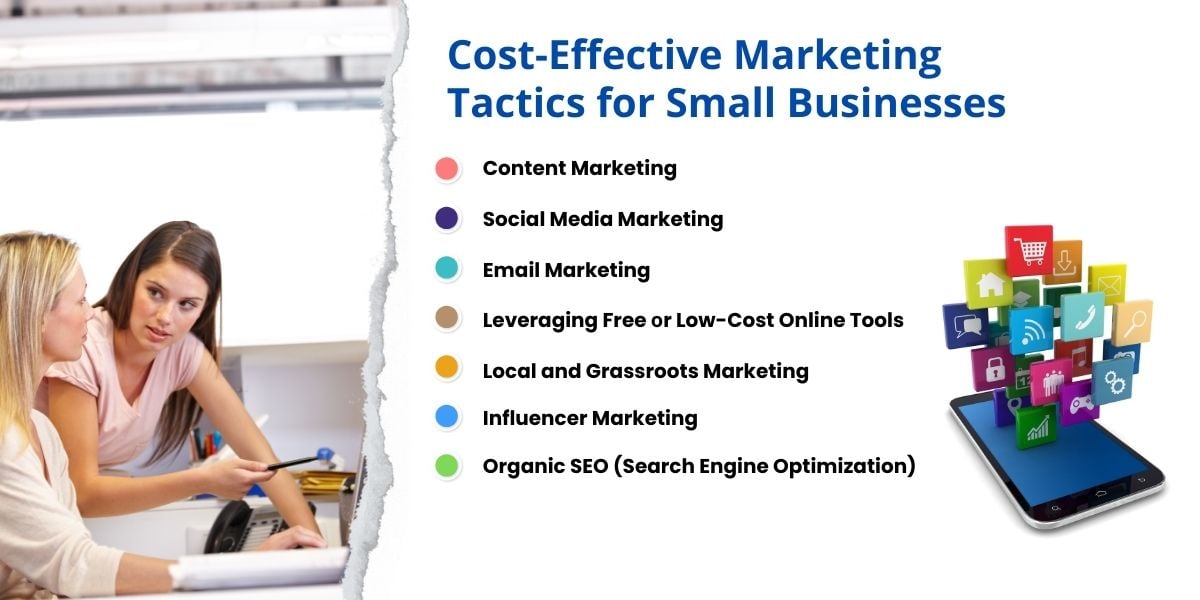
Cost-Effective Marketing Tactics for Small Businesses
◼️ Content Marketing
Content marketing involves creating and sharing valuable, relevant content to attract and engage your target audience. It's a cost-effective strategy that, when done right, can drive organic traffic and build brand authority.
Tips for Effective Content Marketing:
✔ Identify your target audience's pain points and create content that addresses their needs.
✔ Consistently publish high-quality blog posts, videos, infographics, and other content types.
✔ Promote your content through social media, email newsletters, and collaborations with other businesses.
◼️ Social Media Marketing
Social media platforms offer a cost-effective way to connect with your audience, build brand awareness, and drive traffic to your website. Choose the platforms that align with your target audience's preferences.
Practical Social Media Marketing Tips:
✔ Create a content calendar to plan and schedule posts in advance.
✔ Engage with your audience by responding to comments and messages promptly.
✔ Use paid advertising options on social media to reach a wider audience within your budget.
Email marketing remains one of the most cost-effective ways to nurture leads and convert them into customers. Build a mailing list by offering valuable content or incentives to subscribe.
Effective Email Marketing Strategies:
✔ Segment your email list to send personalized and relevant content.
✔ Use automation to send welcome emails, follow-ups, and abandoned cart reminders.
✔ Monitor open rates and click-through rates to refine your email campaigns.
◼️ Leveraging Free or Low-Cost Online Tools
The internet offers a plethora of free or affordable tools and platforms that can streamline your marketing efforts. Examples include website builders, graphic design tools, and email marketing platforms. These resources are accessible and can save you money compared to hiring professionals for every task.
◼️ Local and Grassroots Marketing
Don't underestimate the power of local marketing. Engage with your community through events, sponsorships, and partnerships. Word-of-mouth marketing and local SEO can also boost your visibility in your area without breaking the bank.
◼️️ Influencer Marketing
Influencer marketing involves collaborating with individuals who have a strong online presence in your niche. They can help you reach a targeted audience authentically and cost-effectively. Ensure that the influencers you choose align with your brand values and target demographic.
◼️ Organic SEO (Search Engine Optimization)
Investing in organic SEO can significantly improve your online visibility without heavy marketing expenses. Optimize your website for search engines by using relevant keywords, creating valuable content, and earning backlinks from reputable sources.
Effective Utilization of Social Media for Long-Term Marketing Communication
In today's digital age, social media has become an invaluable tool for businesses, particularly small ones, looking to establish a strong online presence and connect with their target audience.
However, merely having a social media presence is not enough; it's essential to utilize these platforms effectively for long-term marketing communication.
Before we delve into the specifics of leveraging social media for long-term marketing communication, let's understand why it's essential for small businesses.
✅ Building Brand Loyalty: Long-term communication helps foster trust and loyalty among your audience. Consistent engagement with your customers through social media strengthens your brand's reputation.
✅ Staying Relevant: As the business landscape evolves, maintaining ongoing communication with your target market ensures that your brand remains relevant. You can adapt to changing customer preferences and market trends.
✅ Maximizing ROI: Investing in long-term marketing communication on social media can yield a higher return on investment over time. It allows you to build a dedicated customer base that continuously engages with your content and converts into loyal customers.
Now, let's explore how small businesses can effectively use various social media platforms for long-term marketing communication.
Insights on Utilizing Social Media for Long-Term Marketing Communication
Now, let's delve into how small businesses can utilize social media marketing across different platforms for sustained marketing communication.
1. Know Your Audience
Before diving into social media marketing, it's crucial to understand your target audience thoroughly. Who are your ideal customers? What are their preferences, pain points, and interests? Knowing your audience enables you to create content that resonates with them.
Example: If you run a small organic skincare brand, understanding that your audience values natural ingredients and eco-friendliness will guide your content creation.
2. Choose the Right Platforms
Not all social media platforms are created equal. Each platform caters to different demographics and interests. Select the platforms where your target audience is most active.
Example: If your small business specializes in art supplies, platforms like Instagram and Pinterest, known for visual content, may be more effective than LinkedIn.
3. Consistency is Key
Maintain a consistent posting schedule to keep your audience engaged. Regular updates ensure that your brand remains on their radar.
Example: If you own a small bakery, posting daily or weekly about new pastry arrivals, customer reviews, and behind-the-scenes baking processes can maintain interest.
4. Engage with Your Audience
Don't just broadcast your message; actively engage with your audience by responding to comments, messages, and feedback. Engaging conversations build a sense of community and trust around your brand.
Example: If you operate a small bookshop, reply to customer comments on your posts, ask for book recommendations, and hold book-related discussions to foster engagement.
5. Tell Your Story
Share your brand's story and values. Transparency and authenticity resonate with customers and create a lasting connection.
Example: If you're a small family-owned farm, share stories about your farming practices, the history of your farm, and the passion your family has for sustainable agriculture.

6. Educate and Provide Value
Offer informative content that adds value to your audience's lives. Whether it's how-to guides, tips, or industry insights, providing valuable information positions your brand as an authority in your niche.
Example: If you run a small digital marketing agency, share articles and videos on SEO tips, content marketing strategies, and the latest industry trends.
7. Measure and Adapt
Use analytics tools to track the performance of your social media efforts. Analyze data to determine which content resonates most with your audience and adjust your strategy accordingly.
Example: If you notice that your audience engages more with video content than text posts, consider producing more videos for your small tech startup.
Effectively utilizing social media for long-term marketing communication is not just about gaining followers or likes; it's about building meaningful, ongoing relationships with your target audience. Small businesses can thrive in the digital age by understanding their audience, selecting the right platforms, and consistently delivering valuable content.
By doing so, your brand can establish itself as a trusted presence in the lives of your customers, fostering loyalty and sustained growth for the long term.
Measuring Success and Optimizing Your Plan
No matter which cost-effective marketing strategies you choose, digital tracking tools are your secret decoder rings. They help you understand what's working and what's not in the vast online jungle. Dive into website traffic stats, see how many customers reach your checkout after an ad, and check how many hearts your latest Instagram post gets.
This data is your fuel for calculating the "ROI" (that's Return on Investment, the cool business term for figuring out what gives you the most bang for your buck).
But numbers aren't everything! Don't forget to chat directly with your customers through surveys and feedback forms. Find out what kind of content they devour, what social media platforms they like to hang out on, and what questions they have about your awesome products and services.
By listening to their voices, you can fine-tune your digital marketing plan like a master chef perfecting their recipe. Remember, adaptation is key, so use your data and feedback to adjust your strategies and watch your business climb the success ladder, one step at a time!
Real-World Success Stories
To illustrate the power of cost-effective marketing strategies, let's look at a few success stories:
Case Study 1: XYZ Bakery: XYZ Bakery utilized social media marketing and influencer partnerships to promote its unique dessert offerings. Within six months, they saw a 30% increase in online orders and a 20% growth in foot traffic to their physical location.
Case Study 2: GreenTech Solutions: GreenTech Solutions leveraged content marketing and organic SEO to establish themselves as industry thought leaders. They achieved a 50% increase in website traffic and a 25% rise in sales inquiries within a year.
In both cases, these businesses achieved remarkable results without breaking the bank on marketing expenses.
Unleashing the Power of Tailored Small Business Marketing Plans
Think of starting a business like launching a rocket: you need a smart plan and the right fuel to take off and reach for the stars! That's exactly what a tailored small business marketing plan does for your awesome products and services. It's your roadmap to success in the competitive marketplace jungle, even if you're just starting out or need a makeover for your existing plan.
Cost-effective strategies are your secret weapon here. Forget fancy billboards and celebrity endorsements; it's all about smart targeting like a laser beam! This article is your mission control, guiding you to loyal customers and lasting growth without draining your piggy bank.
But remember, in the business world, things can change faster than a rocket taking off! That's why adaptability is your superpower. Track your results like a hawk: are those newspaper ads getting you enough customers? Maybe online ads are a better fit! Don't be afraid to adjust your plan to what works best.
Speaking of starting small, think of it like testing your rocket engines before blasting off. Don't try to launch on every social media platform at once. Focus on one or two where your target audience hangs out, like the cool kids' table at lunch. As your business grows (and your budget gets bigger!), you can expand your marketing reach to other planets, I mean, platforms.
The key is to start small, measure your progress, and keep improving. It's like building a LEGO spaceship: one brick at a time, with each piece bringing you closer to your goals. With cost-effective marketing strategies as your fuel, your business will soar to incredible heights! So, buckle up, put these tips into practice, and prepare for liftoff!
Discover the Right Tools for Your Startup
Take our 2-minute quiz to find tools tailored to your specific needs and goals.
Take the QuizTakes only 2 minutes


