
Support Business Operations: Entrepreneur & Small Biz Guide
This guide provides support for first-time entrepreneurs and small business owners to manage business operations effectively. Learn how to establish systems and processes, maintain motivation and productivity, and delegate and outsource tasks to streamline operations and achieve sustainable growth.

Efficient business operations are crucial for the success of first-time entrepreneurs and small business owners. This article tries to help owners of small businesses manage their operations better.
It helps entrepreneurs overcome their challenges by focusing on systems and processes, motivation and productivity, and delegating and outsourcing. This allows them to streamline their operations and grow their businesses sustainably.
The Significance of Business Operations Support:
◾ Streamlining Processes:
Efficient business operations support enables entrepreneurs to streamline their processes, ensuring smooth and seamless workflows. By identifying bottlenecks and implementing strategies to overcome them, entrepreneurs can eliminate inefficiencies and improve overall productivity.
◾ Strategic Planning:
Business operations support plays a vital role in strategic planning. It helps entrepreneurs align their business goals with market demands and create a roadmap for achieving long-term success. Through careful analysis of industry trends and customer insights, entrepreneurs can make informed decisions and set realistic targets.
◾ Resource Management:
Effective resource management is a crucial component of business operations support. Entrepreneurs need to optimize their use of human resources, technology, and finances to maximize efficiencies and minimize waste. By allocating resources strategically, businesses can ensure optimal utilization and enhance their bottom line.

Practical Tips for Optimizing Business Operations:
➤ Define clear business objectives: The first step to optimizing your business operations is to have a clear understanding of your goals. What do you want to achieve with your business? Once you know your objectives, you can develop strategies and processes to support them.
➤ Conduct a SWOT analysis: A SWOT analysis is a tool that can help you identify your business's strengths, weaknesses, opportunities, and threats. This information can be used to develop strategies to improve your operations and capitalize on your strengths.
➤ Develop an effective business plan: A business plan is a roadmap for your business. It should outline your goals, target market, competitive analysis, marketing strategies, and operational plan. A well-structured business plan can help you stay on track and make informed decisions about your business operations.
➤ Implement robust process management: Efficient processes are essential for streamlined operations. Identify the key processes in your business and document them to create standard operating procedures (SOPs). This will help to ensure that tasks are completed consistently and efficiently. Regularly review and refine your SOPs to ensure that they are up-to-date and effective.
➤ Embrace technology: Technology can help you to automate tasks, streamline processes, and improve communication and collaboration. Invest in business management software, CRM systems, and project management tools to simplify your operations and boost productivity.
➤ Foster a culture of continuous improvement: Encourage your employees to continuously look for ways to improve your processes and operations. This could involve providing feedback, suggesting new ideas, or identifying areas for improvement. Regularly assess the effectiveness of your operations and make changes as needed.
➤ Build strategic partnerships: Partnering with other businesses, suppliers, and service providers can help you to enhance your business operations. For example, you could partner with a supplier to get better pricing on raw materials or partner with a marketing agency to help you grow your customer base.
Types of Business Operations Support and Tips for Implementation
Business operations support is a broad term that encompasses a wide range of services that can help businesses of all sizes to improve their efficiency and productivity. These services can be provided by internal staff, external consultants, or a combination of both.
Here are some of the most common types of business operations support:
Administrative support: This includes tasks such as answering phones, scheduling appointments, managing calendars, and processing paperwork.
Bookkeeping and accounting support: This includes tasks such as tracking income and expenses, generating financial reports, and preparing taxes.
Customer service support: This includes tasks such as answering customer inquiries, resolving complaints, and providing technical assistance.

Human resources support: This includes tasks such as recruiting and hiring employees, onboarding new hires, managing payroll and benefits, and providing employee training and development.
IT support: This includes tasks such as managing computer systems and networks, troubleshooting technical problems, and providing security and compliance solutions.
Marketing support: This includes tasks such as developing and executing marketing campaigns, managing social media accounts, and creating and distributing marketing materials.
Sales support: This includes tasks such as qualifying leads, developing sales proposals, and closing deals.
Tips for implementing business operations support
If you are considering implementing business operations support in your business, here are a few tips:
✔️ Start by identifying your needs: What specific areas of your business could benefit from additional support? Once you have identified your needs, you can begin to research and evaluate different service providers.
✔️ Choose a service provider that is a good fit for your business: Consider factors such as the provider's experience, expertise, and pricing. It is also important to choose a provider that you feel comfortable working with.
✔️ Develop a clear scope of work: Before you engage a service provider, be sure to develop a clear scope of work that outlines the specific services that you will be receiving. This will help to avoid any misunderstandings or disagreements down the road.
✔️ Communicate regularly with your service provider: It is important to communicate regularly with your service provider to ensure that they are meeting your needs and expectations. Be sure to provide feedback and suggestions as needed.
Systems and Processes
Establishing well-defined systems and processes is essential for effective business operations. Here are practical tips to help you create a solid foundation:
• Develop standard operating procedures (SOPs) that outline step-by-step processes for various tasks. SOPs ensure consistency and efficiency in operations.
• Document your workflows and make them accessible to your team for seamless collaboration. This transparency facilitates smoother communication and eliminates confusion.
• Implement a project management tool to streamline task assignments, deadlines, and progress tracking. This technology simplifies workflow management and enhances team productivity.
• Regularly review and update your systems and processes to ensure they remain relevant and efficient. As your business evolves, your operations should adapt accordingly.
Streamlined operations lead to numerous benefits, including increased productivity, reduced costs, and improved scalability. Take inspiration from success stories like [insert example] to see how effective systems can transform a business.
Top 10 Business Operations Support Tools for Entrepreneurs and Small Businesses
Business operations support tools can help entrepreneurs and small businesses streamline their operations, automate tasks, and improve their overall efficiency and productivity. Here are 10 of the top business operations support tools for entrepreneurs and small businesses:
Google Workspace: Google Workspace is a suite of productivity tools that includes Gmail, Google Calendar, Google Docs, Google Sheets, and Google Slides. It is a cloud-based platform that can be accessed from anywhere with an internet connection. Google Workspace is a good option for entrepreneurs and small businesses because it is affordable and easy to use.
QuickBooks Online: QuickBooks Online is a cloud-based accounting software that helps businesses track their income and expenses, generate financial reports, and prepare taxes. It is a popular option for entrepreneurs and small businesses because it is easy to use and has a variety of features.
Zoho CRM: Zoho CRM is a cloud-based customer relationship management (CRM) software that helps businesses manage their customer interactions and relationships. It is a good option for entrepreneurs and small businesses because it is affordable and has a variety of features.
Slack: Slack is a cloud-based team communication platform that helps teams stay connected and collaborate on projects. It is a good option for entrepreneurs and small businesses because it is easy to use and has a variety of features.

Trello: Trello is a cloud-based project management tool that helps teams track their progress on projects and tasks. It is a good option for entrepreneurs and small businesses because it is easy to use and has a variety of features.
Canva: Canva is a cloud-based design platform that helps users create professional-looking graphics, social media posts, presentations, and other marketing materials. It is a good option for entrepreneurs and small businesses because it is easy to use and has a variety of templates and features.
Mailchimp: Mailchimp is a cloud-based email marketing platform that helps businesses create and send email newsletters and campaigns. It is a good option for entrepreneurs and small businesses because it is affordable and has a variety of features.
Shopify: Shopify is a cloud-based e-commerce platform that helps businesses create and manage their online stores. It is a good option for entrepreneurs and small businesses because it is easy to use and has a variety of features.
Square: Square is a payment processing platform that helps businesses accept credit and debit card payments. It is a good option for entrepreneurs and small businesses because it is easy to use and affordable.
Zapier: Zapier is a cloud-based automation tool that helps businesses automate tasks between different applications. It is a good option for entrepreneurs and small businesses because it can help to save time and improve efficiency.
These are just a few of the many business operations support tools available to entrepreneurs and small businesses. When choosing tools, it is important to consider the specific needs of your business. It is also important to choose tools that are affordable and easy to use.
Tips for using business operations support tools
Here are a few tips for using business operations support tools effectively:
✔ Choose the right tools for your needs. Don't just buy the most popular tools or the tools that your friends are using. Take the time to identify your specific needs and choose tools that will help you to achieve your goals.
✔ Integrate your tools. Many business operations support tools can be integrated with each other. This can help you to automate tasks and streamline your operations.
✔ Train your employees. Make sure that your employees are trained on how to use the business operations support tools that you have implemented. This will help to ensure that they are able to use the tools effectively and efficiently.
✔ Monitor your results. It is important to monitor the results of your business operations support tools. This will help you to identify which tools are working well and which ones need to be improved.
Delegating and Outsourcing
★ Delegating tasks and outsourcing certain aspects of business operations can contribute to increased efficiency and scalability. Here's how you can effectively delegate and outsource:
★ Identify tasks that can be delegated without compromising quality or customer satisfaction. Delegate tasks that are time-consuming, repetitive, or require specialized expertise.
★ Find reliable partners or service providers through thorough research and referrals. Look for professionals or companies with a proven track record and positive reviews.
★ Clearly communicate your expectations, deadlines, and deliverables to ensure smooth collaboration. Effective communication is key to maintaining a successful outsourcing relationship.
★ Regularly evaluate the effectiveness of the outsourcing arrangement and make adjustments as needed. Continually monitor the quality and efficiency of outsourced tasks to optimize operations.
★ Strategic delegation and outsourcing not only allow you to focus on core business activities but also provide cost-effectiveness and scalability benefits.

Efficient business operations are essential for the success of first-time entrepreneurs and small business owners. By implementing the tips and recommendations discussed in this article, you can effectively support your business operations. Remember to establish robust systems and processes, maintain motivation and productivity, and strategically delegate and outsource tasks. With dedication and persistence, you can overcome the challenges and achieve long-term success in your entrepreneurial journey.
Essential Motivation and Productivity Tips for Business Operations Support
Business operations support professionals play a crucial role in ensuring the smooth and efficient operation of businesses of all sizes. However, it can be challenging to stay motivated and productive when juggling multiple tasks and deadlines.
Here are a few essential tips for business operations support professionals:
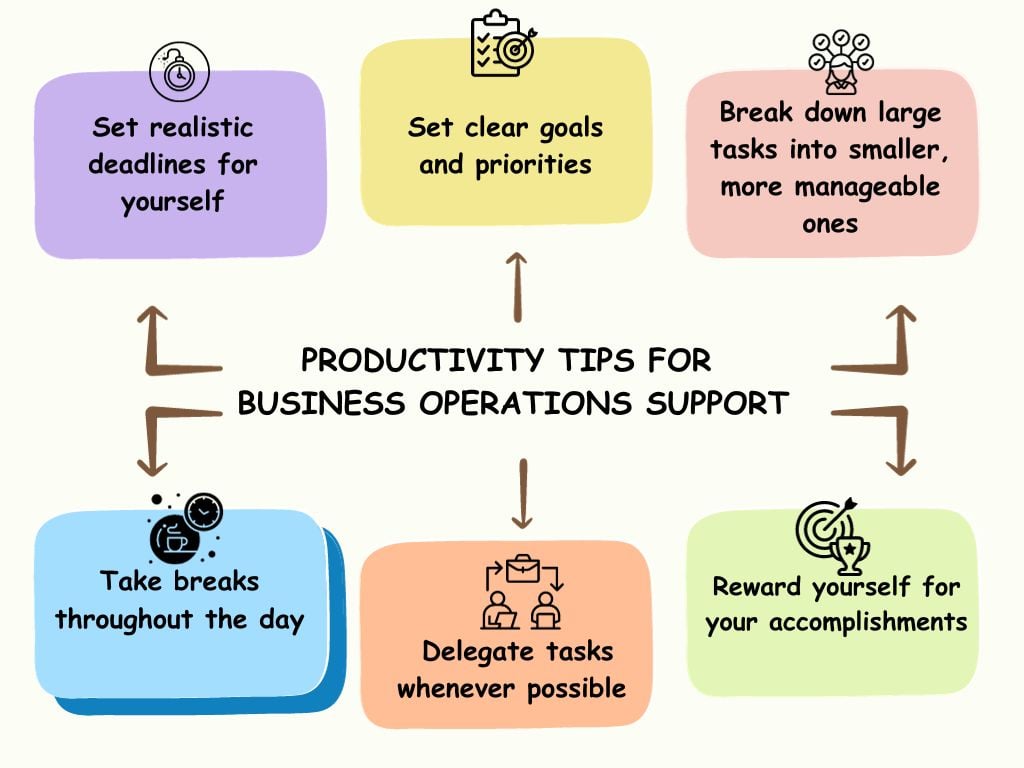
1. Set clear goals and priorities: What are your most important tasks for the day, week, or month? Once you know your priorities, you can focus your time and energy on achieving them.
2. Break down large tasks into smaller, more manageable ones: This will make them seem less daunting and help you to make progress more quickly.
3. Set realistic deadlines for yourself: Don't try to do too much at once, or you'll quickly become overwhelmed. Give yourself enough time to complete tasks to a high standard.
4. Take breaks throughout the day: Get up and move around, or step outside for some fresh air. Taking breaks will help you to stay refreshed and focused.
5. Delegate tasks whenever possible: If you have the ability to delegate tasks to others, do it! This will free up your time so that you can focus on the most important things.
6. Reward yourself for your accomplishments: When you complete a task or reach a goal, take some time to celebrate your success. This will help you to stay motivated and on track.
Fostering a positive and motivated mindset is critical. Surround yourself with positive influences, engage in self-care activities, and regularly evaluate and celebrate your achievements.
Business operations support professionals are essential to the success of any business, but especially for small businesses and entrepreneurs. By staying motivated and productive, you can help your business to run smoothly and efficiently and achieve its goals.
Discover the Right Tools for Your Startup
Take our 2-minute quiz to find tools tailored to your specific needs and goals.
Take the QuizTakes only 2 minutes


