
SWOT Analysis Threats: Risks for Entrepreneurs
Discover how entrepreneurs can tackle threats with SWOT analysis. Learn to identify risks and safeguard your business effectively.

Starting a new business involves making critical decisions that will have a direct impact on its success or failure. One of the most commonly used tools for assessing the feasibility of a new business venture is the SWOT analysis.
The SWOT analysis is a strategic planning tool used to identify an organization's Strengths, Weaknesses, Opportunities, and Threats. Anyway, while a SWOT analysis can be an effective tool for entrepreneurs, it's important to understand the potential risks and dangers involved.
In this article, we'll explore the threats on SWOT analysis, provide practical examples, and offer actionable advice for mitigating risks.
SWOT Analysis: A Tool to Steer Your Business to Success
Imagine you're a captain setting sail across a vast ocean. To navigate effectively and reach your destination, you need to understand two things: what's on your ship (your strengths and weaknesses) and what's out there in the open waters (opportunities and threats).
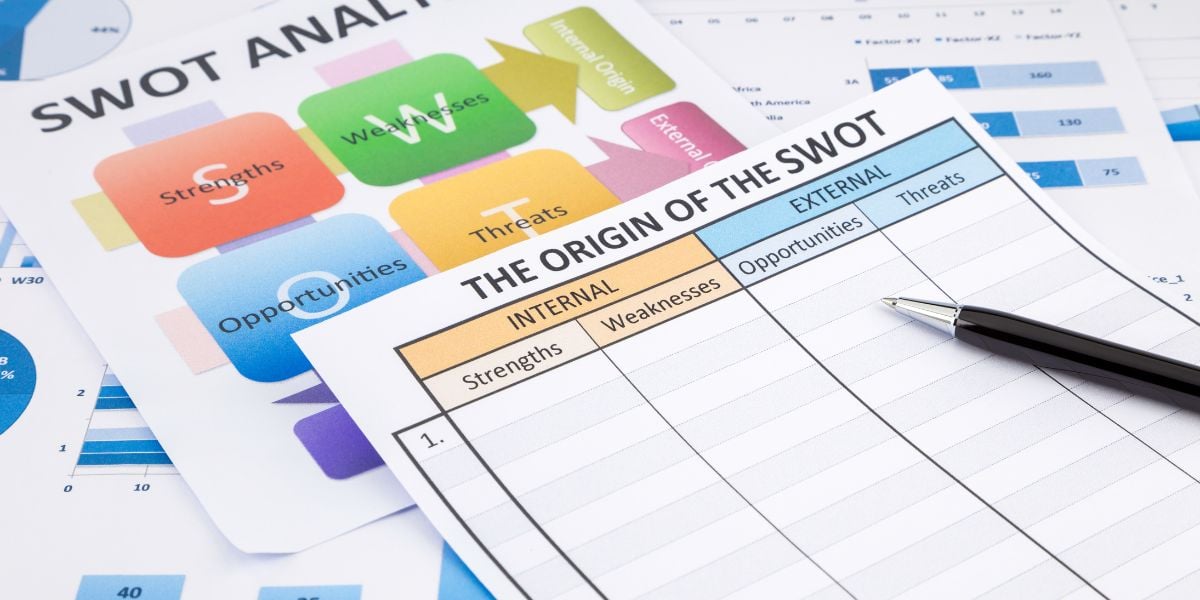
A SWOT analysis is like your personal captain's chart, helping you identify these factors and steer your business towards success.
✳️Here's a breakdown of the four key elements of a SWOT analysis:
- Strengths: These are the things your business does well. Maybe you have a crew of highly skilled sailors (experienced employees), a loyal group of passengers who keep coming back for more (strong customer base), or a reputation for being the friendliest ship on the seas (positive brand image). Strengths are like the powerful winds in your sails, propelling you forward.
- Weaknesses: These are the areas where your business could improve. Maybe your ship is a little outdated (lack of resources), your crew needs some extra training (low employee morale), or it takes a while to get everyone on board (inefficient processes). Weaknesses are like leaky spots in your ship – they can slow you down and make it harder to reach your goals.
- Opportunities: These are exciting things happening outside your business that could benefit you. Maybe there's a new trade route opening up (emerging market), a new type of sailcloth that makes your ship even faster (technological advancements), or a sudden increase in demand for sea travel (growing market). Opportunities are like friendly dolphins guiding you towards new treasures (or customers!).
- Threats: These are the challenges your business faces from the outside world. A fierce storm brewing on the horizon (new competitor) or a change in the currents (shifting customer preferences) could be threats. Threats are like pirates waiting to steal your treasure (profits)!
By understanding these strengths, weaknesses, opportunities, and threats, you can make smart decisions about your business. You can leverage your strengths to take advantage of opportunities, and you can address your weaknesses to avoid threats. Basically, a SWOT analysis helps you chart a course for smooth sailing and avoid any nasty surprises on your business voyage. Now, let's explore some of the potential drawbacks of using a SWOT analysis.
SWOT Analysis: A Great Tool, But Watch Out for These Bumps!
A SWOT analysis is a fantastic tool for business planning, but even the best tools have limitations. Here are some potential roadblocks to consider when using a SWOT analysis:
❌Inaccurate Information (Steering By the Wrong Stars): Imagine you're charting your course based on a wonky compass. A SWOT analysis is only as good as the information you put into it. If you miss important details about your business (strengths and weaknesses) or the market (opportunities and threats), your decisions could be way off course.
❌Opinions vs. Facts (Fishy Findings): A SWOT analysis involves some honest self-reflection, but it can also be influenced by personal opinions. Maybe you think your customer service is amazing, but what do your actual customers say? It's important to gather evidence and be objective when evaluating your strengths and weaknesses to avoid getting a distorted picture.
❌Overconfidence (Getting Too Cozy in the Captain's Quarters): A strong SWOT analysis might reveal some impressive strengths in your business. That's great! But don't let it go to your head. Getting too confident can make you complacent and overlook weaknesses that could sink your ship (business) in the long run.
❌Missing the Big Picture (Foggy Forecast): A SWOT analysis focuses on what's inside your business and what's happening right outside. That's important, but don't forget about the bigger world! Things like the economy, competition, and even customer trends can have a huge impact on your success. Make sure you consider these external factors as well.
By understanding these potential dangers, you can use a SWOT analysis more effectively. Here are some tips:
- Do your research: Gather solid data to support your analysis of strengths, weaknesses, opportunities, and threats.
- Get different perspectives: Don't do a SWOT analysis alone! Involve other people in your business to get a well-rounded view.
- Be honest (brutally honest!): Don't sugarcoat your weaknesses. Facing them head-on is the first step to improvement.
- Consider everything: Don't get so focused on your internal world that you miss what's happening outside.
By following these tips, you can use a SWOT analysis as a valuable tool to navigate your business journey and avoid any nasty surprises along the way.
SWOT Analysis: Great Tool, But Use it Wisely (Real World Examples Included)
A SWOT analysis is a super helpful tool for businesses, but like any tool, it has its limitations. We've talked about some of the bumps you might encounter, and now let's see how some real companies faced challenges identified in their SWOT analysis. Remember, an Opportunity SWOT analysis can help you spot success and risk too!
🍁Missed Opportunities: When Threats Become Shipwrecks
- Blockbuster Rewinding into Trouble: Blockbuster used to be the king of video rentals, but they missed a huge threat: streaming services like Netflix. Their SWOT analysis most likely didn't properly consider this new technology, and as a result, Blockbuster couldn't adapt and went out of business. This is a classic example of a missed opportunity!
- Kodak: The Picture of Missed Opportunity: Kodak dominated the photography industry for years, but then digital cameras came along. Again, their SWOT analysis probably didn't consider the threat of digital photography seriously enough. Kodak failed to adapt and eventually filed for bankruptcy. Imagine if they had identified digital photography as an opportunity to innovate instead of a threat!
- Nokia: From Cellphones to Shipwrecked: Nokia used to be the top dog in mobile phones, but smartphones became the new hotness. Their SWOT analysis likely missed the threat that smartphones posed. Companies like Apple and Samsung swooped in, and Nokia's market share sank. This is another example of a missed opportunity to adapt to a changing market.
🍁Learning from the Past: Opportunity Awaits!
These companies all faced threats identified in their SWOT analysis, but what if they had also used SWOT analysis to identify opportunities? For example, Blockbuster could have explored offering streaming services themselves.
Kodak could have invested in digital camera technology. And Nokia could have focused on developing their own smartphones. By using SWOT analysis to identify not just threats, but also opportunities, businesses can stay ahead of the curve and avoid becoming shipwrecks.
🍁The Takeaway
A SWOT analysis is a powerful tool, but remember, it's only as good as the information you put into it. Do your research, consider different perspectives, and be honest about your strengths and weaknesses (and the opportunities and threats you face). By using SWOT analysis wisely, you can navigate your business journey smoothly and turn challenges into opportunities for success!
Making SWOT Work for You: How to Avoid the Traps (Actionable Steps)
So, we've talked about the potential pitfalls of SWOT analysis, but don't worry! There are ways to steer clear of those dangers and make SWOT a truly valuable tool for your business. Here are some actionable steps you can take:
✳️Do Your Homework Before You Set Sail (Conduct Comprehensive Research): Imagine you're planning a trip across the ocean. You wouldn't just pick a direction and go, right? You'd check the weather forecast, research currents, and study the charts.
A SWOT analysis is similar. Before you dive in, do your research! Look into market trends, what your customers are up to, and what your competitors are doing. The more you know, the more accurate your SWOT analysis will be.
✳️Identify What Could Go Wrong (and Right) Upfront (Identify Risks and Opportunities in Advance): Sometimes, anticipating problems can help you avoid them. Before you even start your SWOT analysis, brainstorm potential risks (threats) and opportunities. Get a diverse group of people involved to get a well-rounded view. This will help you be more objective during the analysis itself.
✳️Keep an Open Mind (Embrace All Points of View): During your SWOT analysis, be open to all ideas, even the ones that might seem far-fetched. Consider external factors that could impact your business, not just the internal stuff. The more perspectives you consider, the better picture you'll get of your overall situation.
✳️Have a Plan B (Develop Contingency Plans): Let's say your SWOT analysis reveals a potential threat, like a new competitor. Don't panic! Develop a contingency plan – a backup strategy for how you'll handle that threat. This could involve partnering with another business, changing your marketing approach, or expanding your product offerings. By having a plan in place, you'll be better prepared to weather any storm (threat) that comes your way.
By following these tips, you can turn SWOT analysis into a powerful tool to mitigate risks, seize opportunities, and navigate your business towards success. Remember, a little planning and a willingness to consider all possibilities can make a big difference!

Charting Your Course: The Final Word on SWOT Analysis
So, you've dipped your toes into the world of SWOT analysis. By now, you understand it's a fantastic tool for assessing your business idea, but like any roadmap, it has its limitations. Inaccurate information can steer you wrong, misleading results can create a false sense of security, and overconfidence can leave you unprepared for rough waters.
The key to using SWOT analysis effectively lies in thoroughness and a healthy dose of skepticism. Do your research! Gather solid data to support your analysis of strengths, weaknesses, opportunities, and threats. Don't be afraid to get different perspectives involved.
Brainstorming with a diverse team can help you identify potential blind spots and ensure a more objective evaluation. You can incorporate as well AI in Swot analysis creation.
Remember, a SWOT analysis is just the first step. By acknowledging both your strengths and weaknesses, you can develop strategies to capitalize on the former and address the latter. Identifying opportunities allows you to seize new markets and adapt to changing trends. And being aware of potential threats empowers you to create contingency plans and weather any storms that come your way.
Think of SWOT analysis as your personal captain's chart. It provides valuable information about your ship (your business) and the vast ocean you're about to navigate (the market). By understanding your internal strengths and weaknesses, and staying alert to external opportunities and threats, you'll be well-equipped to chart a course for success. So, set sail with confidence, but always remember to keep a watchful eye on the horizon!
Discover the Right Tools for Your Startup
Take our 2-minute quiz to find tools tailored to your specific needs and goals.
Take the QuizTakes only 2 minutes


