
Winning Elevator Pitch: Tips and Real-Life Examples
Learn tips, strategies, and real-life examples for crafting a winning elevator pitch. Master the art of concise and persuasive business introductions.

In today's fast-paced business world, entrepreneurs are always competing for time and attention. As such, one of the most critical skills for any new business owner is crafting an elevator pitch. An elevator pitch is a concise and persuasive introduction that captures the essence of your business idea and leaves a lasting impression on the listener.
The goal of an elevator pitch is to communicate your business idea in a way that grabs the listener's attention, differentiates you from the competition, and motivates them to take action. Elevator pitches are not only used to pitch to investors, but they also play a crucial role in interviews and networking opportunities.
In this article, we will provide practical insights and strategies to help entrepreneurs and individuals who want to start a new business craft a strong elevator pitch. We will also share real-life examples of successful elevator pitches that have made a significant impact in the industry.
Real-Life Examples of Winning Elevator Pitches
Ever been stuck in an elevator with someone interesting, only to have the ride end before you could introduce yourself and your idea? That's the essence of an elevator pitch: a brief, impactful introduction to yourself, your business, or your idea, delivered in the time it takes for an elevator ride (usually around 30 seconds).

Here are some real-life examples of successful elevator pitches that capture the essence of a great pitch:
1. Dropbox: Simple and Clear Value Proposition
Imagine being in an elevator and overhearing someone say
"We offer a free service that lets you easily store and access your photos, documents, and videos from anywhere. We're constantly improving it, and we think it's a pretty good deal!"
This is the essence of Dropbox's elevator pitch. It's short, simple, and clearly explains their value proposition: free, accessible storage for your digital files. This pitch is easy to understand and remember, making it a great example of how to effectively communicate your idea in a short amount of time.
2. Uber: Highlighting Convenience and Reliability
Imagine being at a conference and striking up a conversation with someone new. You might introduce yourself with something like:
"I work for Uber, an app that connects people with safe and reliable rides at various price points, all over the world."
Uber's elevator pitch is clear and concise, focusing on the key benefits for their customers: convenience, reliability, and affordability. This pitch is broad enough to resonate with a wide audience, from potential riders to investors.
3. Stripe: Powerful Tools for Growing Businesses
Imagine attending a networking event and meeting someone who works at Stripe. They might introduce themselves by saying:
"Stripe helps businesses of all sizes accept payments online and on mobile. We offer powerful and flexible tools for everything from subscriptions to marketplaces, so businesses can focus on growth."
Stripe's elevator pitch emphasizes their focus on empowering businesses with robust and adaptable payment solutions. They mention specific examples like subscriptions and marketplaces to showcase the versatility of their platform, making it relevant to a wider range of potential customers.
Here's a more detailed breakdown of the key points for a great elevator pitch:
1. Short and Sweet (30 seconds or less): Imagine you're stuck in an elevator with someone interesting, but the ride ends before you can finish your pitch. That's the essence of an elevator pitch - a brief, impactful introduction delivered in the time it takes for an elevator ride.
2. Clear and Concise (Get to the point quickly and avoid jargon): Speak in plain English that anyone can understand. Avoid technical terms or industry jargon that might confuse your listener.
3. Benefit-Oriented (Highlight the value you offer): Don't just explain what you do, explain why it matters. Focus on the problems you solve and the benefits you provide to your audience.
4. Memorable (Leave a lasting impression): Craft a strong closing statement that summarizes your value proposition and leaves the listener wanting to learn more. This could be a tagline, a powerful statistic, or a thought-provoking question.
Additional Tips:
- Hook them from the start: Grab their attention within the first few seconds with a compelling statement, question, or even a surprising fact related to your business.
- Practice makes perfect: Don't wait until the moment of truth to refine your pitch. Rehearse it in front of a mirror, record yourself, and get feedback from others to improve your delivery and identify areas for improvement.
- Tailor your pitch: Remember, one size doesn't fit all. Adapt your pitch based on your audience and the situation. For example, when talking to investors, focus on your unique selling proposition (USP) and potential return on investment (ROI). When talking to customers, highlight how your product or service solves their pain points.
By following these tips, you can craft a compelling elevator pitch that effectively communicates your business idea, grabs attention, and leaves a lasting impression on your audience.
Remember, an elevator pitch is a valuable tool for introducing yourself, your business, and your ideas in a concise and impactful way.
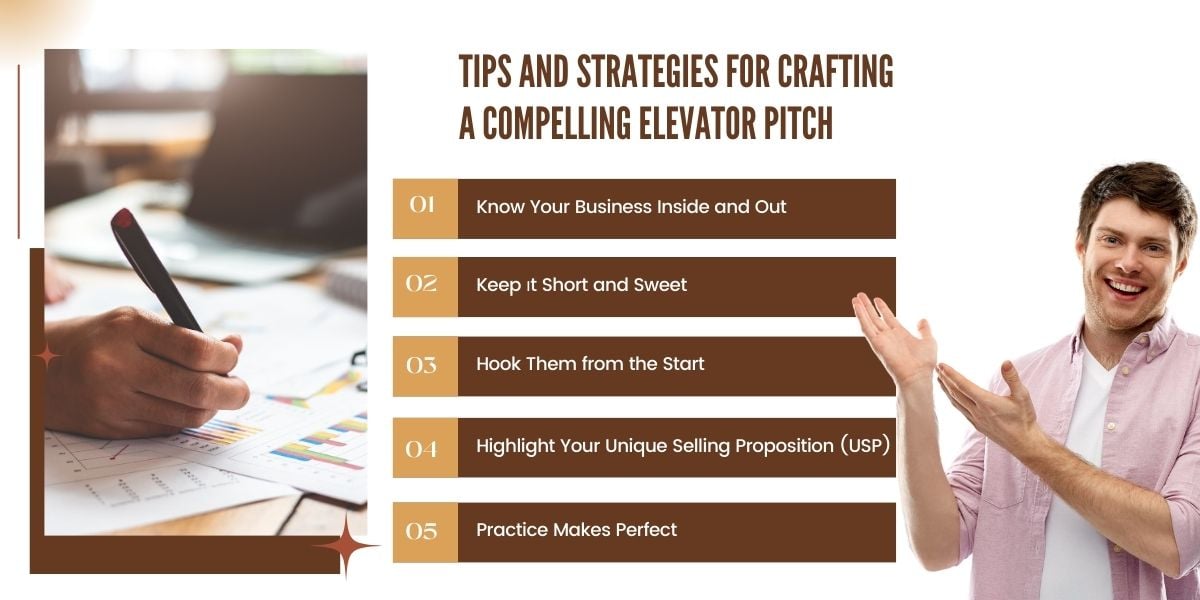
Tips and Strategies for Crafting a Compelling Elevator Pitch
Imagine you have a chance to introduce your business idea to a potential investor, partner, or customer, but you only have the time it takes for an elevator ride (around 30 seconds) to make your pitch. That's the essence of an elevator pitch: a concise and impactful introduction that grabs attention and leaves a lasting impression.
Here are some essential tips and strategies for crafting a compelling elevator pitch:
1. Know Your Business Inside and Out
Before crafting your pitch, solidify your understanding of your business. This includes your product or service, the target market you serve, and what makes your offering unique. A clear understanding will help you communicate the core essence of your business effectively.
2. Keep it Short and Sweet
Aim for between 30 seconds and 2 minutes, depending on your audience. Remember, you're capturing attention in a brief window, so prioritize clarity and conciseness. Avoid jargon or technical language that might confuse your listener.
3. Hook Them from the Start
The first few seconds are crucial for grabbing attention. Start with a compelling statement or question that sparks interest and draws the listener in. Consider using sensory language to help them visualize your idea and create an emotional connection.
4. Highlight Your Unique Selling Proposition (USP)
What makes your business stand out from the crowd? Your USP is your secret weapon. Clearly explain what sets your product or service apart and why customers should choose you over the competition. Be specific and quantify your USP if possible, using data or results to back up your claims.
5. Practice Makes Perfect
Don't wait until the moment of truth to refine your pitch. Practice regularly until it becomes second nature. Rehearse in front of a mirror, record yourself, and seek feedback from others to improve your delivery and identify areas for improvement.
By following these tips and strategies, you can craft a compelling elevator pitch that effectively communicates your business idea, grabs attention, and leaves a lasting impression on your audience. Remember, an elevator pitch is a valuable tool for introducing yourself, your business, and your ideas in a concise and impactful way.
Common Questions and Topics in Elevator Pitch Interviews
When preparing for an elevator pitch interview, anticipate encountering these common questions and areas of discussion:
1. Tell me about your business:
This is your chance to introduce your company in a nutshell. Briefly explain what you do, who you serve (your target market), and what makes you different from the competition (your unique selling proposition).
2. What problem does your business solve?
In a crowded marketplace, successful businesses address a specific problem. Be prepared to explain the issue your company tackles and how you uniquely approach solving it.
3. How do you make money?
Investors are naturally curious about your revenue model. Explain how your business generates income, including pricing, profit margins, and projected revenue growth.
4. What's the market opportunity?
Investors seek businesses with substantial market potential. Be prepared to discuss the size of your target market, its growth trajectory, and your plan to capture a significant share.
Bonus Tip: While not explicitly mentioned, you might encounter questions related to Porter's Five Forces. This framework helps analyze the competitive landscape of an industry. Be prepared to discuss factors like:
- Threat of new entrants: How easy is it for new businesses to enter your market and compete with you?
- Bargaining power of suppliers: How much control do your suppliers have over pricing and terms?
- Bargaining power of buyers: How much control do your customers have over pricing and terms?
- Threat of substitutes: Are there readily available alternatives to your product or service?
- Competitive rivalry: How intense is the competition in your industry?
By anticipating these questions and preparing clear, concise answers, you'll be well-equipped to deliver a compelling elevator pitch that captures attention and leaves a lasting impression during your interview.
Making Your Elevator Pitch Shine for Different People and Situations
Imagine you have only a few moments to explain your amazing business idea. That's the power of an elevator pitch! But how do you talk to different people in a way that grabs their attention?
Here's the secret: Tailor your pitch to your audience and the situation.
1. Investors: They care about making money, so show them how your business will do just that. Talk about your unique selling point (USP) and how much profit you can potentially make (return on investment). Highlight your team's experience and achievements, and be ready to talk numbers like sales, profits, and how much cash you have.

2. Customers: They care about solving their problems. Focus on how your product or service makes their lives easier. Talk about their pain points and how your business offers the perfect solution.
3. Employees: They care about their future. Explain how your company can help them grow and build their careers. Talk about the company culture and the positive impact your business has on the industry.
4. Different situations: Change your pitch based on the setting.
- Trade show or conference: Focus on the benefits your business offers attendees.
- Networking event: Focus on building a connection with the person you're talking to.
Remember: Mastering the Lean Startup Canvas can help you craft a strong elevator pitch by focusing on your value proposition and understanding your target audience.
Bonus tip: Keep it short, simple, and practice until you can deliver it confidently in any situation!
An elevator pitch is a powerful tool for any entrepreneur. Remember, it should be short, clear, and benefit-oriented. Practice your pitch until you can deliver it confidently, and don't be afraid to adapt it based on your audience and the situation.
With a winning elevator pitch, you can grab attention, spark interest, and leave a lasting impression. As the saying goes, "If you can't explain it simply, you don't understand it well enough." So keep it simple, practice hard, and remember: your passion and enthusiasm are just as important as your words. Now go out there and tell your story!
Discover the Right Tools for Your Startup
Take our 2-minute quiz to find tools tailored to your specific needs and goals.
Take the QuizTakes only 2 minutes


