
Business Planners: The Ultimate Tool for Entrepreneurs
Discover the power of business planners for entrepreneurs. Explore digital and paper options to stay organized and achieve your goals.

As an entrepreneur, it’s common to juggle multiple tasks and responsibilities on a daily basis. With numerous deadlines, meetings, and priorities to manage, it can quickly become overwhelming, and it’s easy to lose track of your long-term business goals. This is where a business planner can be an invaluable asset for entrepreneurs. In this article, we’ll explore the benefits of using both digital and paper business planners, and how they can help entrepreneurs accomplish their goals.
Business Planner: The Keystone to Successful Entrepreneurship
Business planning is an essential part of any entrepreneur's journey. It is a meticulous process involving carefully plotting your business's future path, setting clear goals, marking important tasks and schedules, and managing finances. Across both traditional and digital realms, business planning remains a consistent need, though the approach and tools used may vary.

A business planner acts as the compass in this important journey, designed specifically to cater to the varied needs of entrepreneurs. Its primary objective is to serve as an organizational tool that assists in maintaining focus and keeping all business operations on track.
Traditional business planning:
Traditionally, writing a business plan involved creating a comprehensive document outlining the business' objectives, strategies, target audience, marketing and sales plans, financial forecasts, etc. It necessitated hours of research and meticulous formatting to present a compelling narrative to stakeholders. Although time-consuming, this business planning format resulted in a concrete plan of action with clearly defined goals.
Digital business planning:
With the advent of technology, digital business planning has begun to replace its traditional counterpart. In today's fast-paced digital world, business planning tools offer a simple interface to input information, automate certain tasks, and provide an easy way to track progress towards goals. This doesn't eliminate the need to know how to craft a business plan, but it streamlines and simplifies the process.
Paper Business Planners
Paper business planners have been around for decades and have become a popular choice for many entrepreneurs. They offer several advantages such as:
Pros:
1. Tangibility - Physical planners can be more tangible than digital ones, allowing for easier recall of past entries.
2. Personalization - Business owners can customize paper planners with different layouts, covers, and colors to suit their preferences.
3. Calendar Integration - Paper planners can be integrated with wall calendars, providing an at-a-glance view of a month.
4. No Distractions – Paper planners minimize distractions, and there’s no need to worry about battery life or internet connectivity.
Cons:
1. Limitations - Paper planners have limitations when it comes to editing and sharing information.
2. Cost - There is a cost associated with purchasing a new planner every year or customizing types of paper, pages, and covers.
Digital Business Planners
Digital business planners offer several benefits to entrepreneurs who prefer a more digital approach to business planning. One of the advantages are:
Pros:
1. Accessibility - Digital planners are accessible from any device with an internet connection, allowing business owners to access their information anytime and anywhere.
2. Unlimited Customization - Digital planners can be highly customized with automatic reminders, notifications, and more.
3. Cost-Effective - There are no expenses associated with printing or buying new paper planners.
4. Easy Collaboration - The digital form allows for easy collaboration with other team members.
Cons:
1. Learning Curve - It takes time to learn how to use digital planners, and there is a process of understanding a new program or app.
2. Technical Issues - Technical problems can arise, such as system crashes or internet connectivity issues.
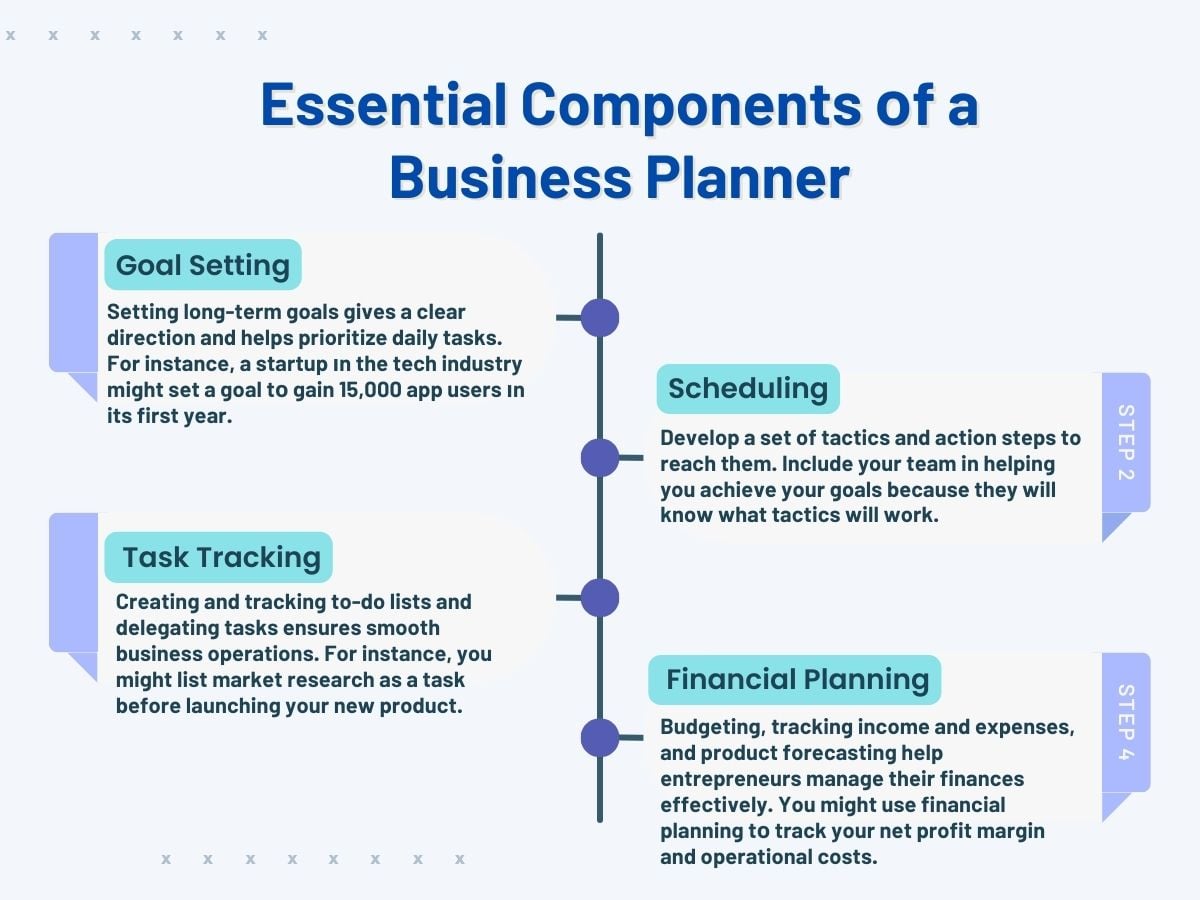
Essential Components of a Business Planner
No entrepreneur can disregard the benefits of a well-structured business planner. An effective planner offers a tangible frame of reference and serves as a guidepost for businesses navigating the unchartered waters of entrepreneurship. Here are the key elements to include in a successful business planner:
✔️ Goal Setting: Setting long-term goals gives a clear direction and helps prioritize daily tasks. For instance, a startup in the tech industry might set a goal to gain 15,000 app users in its first year.
✔️ Task Tracking: Creating and tracking to-do lists and delegating tasks ensures smooth business operations. For instance, you might listmarket research as a task before launching your new product.
✔️ Scheduling: An effective schedule keeps tasks on track and ensures efficient use of time. For example, you may schedule weekly meetings to discuss and analyze progress.
✔️ Financial Planning: Budgeting, tracking income and expenses, and product forecasting help entrepreneurs manage their finances effectively. You might use financial planning to track your net profit margin and operational costs.
Tailoring the Business Planner to Your Needs
It is essential to remember that business planners should not follow a 'one size fits all' approach. Make sure to tailor them to serve your specific business needs and goals. Here's how you can customize your business planner:
• Determine your business priorities: Focus on the most important tasks to achieve your goals. If market analysis is of paramount importance, prioritize it in your planner.
• Choose the right planning system: Are you more comfortable with physical planning or do digital platforms serve you better? For example, a tech-oriented fledgling company may prefer software like Trello for task management, while a traditional business might opt for a tangible business planner.
• Consider your individual preferences: Choose from various planner layouts, paper quality, and covers that make you comfortable while using it. If you're a visual person, for instance, go for a planner with lots of charts and diagrams.
Whether you're penning down your company description or identifying target markets, a mindfully curated and customized business planner will serve as an indispensable tool on your journey to building a successful venture.
Successful Business Owners Who Use Business Planners
Many successful business owners attribute their achievements to using a business planner. Here are some examples of successful companies that have used planners to achieve success in various aspects of their businesses:
1. Steve Jobs - Apple’s co-founder, Steve Jobs, was known for his innovation and creativity. He attributed his success to using a simple To-Do list to manage his daily tasks.
2. Richard Branson - Branson is famous for his work ethic and for being a successful entrepreneur. He incorporates a planner called "The Virgin Way" that helps him stay on track with his businesses.
3. Elon Musk - Musk’s secret weapon for productivity is his list-making habit. He uses a simple paper planner-based system to manage his daily tasks.
A Guide to Tools for Creating Business Planners
Creating a business planner requires careful thought and a tool that aligns with your business' objectives. Whether you prefer a digital planner or a traditional paper one, there's a myriad of resources available that cater to diverse needs. The type of business and its high-level strategies greatly influence the choice of a business planning tool. Here are some popular suggestions:
- Digital Business Planner Tools
There is no dearth of business planner software, apps, and platforms catering to those who prefer digital organization. Some popular platforms ideal for creating digital planners include:
✓ Asana:
Asana offers a streamlined, intuitive interface to manage tasks and to-do lists. It is a great tool for teamwork and collaboration, proving ideal for businesses that have remote teams or where multiple stakeholders are involved.
✓ Trello:
Trello is an excellent tool for visual planning. Its system of boards, lists, and cards allows for easy task tracking and assignment. Start-ups and tech companies often favor Trello for its user-friendly nature.
✓ Google Calendar:
Google Calendar is more than just a scheduling tool. It can be used for setting goals, planning events, and setting task deadlines. It is beneficial for both individual entrepreneurs and large teams because of its seamless integration with other Google services.
- Paper-Based Business Planner Tools
In contrast, for those who prefer the tangibility of traditional paper planners, these brands offer excellent options:
✓ The Day Designer:
The Day Designer provides a structured format to plan your day and achieve your goals. Its mix of goal-setting worksheets and daily agenda pages makes it well suited for businesses that require meticulous planning and scheduling.
✓Whitney English:
This brand offers particularly appealing planners for creative businesses with its visually pleasing design elements. The system includes goal setting pages, monthly overviews, and detailed weekly pages.
✓ Create Yourself:
These planners are about tailored productivity and personal development. They are ideal for businesses that focus on self-improvement and personal growth.
When selecting a system, be it digital or paper-based, it is not about picking the most popular one but the one that suits your specific business needs and personal preferences. Choosing the right tool can significantly streamline your planning process and increase your venture's chance of success.
Monitoring and Updating Your Business Planner
The aim of creating a business planner is to serve as a compass, guiding your venture toward defined goals. However, to function effectively, it's necessary to keep this planner current. Regular review and adjustment of your business planner ensure it remains a dynamic tool that adapts in tandem with the evolving business landscape. Here are some key points to keep in mind:
☑ Baseline Analysis:
Regularly compare your planner with actual business results. This assists in identifying trends and discrepancies, providing a basis for optimization of future activities.
☑ Periodic Reviews:
Determine a specific review cycle, such as monthly or quarterly. Consistency is key here as regularity helps to capture slight deviations, not just large changes.
☑ Alignment with Market Dynamics:
Your planner should adapt to market fluctuations. For instance, if market research indicates a new potential target market, update your business planner accordingly.
☑ Inclusion of New Goals:
Over time, the scope of your business could expand and incorporate new objectives. Update your planner with these new goals to pave the way for achievement and further growth.
☑ Flexibility in Approach:
If certain strategies are not producing the desired outcomes, don’t hesitate to alter them. Your planner should always be moldable to fit changes in your business approach.
Adhering to these practices ensures that your business planner remains an accurate reflection of your business trajectory, thus making it an effective guide toward achieving and surpassing your business objectives.
The Power of Business Planning
A business planner is more than just an organizational tool; it's an essential mechanism that enables entrepreneurs to map out their path to growth effectively. Planning and prioritizing daily tasks not only streamline operations but also keep businesses focused on progressing toward long-term visions.
Whether a digital interface or a tactile paper planner is more conducive to their workflow, entrepreneurs have a plethora of options and platforms to choose from, catering to every business type and working style. The key lies in personalizing the planner and aligning it with the business's unique needs and goals.
The process of choosing tools, decorating layouts or creating boards might seem tedious but it's inevitably worth the while. After all, this exercise can uncover insights into business processes, task management, and goal tracking which might have otherwise remained elusive.
Entrepreneurs must remember that a well-structured and regularly updated business planner is nothing less than a game changer. It provides a bird's eye view of the business and its trajectory, facilitating informed decisions and pivots. So, if you haven't already, it's time to invest time and effort into a business planner. Personalize it, make it a part of your daily routine and leverage its power for your business's long-term success.
Discover the Right Tools for Your Startup
Take our 2-minute quiz to find tools tailored to your specific needs and goals.
Take the QuizTakes only 2 minutes


