
Business Planning Sample: Guide for New Business Owners
Discover a simple guide to business planning for new entrepreneurs - from defining your idea to building a competitive strategy. Get started today!

Starting a new business can be an exciting venture, but it requires careful planning and strategizing to ensure long-term success. One crucial component of this process is creating a well-structured business plan. A business plan serves as a roadmap, outlining your goals, strategies, and financial projections. It not only guides your business decisions but also helps secure funding or investor support.
In this comprehensive guide, we will walk you through the steps of creating a business plan, providing practical insights and examples along the way. Whether you're a budding entrepreneur or an individual interested in starting a new business, this article will equip you with the necessary tools to embark on your entrepreneurial journey.
Business Plan 101: The Definitive Guide to Crafting your Enterprise's Blueprint
Often, the difference between a business that thrives and one that does not is a robust business plan. Understanding and crafting a plan can seem daunting, but it need not be.
At its essence, a business plan is a formal document that outlines your business idea, goals, strategies, and financial projections. This not only serves to define a clear direction for your enterprise but also assists in decision-making, underpinning the pillars of achieving your goals.
A comprehensive, or traditional business plan includes elements such as an executive summary, company overview, market analysis, a log of the products or services offered, marketing strategies, an operational plan, and financial projections.
Let's take a deeper look at the crucial sections of a business plan and provide a basic guide to drafting each. Thereby, transforming business planning from a mammoth task into a manageable journey.
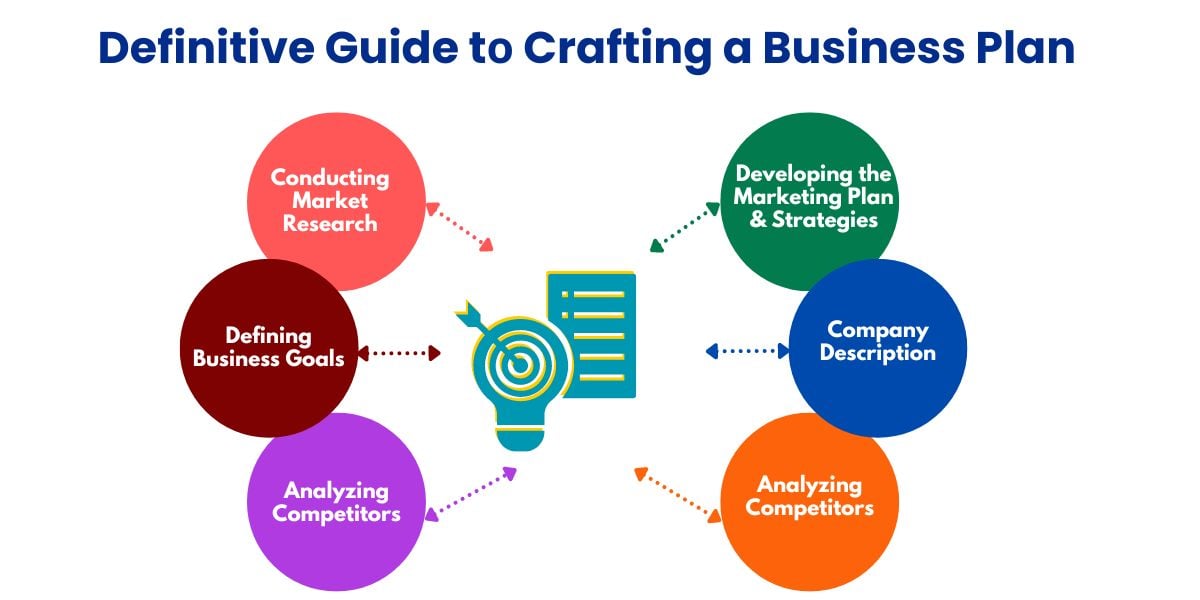
Conducting Market Analysis
Understanding your market is vital. Begin with conducting thorough market research. Identify potential customers and understand their needs. Delve into the lay of the land in your industry, paying keen attention to key industry players or direct competition. Such detailed reconnaissance will help refine your business idea and shape a unique selling proposition that caters to your identified target market.
Defining Business Goals
Begin crafting your plan by setting clear and specific goals—a crucial stage in the business planning process. The trick is framing both achievable and measurable goals. Whether it's about scaling up sales, branching to new markets, or launching new products, short-term and long-term objectives should be articulate, precise, and compelling.
Analyzing Competitors
Identifying rivals is not enough. An exhaustive examination of their strengths, weaknesses, and position in the market is key. Consequently, you can leverage their weak spots while learning from their successes and carve a niche for your business. By doing so, you devise effective strategies, solidifying your competitive advantage.
Developing the Marketing Plan & Strategies
Once you've identified your target market and defined your unique selling proposition, it's time to outline your marketing strategies. Whether it be branding, advertising, enhancing your online presence, or exploring the world of social media marketing, your strategies need to be effective and reflect your product. Tailoring your marketing plan to suit your customer base has its benefits and helps betters your proposition.
Projecting Financials
After an exhaustive qualitative analysis and strategy formation, focus shifts to quantitative analysis - estimating your business's financial performance over a defined period. This includes revenue projections, expenses, profit margins, and a wholesome cash flow analysis, serving as a reality check on your business's financial viability. It's also a vital step as it helps evaluate funding requirements, potential returns, and business feasibility.
Company Description
Last but not least, concisely articulate your company's description. Detail what your business aims to achieve, the problem it hopes to solve in the marketplace, and how the company plans to do so. This section helps strike a chord with potential investors, stakeholders, and employees, making everyone understand your enterprise's direction.
In the world of businesses and startups, a well-structured business plan becomes your roadmap to success. It lays down each stepping stone towards achieving your endeavor's goals while giving due importance to the potential pitfalls and competitors. So, let's begin the journey, one step at a time.
Diving Into Case Studies and Examples
To understand how crucial a meticulously designed business plan is, we plunge into a few case studies that demonstrate its power and potential. Take, for instance, ABC Health Tech, a realm-defining startup in the digital health sector. Their well-conceived business plan became a beacon guiding them to attract venture capital investments.
The company's assiduous market research, comprehensive competitive landscape appraisal, and robust financial projections - all cogent elements of a compelling business plan - painted a potent picture of their innovative product's growth trajectory.
As a result, they execute a highly successful funding round. By learning how to write a business plan, including a precise executive summary and other vital components, ABC Health Tech demonstrated that astute business planning could catapult a company toward exponential growth and progress.
Their success story serves as an inspiration and a tutorial for emerging entrepreneurs. It reaffirms that the discipline and insight that go into crafting a sharp, detailed, and compelling business plan connect innovation to investment.
Adapting Your Business Plan as the Company Evolves
When you're a new business owner, creating your initial blueprint for success often involves a traditional business plan. This document not only serves as a detailed company description and the foundation of your marketing plan but also outlines your marketing strategy and competitive advantage in a bustling marketplace. However, as your business grows and changes—and trust us, it will—so too should your business plan.
The evolution of a business can render the initial plans less relevant. You might find that your target market shifts, a new competitor has emerged, or perhaps a marketing strategy has yielded unexpected results. This is when business planning isn’t a “one and done” activity, but rather an ongoing endeavor.

As you adapt to changes, there's also an opportunity to streamline your business plan. The lean canvas approach comes in handy for growing businesses. Instead of sprawling documents, a lean canvas captures the essence of your business model in a more fluid, agile format which can be updated more regularly and with less effort.
Let’s explore a few essential elements within business planning that require your attention as your company grows:
♦️ Reflect on Your Company Description
As your business scales and diversifies, your initial company description might need a revamp. New products and services, additional value propositions, or even pivots in business direction should be reflected accurately to keep investors and stakeholders in the loop.
♦️ Revise Your Marketing Strategy and Plan
An effective marketing strategy is dynamic, changing as customer behavior and market conditions evolve. Tracking your marketing efforts and adjusting your marketing plan ensures you’re always ahead of the curve, making the most of your resources to continue building your brand.
♦️ Re-evaluate Your Competitive Advantage
The edge that set you apart at your launch may not maintain its sharpness over time. By regularly analyzing your competitive advantage, you can adjust and redefine what makes your company uniquely appealing to customers.
♦️ Update Financial Projections
The financial part of planning is where the nuts and bolts of strategy translate into numbers. It’s vital to update your financial plans regularly to reflect the current state of your business and project future growth accurately. This continual revision ensures that you are always in tune with your financial health and prepared for investments or expansions.
Remember, a business plan is not set in stone. It's a living document that evolves as you gain more knowledge about your operations, market, and customers. Regularly revisiting and revising your business plan is crucial—not only for the survival of your business but for its thriving growth. Stay agile, stay informed, and keep planning!
Crafting Business Plans That Work
Creating an exhaustive business plan might seem laborious, but the benefits it accords are worth the effort. A robust business plan heightens your chances of success by providing a well-defined roadmap for informed decision-making. More importantly, it serves as a persuasive tool when vying for funding or attracting potential investors, as it underscores your preparedness, commitment, and growth potential. Forward-thinking entrepreneurs know the value of an inspiring and realistic business plan—it's a passport to success running a small business.
A well-structured business plan is a critical tool for new business owners. It outlines your goals, strategies, and financial projections, acting as a roadmap for success. Through its pages, you can express your business's mission statement, problem statement, and solution statement clearly, offering a narrative that resonates with stakeholders.
For those embarking on the entrepreneurial journey, remember that your business plan is more than a document—it's a living blueprint that grows with your business. It should guide your marketing and sales strategies, reflecting your aspirations and detailing the steps you'll take to achieve your business goals.
By following the step-by-step guide provided in this article and leveraging the resources available, such as Startuptools.ai, you can create an effective business plan that will set you on the path to entrepreneurial success. Remember, investing time and effort into creating a comprehensive business plan is an investment in the future of your business.
As you draft your plan, draw upon your passion. Allow it to fuel your creativity and guide your vision. New business owners and startups, let motivation be the wind beneath your wings as you soar towards your dreams.
Your determination today delineates the achievements of tomorrow. So, as you plot out your objectives and strategies, see each line of your business plan as a step closer to realization—a testament to the difference your business will make in the marketplace.
Discover the Right Tools for Your Startup
Take our 2-minute quiz to find tools tailored to your specific needs and goals.
Take the QuizTakes only 2 minutes


