
Business Planning Strategies: Success as an Entrepreneur
Unlock the secrets to successful entrepreneurship with our comprehensive guide on business planning strategies.

When you start a new business, there are very important steps to make it successful. First you have to develop an operating plan. If you manage your business well, you will be better able to deal with the problems of the marketplace and achieve sustained growth.
Setting Clear and Achievable Goals in Business Planning
When you start a new business, it's important to set goals for yourself so you know what you want to achieve. Your short-term goals are things like getting customers, and your long-term goals are things like increasing profits or reaching new markets. You can use your goals as a guide for decision-making and resource allocation when you're running your business.
Setting clear and achievable goals holds the key to sustained growth and success in any business venture.
How to Set Clear and Achievable Goals for Sustained Business Growth and Success
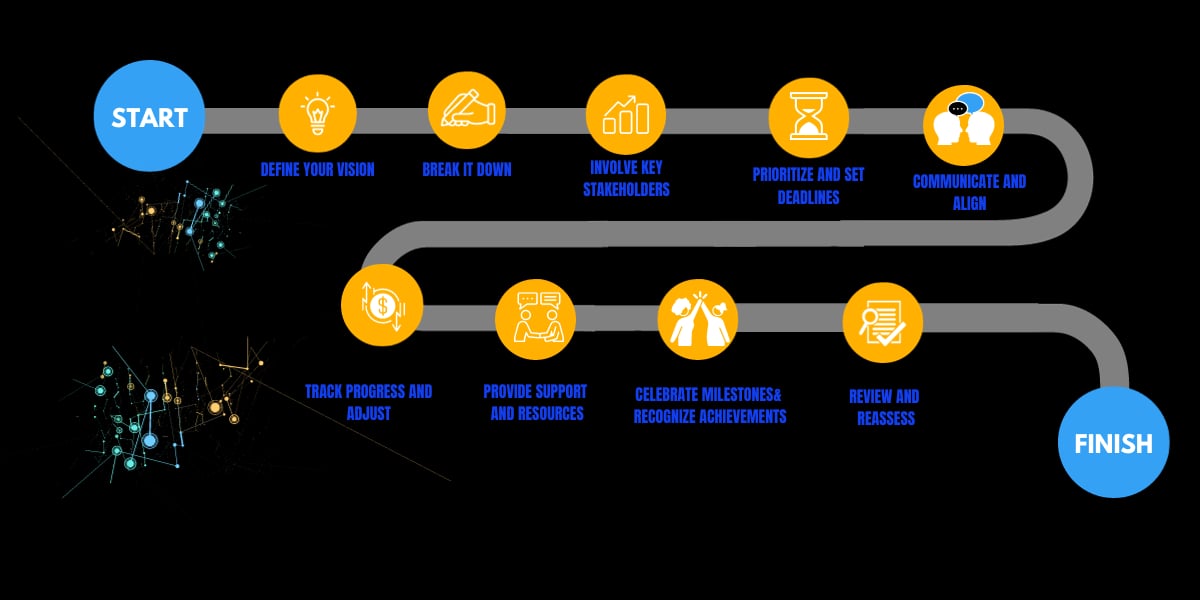
◾ Define your vision: Start by defining your long-term vision for the business. This will help you set your goals. This will provide a North Star for setting your goals.
◾ Break it down: Break your long-term vision into smaller, actionable goals. These smaller goals should be specific, measurable, achievable, relevant, and time-bound (SMART goals). They should align with your overall vision and be manageable for your team.
◾ Involve key stakeholders: Engage key stakeholders, such as managers, employees, and even customers, in the goal-setting process. Their input can provide valuable insights and ensure that goals are realistic and meaningful to the organization.
◾ Prioritize and set deadlines: Prioritize your goals based on urgency and importance. You need to make a list of what you want to and set deadlines and try to finish them by those deadlines. This will help create a sense of focus and urgency within the organization.
◾ Communicate and align: Clearly communicate the goals to all members of the organization. Ensure that everyone understands the goals, why they are important, and how they contribute to the overall vision. Align individual goals with team and organizational goals to foster unity and collaboration.
◾ Track progress and adjust: Regularly monitor and track progress towards achieving the goals. Use key performance indicators (KPIs) to measure success and identify areas that require improvement. Make necessary adjustments to goals, strategies, or resources if needed.
◾ Provide support and resources: Ensure that teams have the necessary resources, tools, and support to achieve their goals. This may include training, technology, mentoring, or additional staffing. Identifying and addressing any obstacles or barriers will help increase the likelihood of goal achievement.
◾ Celebrate milestones and recognize achievements: Celebrate milestones and achievements along the way. Recognize and appreciate the efforts of individuals and teams who contribute towards reaching the goals. This boosts morale, motivation, and fosters a positive environment.
◾ Review and reassess: Every now and then, we stop doing the things we were doing. We make sure it is still the right thing to do. Modify goals if necessary and set new ones to continue driving growth and success.
Remember, setting clear and achievable goals requires continuous effort and commitment. By following these steps, you can establish a goal-setting framework that promotes sustained business growth and success.
Market Research
Thorough market research is essential for understanding the target audience, competition, and industry trends. By conducting market research, entrepreneurs can identify gaps in the market, niche variations, and consumer preferences. Determine your target market demographics, psychographics, and purchase behaviors. Analyze competitors' strengths and weaknesses to gain a competitive advantage.
Secrets to Effective Market Research
🔹 Identify your target audience: Determine who your ideal customers are, their demographics, interests, and pain points. This will help you tailor your marketing efforts effectively.
🔹 Conduct surveys and questionnaires: Create surveys or questionnaires to gather insights from your target audience. Ask relevant questions about their preferences, needs, and expectations from products or services similar to yours.
🔹 Analyze competitor's strategies: Evaluate your competitors' marketing strategies, branding, pricing, and product offerings. You can conduct a SWOT analysis. This means assessing the strengths, weaknesses, opportunities, and threats involved.
🔹 Monitor online trends: Stay updated with the latest trends and changes in your industry. Follow relevant blogs, social media platforms, industry publications, and forums to identify emerging preferences or demands.
🔹 Utilize market research tools: You can determine how many people are searching for something by using online tools. By learning how many people are searching for something, you can know a lot about it.
🔹 Conduct focus groups or interviews: Ask people what they think of your product. It is important to ask people what they think before you make plans. This qualitative data can be invaluable for developing effective marketing strategies.
🔹 Analyze customer feedback: Listen to what the customers say about your product and make changes.
🔹 Monitor social media discussions: Track social media discussions and conversations related to your industry, brand, or competitors. This will help you gauge customer sentiment, identify trends, and discover potential areas for improvement.
🔹 Seek market opportunities: People who want to buy and sell things sometimes need help finding each other. We are trying to help companies to find more customers by using big data. By catering to these underserved areas, you can gain a competitive advantage and unlock new opportunities for business expansion.
🔹 Utilize market intelligence: Determine how many people are in the market. We use statistics to help us know how much money we can make in the market. This data-driven approach can inform your decision-making process and help you make strategic business decisions.
🔹 Validate your ideas: Before fully launching a new product or service, learn facts by reading reports and statistics. Lots of people want to help you test your product and give you their opinion. They might help you to improve it.
🔹 Keep track of industry influencers: Identify key influencers or thought leaders in your industry. Follow their insights, engage with their content, and collaborate with them if possible. This can help you stay updated with industry trends and gain visibility within your target audience.
🔹 Adapt and iterate: Market research should be an ongoing process. Monitor the market, consumer behavior, and feedback to make necessary adjustments to your marketing strategies, products, or services.
🔹 Seek professional assistance: If you lack sufficient knowledge about the market, it is advisable to seek professional assistance. When you need ideas about how to do something, it is good to get advice from someone who has already done it.
🔹 Stay customer-centric: Remember that market research is ultimately about understanding and meeting customer needs. Keep the customer at the center of your decision-making process to drive business success.
Financial Forecasting
Accurate financial forecasting is vital for creating a realistic budget, securing financial resources, and estimating revenue projections. Develop a comprehensive financial plan that includes sales forecasts, expense budgets, and cash flow projections. This will help you gauge financial viability, set pricing strategies, and plan for growth.
Top Tips for Accurate Financial Forecasting
🔶 Gather and Analyze Relevant Data: Collect historical financial data, market trends, industry benchmarks, and any other relevant information that can aid in accurate forecasting. This data will serve as the foundation for your projections and help you make informed decisions.
🔶 Utilize Forecasting Methods: Use a combination of forecasting methods, such as trend analysis, regression analysis, or time-series forecasting, to generate reliable financial projections. Consider both quantitative and qualitative factors to ensure a comprehensive forecast.
🔶 Regularly Review and Update Forecasts: Sometimes things change, so you have to update your financial forecast. It needs to be accurate. Update on a monthly or quarterly basis to maintain accuracy and relevance.
🔶 Involve Key Stakeholders: Collaborate with relevant departments and key stakeholders, including sales, marketing, operations, and finance teams, to gather input and insights for your financial forecasts. This cross-functional approach ensures a comprehensive and realistic projection.
🔶 Plan for Different Scenarios: In addition to the base-case forecast, develop forecasts for various scenarios, such as best-case, worst-case, or moderate-case scenarios. This helps you assess the potential impact of different situations and make contingency plans to mitigate risks.
By following these tips, you can improve the accuracy and reliability of your financial forecasts. This will aid in better budgeting, financial decision-making, and long-term planning, ultimately contributing to the success and stability of your business.
Risk Management
Companies can't last forever unless they figure out how to manage risks and protect themselves so they will be around for a long time. Identify potential risks such as market fluctuations, supplier disruptions, or changes in regulations. Develop contingency plans and alternative strategies to address these risks, ensuring business continuity even in adverse circumstances.

Essential Tips for Effective Risk Management:
Conduct a Comprehensive Risk Assessment: Identify and analyze potential risks that could impact your business. This includes external factors such as economic trends, competition, and regulatory changes, as well as internal factors like operational vulnerabilities and resource limitations.
Prioritize Risks and Establish Mitigation Strategies: We have to decide which risks are the most important. We have to figure out how to handle them. You should do something about the riskiest thing first, because then you can worry less about the other risks.
Regularly Review and Update Risk Management Plans: When things change, we change our plans. Conduct routine reviews of your risk management plans, making necessary adjustments to address emerging risks or changing business conditions.
Foster a Culture of Risk Awareness and Responsiveness: To help people, we have to understand which ones might be in danger. People need to know about risks so they can be careful. Make sure you're looking out for bad things that could happen. Create channels for effective communication and collaboration to foster a proactive approach to risk management.
Automate and Monitor Risk Management Processes: Utilize technology and automation tools to streamline your risk management processes. Monitor key risk indicators and set up alerts to quickly identify deviations from expected performance. Regularly assess the effectiveness of your risk management efforts and adjust your strategies accordingly.
Nurture a Strong Team
Creating a business plan is not a solo endeavor. It might be best to have a few different people working on separate parts of the plan. It would be smart to trust people with the skills to come up with ideas that make sense for your business.
5 Key Strategies for Cultivating a Strong Team
Clearly Communicate the Vision: Ensure that every team member understands the overall vision and goals of the business plan. Encourage your team members to speak up.
Encourage Open and Honest Communication: Make sure everyone on the team works well together and knows what they are supposed to do. Our team members should always tell the truth. People (teams) need to talk to each other when they have ideas, concerns, or feedback.

Foster Trust and Empowerment: Trust forms the foundation of a strong team. Delegate responsibilities and provide team members with the autonomy to make decisions and contribute their unique expertise. Recognize and acknowledge their contributions, supporting their growth and development within the team.
Foster Collaboration and Interdependence: Involve multiple team members in the risk assessment process to gather diverse perspectives and insights. Encourage open and honest discussions to identify and evaluate potential risks comprehensively. This collaborative approach enhances risk identification and helps in developing more effective mitigation strategies.
Embrace Diversity and Inclusion: Recognize and value the diversity within your team. Capitalize on the different strengths, skills, and perspectives each team member brings to the table. Encourage an inclusive environment that appreciates and respects individual differences, fostering creativity, innovation, and higher productivity.
Challenges and Finding Motivation in Business Planning Strategies
Entrepreneurs inevitably face challenges during the business planning process. A common obstacle is the fear of failure or uncertainty. Overcome this by seeking mentorship, networking with experienced entrepreneurs, and embracing a growth mindset. Iterate and adapt your business plan as needed, always remaining open to feedback and new opportunities.
Business planning helps you start a new business so it's easier to be successful. A business plan shows people that your venture is viable so they can invest in it, or rent or sell something to you. It also shows you how to be successful over time and makes it easier to grow (expand) or sell your business.
Successful entrepreneurship requires meticulous business planning strategies. By setting clear goals, conducting market research, accurately forecasting finances, and implementing effective risk management, entrepreneurs can enhance their chances of success. Overcoming challenges and embracing the long-term benefits, entrepreneurs can confidently navigate the journey of starting a new business.
Remember, successful businesses are built on solid foundations, and strategic business planning is the catalyst for sustainable growth.
Discover the Right Tools for Your Startup
Take our 2-minute quiz to find tools tailored to your specific needs and goals.
Take the QuizTakes only 2 minutes


