
Essential Parts of Business Planning
Discover the essential parts of business planning for entrepreneurs. Set goals, conduct market research, and develop a financial and marketing strategy. Explore startuptools.ai for intuitive support.

In the fast-paced world of entrepreneurship, strategic planning serves as the bedrock for success. An effective business plan not only maps out the path to accomplishment but also acts as a compass for decision-making. This article will uncover the vital parts of business planning, equipping aspiring entrepreneurs with the knowledge they need to launch their ventures with confidence.
Goal Setting
An important part of successful business planning includes setting both short-term and long-term goals. These goals offer valuable guidance and focus for your company, helping you stay on track towards achieving your larger objectives.
Example: A tech startup might set a goal to acquire 10,000 active users within the first six months of launch by implementing targeted marketing campaigns and user-friendly features.
Short-term goals are immediate targets that are achievable within a period of up to 12 months. These could include:
• financial targets such as attaining a certain level of sales
•marketing aims like growing your social media presence
• operational objectives such as launching a new product or service
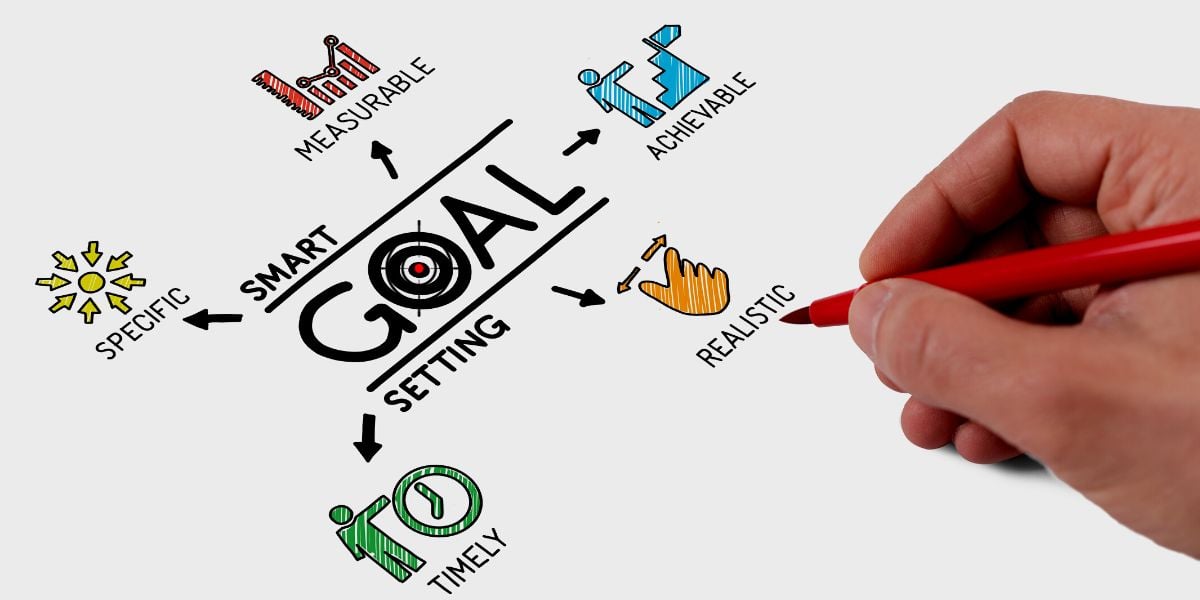
💡 Tip: Use SMART objectives (Specific, Measurable, Achievable, Relevant, Time-bound) to structure your short-term goals.
Long-term goals, on the other hand, are the larger, overarching objectives that you aim to achieve in the next three to five years. These should align with your company’s mission and vision. They might encompass ambitions related to financial growth, market share acquisition, or your business's expansion or diversification.
💡 Practical tip: Utilize AI-powered analytics tools to analyze market trends and accurately forecast your abilities to achieve long-term targets.
Breaking Down Goals Into Manageable Tasks
Once you've defined your short-term and long-term goals, it’s crucial to break them down into manageable tasks. This process, often referred to as creating 'action steps', enables you and your team to focus on specific, achievable tasks that collectively lead to achieving the larger goal.
✅ Create a task list: Identify what needs to be done to accomplish each goal. Assign each task to a team, department, or individual, ensuring accountability and ownership.
✅ Set realistic timelines: Each task should have an associated timeline that accommodates potential challenges without creating unnecessary pressure.
💡 Tip: Consider using project management and collaboration tools, such as Asana or Trello, to keep everyone on track. These AI-backed solutions can help schedule tasks, assign roles, and monitor progress efficiently.
Goal setting serves as a compass for your business, guiding your strategies and decisions. Whether your ambitions are financial growth, market dominance, or strategic growth milestones, breaking them down into recordable, achievable tasks and setting clear timelines is key.
Keep your eyes on the goals because with the right planning, they're much closer than they may appear.
Market Research
One of the main pillars of efficient business planning is thorough market research. Understanding your industry trends, target audience behavior, and competitors are critical steps in shaping an effective business strategy and product/service offer.
a. Conduct thorough market research to gain insights into industry trends, target audience behavior, and competitor analysis.
b. Identify gaps and opportunities in the market to differentiate your business and tailor strategies accordingly.
How to Conduct Thorough Market Research
Market research is a process of acquiring, analyzing, and interpreting information for better understanding of the market in which your company operates. It includes the following:
Industry trends: Discover what’s currently happening in your industry. Keeping an eye on trends will help you anticipate changes and devise strategies to stay competitive.
Target audience behavior: Understand your prospective customers’ preferences, needs, and purchasing habits. Knowing what motivates your audience can help shape your products, services, and marketing strategy.
Example: A new bakery might identify a growing demand for gluten-free pastries in the local market and decide to specialize in unique gluten-free recipes to cater to this niche.
💡 Tip: Social listening tools use AI to track conversations around relevant topics, brands, and products, thus providing insights into customer behavior and preferences.
Competitor Analysis: Evaluate your competitors’ strengths and weaknesses. Understanding their strategies can inform your own unique approach to the market.
💡 Practical tip: Use AI tools like SEMrush or SimilarWeb to gather in-depth competitor information, from keyword usage to social media engagement.
Identifying Gaps and Opportunities
One of the primary objectives of market research is identifying gaps and opportunities in the market. Once you've gained a deeper understanding of your industry, audience, and competitors, you can start looking for underserved areas or emerging trends in your market.
For example, a new bakery might identify a growing demand for gluten-free pastries in the local market. By conducting thorough market research, they know their potential customers' needs and can tailor their product offering accordingly. In this case, they might decide to specialize in creative, delicious gluten-free recipes to cater to this niche.
💡 Tip: Keep an eye out for sub-sections of your market where demand exceeds supply. That’s a ripe opportunity for your business to meet customers' needs better than your competitors.
Financial Planning
Every successful business venture is underpinned by meticulous financial planning. Part of this planning involves knowing your revenue streams, understanding your expenses, accurately projecting your cash flow, and being savvy about funding.
🍀 Develop a Comprehensive Financial Plan
• Revenue streams: Identify all the different ways your business expects to generate income. It could be through product sales, providing services, licensing, or subscriptions, among other things.
• Expenses: Consider every cost involved in running your business, from operational and production costs to marketing and employee salaries. An accurate depiction of your expenses will ensure you allocate funds wisely, keeping your business financially healthy.
💡 Practical tip: AI and machine learning tools can help automate business expense tracking, providing precise reports and insights to optimize spending.
• Cash flow projections: This involves forecasting the amount of money that will be entering and leaving your business in the future. It gives you the ability to foresee periods of cash shortages or surpluses and plan accordingly.
🍀 Consider Different Funding Sources
• Loans: Traditional loans from banks or online lenders can be an excellent source for getting your business off the ground or maintaining cash flow.
💡 Practical tip: Be sure to take into account the interest rates and repayment terms before settling for this option.
• Grants: Depending on your business type and location, you may be eligible for grants from government bodies or other organizations.
• Bootstrapping: This refers to self-funding your business, often through personal savings or by working another job. While it might involve some personal risks, bootstrapping provides full control over your business.
💡 Practical tip: The key to successful bootstrapping is to keep overheads as low as possible and prioritize spending.
For example, a small consulting firm could forecast its revenue based on hourly rates and projected client demand. In addition, they would factor in operational costs like office space, employee salaries, and marketing expenses to understand the full scope of their business expenses.
Data-driven financial planning coupled with insightful cash flow management can sustain your business's growth and profitability.
Marketing Strategies
A well-thought-out marketing strategy is indispensable to a successful business. It guides your marketing efforts, ensuring they resonate with your target audience and promoting your product or service effectively.
a. Identify target customers and create customer profiles to guide marketing efforts.
Identify target customers: Your marketing efforts should be directed at the people most likely to purchase your product or service. Identify the demographic characteristics, preferences, and behaviors of your ideal customer.
Create customer profiles: These are general representations of your ideal customers, also known as buyer personas. It might include details about their demographics, interests, buying behavior, and pain points.
b. Develop a marketing strategy that incorporates online and offline channels, leveraging social media, content marketing, advertising, and networking.
Online Channels: These include social media, email marketing, content marketing, SEO, and online advertising. Your choice of channels depends on where your audience spends most of their time online.

Offline Channels: This might involve direct mail campaigns, print and broadcast advertising, networking events, and physical promotional materials.
💡 Practical tip: Keep track of all your offline marketing initiatives and measure their impact on your overall business growth.
For example, an e-commerce store specializing in sustainable fashion might focus on social media campaigns to highlight their eco-friendly practices. They might show behind-the-scenes footage of their sustainable production process or feature customer testimonials discussing their eco-friendly benefits. Additionally, they could engage with influencers in the sustainability space to extend their reach to environmentally conscious consumers.
Effective marketing necessitates a deep understanding of your target consumers and a multifaceted approach to outreach. Incorporating both online and offline channels into your marketing strategy ensures a wider reach and higher customer engagement.
Operational Planning
Operational planning translates your company's strategic objectives into actionable tasks, setting the groundwork for your day-to-day business operations. This involves meticulously organizing key processes such as supply chain management, technology infrastructure, human resources, and logistics.
🔹 Define the key operational processes, including supply chain management, technology infrastructure, human resources, and logistics.
Supply chain management: Design a robust supply chain that ensures your products' timely creation, shipment, and delivery. Effectively managing this process can lead to significant cost savings and enhance customer satisfaction.
Technology infrastructure: Your technological setup should support and improve your business operations. This might involve software for automating tasks, systems for data management, networks for internal communication, or platforms for digital marketing.
Human resources: Determine your staffing needs, from the roles required to the skills necessary for those roles. Develop protocols for recruitment, training, and employee retention.
Logistics: Efficient logistics planning involves everything from procurement and material handling to warehousing and transportation. A robust logistical plan ensures timely, cost-effective delivery of your products/services.
🔹 Develop contingency plans to address potential risks or disruptions in operations.
Example: A food delivery startup might create a streamlined system for order management, food preparation, and delivery logistics to ensure efficient operations and customer satisfaction.
Successful business planning encompasses various essential components. From goal setting to operational planning, each part plays a crucial role in building a sustainable and thriving business.
Operational risks or disruptions can come from various sources—supplier issues, technology failures, manpower shortages, or unexpected market changes. Therefore, having well-thought-out contingency plans is crucial to ensure your business can quickly adapt and recover.
Consider a manufacturing company experiencing supply chain disruptions due to an unforeseen supplier issue. With a contingency plan in place, they might have backup suppliers to ensure their operations continue running smoothly.
Operational planning is a key component of an effective business strategy. It ensures that all business resources - people, process, and technology - are used optimally to achieve strategic goals.
Management and Staffing
👨👨👦👦 Importance of Management Experience
Business Oversight: Experienced management provides the essential capability of overseeing various business operations, ensuring tasks are appropriately coordinated and the business goals are met.
Decision-Making: Management's experience leads to insightful and informed decision-making which can significantly impact the company’s profitability and growth.
Problem-Solving: Seasoned managers are often well-equipped to deal with unforeseen problems or conflict, drawing on their past experiences and skills to find adequate solutions.
Team Leadership: Effective managers motivate staff, inspire teamwork, and foster a positive working environment. Their leadership can help retain employees and promote workplace satisfaction.
Strategic Planning: Managers use their knowledge and experience to set realistic goals, find new ways to grow the business, and avoid problems.
💡 Practical tip: Implement a continuous learning program for managers to keep them updated in the latest management trends and techniques.
👨👨👦👦 Staffing Decisions
Recruitment Strategies: Successful companies design their recruitment strategies to attract qualified and compatible employees. This might involve leveraging online job platforms, social media, employee referrals, or recruitment agencies.
Training: To help employees learn important skills for their jobs, companies should have training programs when people start working and continue offering them as they work.
This training can teach people how to do their jobs well, how to communicate and work with others, and how to understand how the company works. When employees get better at their jobs and understand how everything works, they can do even better work for the company. That's why it's important for businesses to keep investing in training for their employees.
💡 Tool Tip: E-learning platforms can facilitate wide-ranging, customizable, and convenient training programs.
Workforce Management: To optimize productivity, businesses must manage work schedules, assign tasks efficiently, and ensure an equitable distribution of workload. This also entails managing leave, overtime, and employee performance.
Thee role of management and staffing in business planning is crucial. Experienced managers help guide teams, facilitate essential decision-making, resolve conflicts, and lead strategic planning. Moreover, well-thought-out recruitment, training, and workforce management ensure a high-performing and positive work environment.
Milestones and Implementation Timeline
Setting milestones and creating an implementation timeline are pivotal steps in business planning. They are crucial for charting out the business's path and measuring its progress towards its stated objectives.
🎯 Setting Realistic and Measurable Objectives
SMART Goals: The first step in planning should be to establish SMART (Specific, Measurable, Achievable, Relevant, Time-bound) goals. This approach enables you to define clear, actionable objectives and supports efficient tracking and evaluation.
Hierarchy of Objectives: Chart out your goals at different levels - organization level, department level, team level, and individual level. This hierarchical view ensures alignment of objectives across the business and aids in realizing the overarching vision.
Metrics for Success: Determine how you'll measure success for each objective. These could be qualitative (improving customer satisfaction) or quantitative (boosting sales by 20%). Using Key Performance Indicators (KPIs) can help monitor progress over time.
Review & Adjust: Regularly review the objectives and adjust as necessary. This is critical in accommodating changes in business strategy, market conditions, or dealing with unexpected barriers.
🎯 Creating an Implementation Timeline
Define Stages: Break down the business plan into key stages or phases. For each phase, specify the tasks that need to be accomplished. This could include market research, product development, marketing and sales, and review and feedback.
Timeline: For each task or stage, determine the start and end dates. Ensure that these timelines are realistic, given the resources at your disposal and the complexity of each task.
Prioritize: Not all tasks are of equal importance. Some are interdependent. Understand these relationships and prioritize tasks based on their impact on overall project success and their dependencies.
Assign Roles: Clearly assign responsibilities for each task or phase. This ensures accountability and lays a clear path for progression.
Monitor & Adjust: Keep track of how your project is going compared to your plan. If things take longer or are done faster than planned, change your plan. If delays occur, or if tasks are completed ahead of schedule, adjust your timeline accordingly.
By setting realistic goals and making a detailed timeline, you are setting your company up for success. These tools help you manage your team's work and track your progress. This way, you can make changes to your plan as needed to reach your goals.
Charting Your Way to Triumph with Business Planning
Business planning is the foundation of any successful business. It helps you set clear and achievable goals, identify new opportunities, and anticipate and mitigate risks.
In today's tech-driven world, there are many AI tools that can help you with business planning. These tools can automate tasks such as market research, financial forecasting, and risk assessment, freeing up your time to focus on more strategic initiatives. They can also provide valuable insights into your customers, competitors, and industry trends, helping you make better decisions about your business.

No matter what stage you're at in your business journey, business planning is an ongoing process. It's important to regularly review and update your business plan to ensure that it's aligned with your current goals and objectives. This will help you stay focused on the right things and adapt to changes in the market.
As Eric Ries, author of The Lean Startup, says, "Startup success can be engineered by following the process, which means it can be learned, which means it can be taught." Business planning is a key part of the startup process, and it's something that all entrepreneurs should take the time to do.
Discover the Right Tools for Your Startup
Take our 2-minute quiz to find tools tailored to your specific needs and goals.
Take the QuizTakes only 2 minutes


