
How to Set Up Operations for a New Startup
A comprehensive guide for new startup owners to establish their operations successfully and navigate the challenges of running a business.

Establishing operations is a crucial process that lays the foundation for a new business. As a new startup owner, you may find yourself navigating legal, financial, and operational complexities. To ensure a successful launch, it is important to manage these challenges effectively.
Establishing Operations guide will give you practical tips and step-by-step guidance, in any industry. This article covers everything you need to know to launch a successful startup.

Defining Establishing Operations
Establishing operations refers to the process of setting up the foundational aspects of a new business. It involves identifying and implementing the necessary procedures, protocols, and resources needed to operate effectively and achieve desired goals. By taking the time to establish operations properly, you can minimize risks and maximize the likelihood of success.
Developing a Winning Marketing and Branding Strategy for Your Startup
Launching a startup is exciting but requires careful planning and strategy for long-term success. Developing an effective marketing and branding strategy is crucial for creating a strong foundation for your business. This article will help you create a winning marketing strategyfor your startup.
1. Define Your Target Audience:
Understanding your target audience is paramount to tailoring your marketing efforts. Identify who your ideal customers are, their demographics, interests, and pain points. Conduct market research and gather insights to refine your messaging and offerings to align with the needs and preferences of your target audience.
2. Craft a Unique Value Proposition:
Differentiate your startup from competitors by creating a unique value proposition. Clearly articulate how your product or service solves a specific problem or fulfills a need better than others. Highlight the key benefits and advantages that set your startup apart, as this will become the core message of your branding strategy.
3. Build a Strong Brand Identity:
Establishing a consistent and compelling brand identity is crucial in creating a lasting impression in the minds of your audience. Develop a strong visual identity including a logo, color scheme, and typography that visually represent your brand. Create brand guidelines to ensure consistency across all marketing materials, both online and offline.
4. Utilize Digital Marketing Channels:
Digital marketing is an effective and cost-efficient way for startups to reach their target audience. Leverage various digital channels such as social media, content marketing, search engine optimization (SEO), and email marketing to create brand awareness, engage with your audience, and drive traffic to your website. Develop a content strategy that provides valuable information, showcases your expertise, and addresses the pain points of your target audience.
5. Embrace Influencer Marketing:
Influencer marketing has gained significant traction in recent years. Collaborating with influencers relevant to your industry or niche can help amplify your startup's visibility, credibility, and reach. Identify influencers who align with your brand values and have an engaged audience to promote your products or services.
6. Monitor and Refine Your Strategy:
Continuously monitor the performance of your marketing efforts and implement analytics tools to gather valuable data. Analyze key metrics such as website traffic, conversion rates, social media engagement, and customer feedback. Use this data to refine your marketing strategy, optimize campaigns, and capitalize on what works best for your startup.
The Importance of a Solid Business Plan
A business plan is a crucial document that outlines the goals, strategies, and future aspirations of a company. It serves as a roadmap for success, guiding entrepreneurs and business owners towards their desired outcomes. While some may consider it a tedious task, a solid business plan is essential for various reasons. Here are a few key reasons why having a well-thought-out business plan is of paramount importance.
Set Clear Goals and Objectives
The main advantage of a business plan is that it helps you set clear goals and objectives. By creating a roadmap for your business, you can set specific targets and outline the steps needed to achieve them. This clarity allows you to track your progress and stay focused on your objectives, helping you avoid feeling overwhelmed or losing direction.
Secure Funding and Investments
When looking for funding or investment, a strong and well-organized business plan is essential. Investors and financial institutions want to know about your business model, market analysis, and growth projections. A solid business plan shows your dedication, expertise, and knowledge of the industry, which improves your chances of getting the funding you need to start or grow your business.
Identify Strengths and Weaknesses
A business plan allows you to conduct a thorough evaluation of your strengths and weaknesses. By carefully analyzing your target market, competition, and internal resources, you can identify areas for improvement and develop strategies to capitalize on your strengths. This introspection enables you to position your business advantageously and make the necessary adjustments to optimize your chances of success.
Manage Risks and Challenges
Every business has risks and challenges. With a carefully crafted business plan, you can recognize these potential obstacles and create backup plans to lessen their impact. This proactive approach allows you to anticipate and resolve issues, ensuring that your business remains on track and resilient in difficult times.
Attract Key Stakeholders
A business plan not only serves as a roadmap for your company but also plays a vital role in attracting key stakeholders such as customers, employees, partners, and suppliers. It conveys your vision, mission, values, and unique selling propositions, which builds trust and confidence among stakeholders. Moreover, a business plan showcases your market research, competition analysis, and target audience, making it easier for potential customers and partners to understand the value your business brings to the table.
Measure Success and Progress
Lastly, a solid business plan serves as a benchmark to measure the success and progress of your business over time. By comparing actual performance against the goals outlined in your plan, you gain valuable insights into areas that need improvement or strategies that require adjustment. This feedback loop allows you to make informed decisions, pivot when necessary, and ensure that your business remains relevant and profitable in an ever-changing market.
Building a Strong Team and Hiring the Right Employees
Having a strong and capable team is crucial for the success of any business. Building a team of talented individuals who align with your organization is essential for achieving business goals and creating a positive work environment. In this article, we will discuss the importance of building a strong team and hiring the right employees.
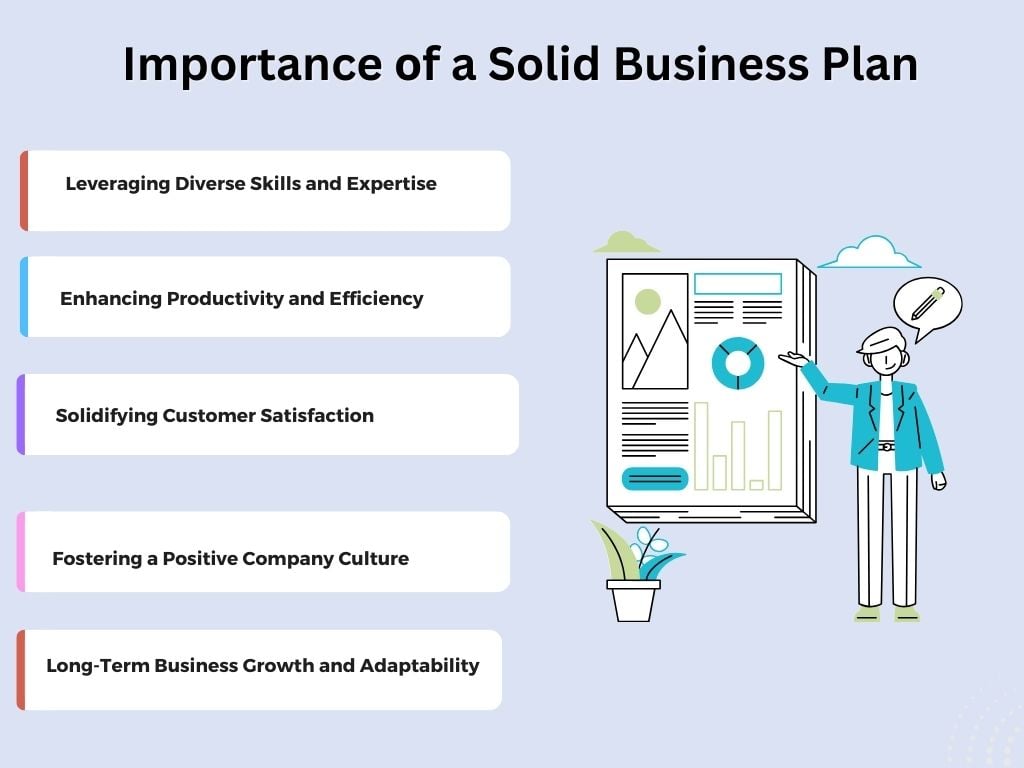
✅ Leveraging Diverse Skills and Expertise
A strong team consists of individuals with diverse skills and expertise. Hiring employees from different backgrounds and abilities expands the pool of knowledge and experience available to businesses. This diversity fosters problem-solving, creativity, and innovation within the team, enabling a well-rounded approach to addressing challenges. Each team member brings a unique perspective and skill set, enhancing decision-making and the effectiveness of the organization as a whole.
✅ Enhancing Productivity and Efficiency
Hiring the right employees improves productivity and efficiency in businesses. A strong team consists of individuals with the required skills, experience, and work ethic to contribute to the organization's success. Motivated employees who share the company's goals and values work together towards a common purpose. This team synergy leads to increased productivity, effective collaboration, and efficient workflow processes.
✅ Fostering a Positive Company Culture
Building a strong team involves more than just skills and qualifications; it also requires a positive company culture. When hiring, businesses should look for individuals whose values and attitudes align with the company's mission and vision. Employees who are passionate and share the same values create a supportive work environment. This positive culture encourages teamwork, employee engagement, and a sense of belonging, resulting in higher satisfaction and retention rates.
✅ Solidifying Customer Satisfaction
A strong team leads to improved customer satisfaction. When employees are well-suited for their roles and collaborate effectively, they can meet customer needs and provide exceptional service. Hiring employees with strong interpersonal skills and a customer-centric mindset ensures customers receive excellent support and care. Satisfied customers lead to increased loyalty and positive referrals, benefiting the growth and success of the business.
✅ Long-Term Business Growth and Adaptability
Building a strong team and hiring the right employees is not only about the present but also about the future. By investing in talented individuals who are committed to personal growth and development, businesses can build a foundation for long-term success. As the business evolves and faces new challenges, a strong team can adapt and grow alongside the organization. Hiring employees who are flexible, open to learning, and adaptable ensures that the team can navigate change and support the business in achieving its long-term goals.
Managing Legal, Financial, and Operational Complexities
New startup owners face the challenge of managing legal, financial, and operational complexities when starting a business. To effectively address these challenges, it is crucial to understand the requirements and regulations specific to your industry.
Before launching your startup, conduct thorough market research to identify legal obligations and potential pitfalls. Seek advice from legal professionals who specialize in your industry, as they can provide guidance and help you navigate complex legal frameworks.
Additionally, ensure you have a solid financial plan in place. Consider consulting with a financial advisor to help you manage your startup's finances effectively. Budgeting and forecasting are essential to ensure you have the necessary funds to cover initial expenses, weather unexpected challenges, and sustain growth.
Setting up the Right Accounting and Financial Systems
Setting up the right accounting and financial systems is a crucial step for entrepreneurs when starting a business. Properly managing the financial aspect of a business is essential for its success and long-term sustainability. In this article, we will discuss the importance of establishing the right accounting and financial systems and the benefits they bring to a business.
☑️ Accurate Financial Tracking
One of the primary reasons to establish robust accounting and financial systems is to ensure accurate financial tracking. By implementing a systematic approach to record and track income, expenses, and other financial transactions, business owners can gain a clear understanding of the financial health of their company. This information allows entrepreneurs to make data-driven decisions, identify areas of cost-saving or profit improvement, and measure key performance indicators accurately.
☑️ Compliance and Legal Obligations
Having the right accounting and financial systems is crucial for meeting legal obligations and complying with laws and regulations. Depending on the business, there may be specific requirements for financial reporting, taxes, and record-keeping. Implementing proper systems helps businesses stay compliant, avoid penalties, fines, and legal issues that may result from non-compliance.
☑️ Effective Cash Flow Management
Cash flow is crucial for any business. Implementing effective accounting and financial systems helps entrepreneurs manage cash flow efficiently. By tracking incoming and outgoing funds, business owners can anticipate cash shortages or surpluses and take proactive measures to maintain a healthy cash flow. This involves timely invoicing, monitoring payment cycles, and managing expenses to ensure funds are available when needed. Proper cash flow management is essential to support daily operations, invest in growth opportunities, and meet financial obligations.
☑️ Informed Decision Making
Accurate and current financial information from reliable accounting and financial systems is crucial for making informed decisions. Whether it's assessing new product profitability, evaluating expansion plans, or analyzing potential investments, having strong financial data is vital. This empowers entrepreneurs to make decisions based on facts, reducing risks and maximizing business opportunities. growth.
☑️ Facilitating Financial Planning and Forecasting
Setting up the right accounting and financial systems also facilitates financial planning and forecasting. By analyzing historical financial data and market trends, business owners can develop realistic financial projections and set achievable goals. This process helps in creating budgets, identifying areas for cost optimization, and setting revenue targets. Financial planning and forecasting provide businesses with a roadmap for their financial growth and can be used to attract investors or secure funding.
☑️ Smooth Audit and Due Diligence Process
Having well-established accounting and financial systems significantly streamlines the audit and due diligence processes. In the event of an audit or when seeking funding, potential investors or financial institutions will require access to accurate and well-organized financial records. With proper systems in place, entrepreneurs can easily provide the necessary documentation, which not only speeds up the process but also enhances credibility and trust.
Overcoming Common Obstacles
When starting a new business and setting up operations, there are common obstacles that many startup owners face. By addressing these challenges directly, you can increase your chances of success.
1. Limited Budget:
Startups often have limited money to work with. To overcome this, look for cost-effective solutions like using cloud-based software or digital marketing channels. You can also collaborate with other businesses to share expenses and resources.
2. Hiring the Right Talent:
Finding and keeping talented employees can be difficult for startups. To attract the right people, highlight your company's unique culture and potential for growth. You can offer incentives like equity in the company, flexible work arrangements, or opportunities for professional development.
3. Navigating Regulatory Requirements:

Meeting regulatory requirements can seem overwhelming. To navigate this, seek advice from legal experts who specialize in your industry. They can help you understand and comply with the necessary regulations, saving you time and effort.
Establishing operations is a critical stage in the journey of starting a new business. By understanding the complexities involved and following practical guidance, you can lay a solid foundation for success. Conduct thorough market research, develop a strategic plan, secure funding, and effectively manage resources to establish operations smoothly. Remember, with the right mindset and diligent efforts, your startup can thrive in any industry.
Discover the Right Tools for Your Startup
Take our 2-minute quiz to find tools tailored to your specific needs and goals.
Take the QuizTakes only 2 minutes


