
Exploring the Key Components of Business Planning
Discover the key components of business planning and learn how to create a solid foundation for your entrepreneurial journey. Gain insights and practical tips for success.

In today's competitive business world, having a clear and comprehensive business plan is essential for success. Whether you're an experienced entrepreneur or just starting out, understanding the key components of business planning can help you create a strong foundation for your entrepreneurial journey.
In this article, we will delve into the fundamental aspects of business planning with a particular focus on general industries. We will begin by defining business planning and then explore its benefits, challenges, and role in securing funding. By providing comprehensive information, we aim to equip you with the knowledge and tools to effectively navigate the world of business planning.
What is Business Planning?
Business planning is the process of setting goals, defining strategies, and outlining the necessary steps to achieve those objectives. It goes beyond just conceptualizing a business idea and involves thinking critically about every aspect of your venture. A well-crafted business plan serves as a roadmap for your entrepreneurial journey, guiding you through potential obstacles and helping you make informed decisions.
Unveiling the Key Components of Business Planning:

A comprehensive business plan typically encompasses several key components, each playing a pivotal role in shaping the business's trajectory. Let's delve into each component, exploring its significance and the insights it provides:
🔸 Executive Summary: The executive summary serves as the business plan's elevator pitch, providing a concise overview of the company, its products or services, target market, competitive analysis, financial projections, and key milestones.
🔸 Company Description: This section provides a detailed overview of the company, including its mission, vision, values, history, ownership structure, and management team.
🔸 Products or Services: This section delves into the specifics of the company's products or services, highlighting their unique features, benefits, and competitive advantages.
🔸 Market Analysis:This section provides a thorough understanding of the market landscape, including industry trends, target market segmentation, competitive analysis, and potential growth opportunities.
🔸 Marketing and Sales Plan: This section outlines the company's strategies for reaching its target market, promoting its products or services, generating leads, and converting them into paying customers.
🔸 Management and Organization: This section describes the company's organizational structure, key personnel, their expertise, and their roles in achieving the business objectives.
🔸 Financial Plan: This section provides a detailed financial forecast, including revenue projections, expense estimates, cash flow statements, and balance sheet projections.
🔸 Appendix: This section is like a bonus room in your business plan. It's where you can add extra information that you didn't put in the main part of your plan. This could be things like market research reports, financial statements, team resumes, or product specifications. Think of it as a place to put all the extra details that might be helpful for someone who wants to learn more about your business.
For example, if you did a lot of research on your target market, you could include that research report in the appendix. Or, if you have a complicated financial model, you could put that in the appendix too. Just remember to only include things that are relevant and helpful. You don't want to overload your reader with too much information!
The Significance of Unveiling the Components of Business Planning
Delving into the intricacies of business planning is not merely an academic exercise; it is a strategic imperative for any business aspiring to navigate the competitive landscape and achieve sustainable growth. A comprehensive business plan offers a plethora of benefits, including:
Clarity and Direction: Business planning provides a clear vision and direction for the business, ensuring that all stakeholders are aligned and working towards common goals.
✔ Define Your Vision and Mission: Articulate a clear vision of what you want your business to achieve and a concise mission statement that outlines your purpose.
✔ Establish Specific, Measurable Goals: Set SMART (Specific, Measurable, Achievable, Relevant, and Time-bound) goals that align with your vision and mission.
✔ Collaborate with Stakeholders: Engage with key stakeholders, including employees, partners, and investors, to ensure alignment and buy-in
Enhanced Decision-Making: By meticulously analyzing market trends, customer needs, and competitive forces, business planning empowers informed decision-making, reducing the likelihood of costly missteps.
✔ Conduct Thorough Market Research: Gather comprehensive data on market trends, customer needs, and competitive dynamics.
✔ Analyze Industry Benchmarks: Identify industry standards, performance metrics, and best practices to assess your competitive positioning.
✔ Evaluate Alternative Strategies: Consider different approaches to achieving your goals and assess their potential risks and rewards.
Attracting Investors and Securing Funding: A well-crafted business plan serves as a compelling narrative, showcasing the viability and potential of the venture, thereby attracting potential investors and securing funding.
✔ Create Compelling Executive Summary: Summarize your business's essence, target market, financial projections, and competitive advantages in a concise and engaging manner.
✔ Highlight Market Opportunity: Demonstrate the potential growth and profitability of your venture within the identified market.
✔ Showcase Financial Viability: Provide credible financial projections that support the feasibility and sustainability of your business model.
Adaptability and Resilience: Business planning is not a static document; it evolves as the business grows and adapts to changing market conditions, ensuring long-term sustainability.
✔ Continuously Monitor Market Trends: Stay updated on emerging trends, shifts in consumer preferences, and changes in the competitive landscape.
✔ Regularly Review and Update Plan: Reassess your goals, strategies, and financial projections to ensure they remain aligned with changing market conditions.
✔ Embrace Flexibility and Agility: Be prepared to adapt your business model and strategies in response to unforeseen challenges and opportunities.
Crafting a Winning Business Plan: Practical Tips and Guidance
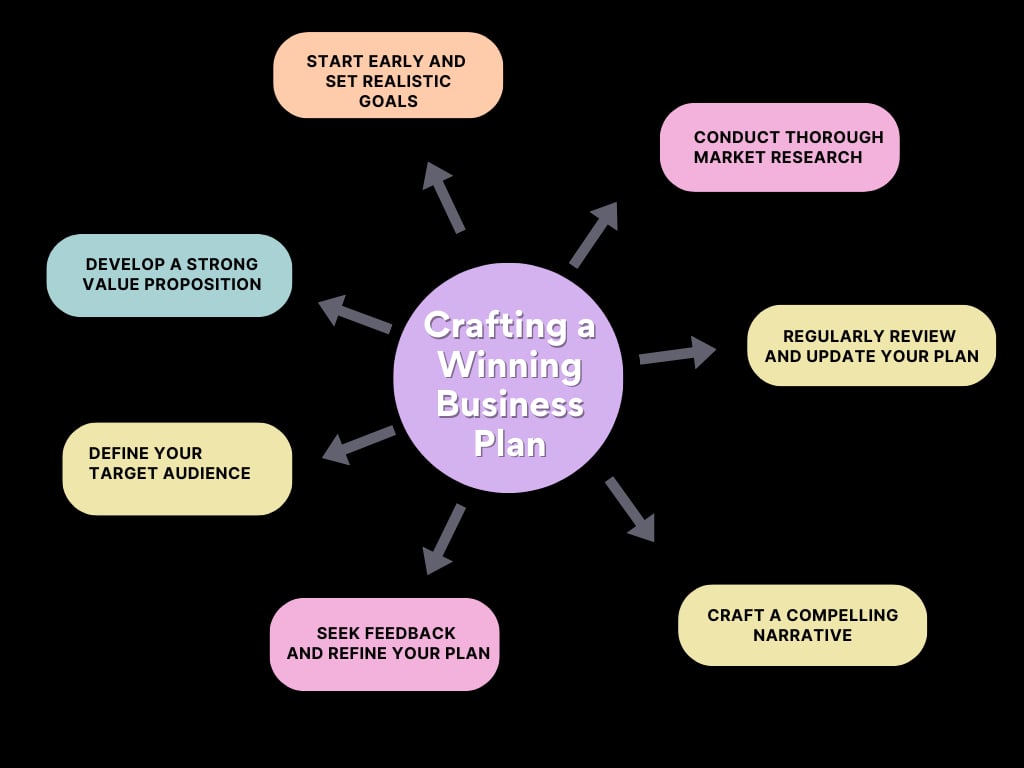
Although the specific components of a business plan may vary depending on the industry and business model, some general principles apply to creating a successful business plan. Here are some practical tips and guidance to help you craft a compelling and effective document
◻️ Start Early and Set Realistic Goals: Begin developing your business plan well in advance of your launch date. This will give you ample time to conduct thorough research, analyze your target market, and refine your strategies. Setting realistic goals is crucial for the credibility of your business plan. Avoid overly ambitious targets that may raise doubts about your feasibility.
◻️ Conduct Thorough Market Research: Gain a comprehensive understanding of your industry, target market, and competitive landscape. Analyze market trends, identify potential opportunities, and assess the strengths and weaknesses of your competitors. This research will inform your strategic decisions and enhance your chances of success.
◻️ Define Your Target Audience: Clearly identify your ideal customer – their demographics, needs, preferences, and pain points. Understanding your target audience will enable you to tailor your products, services, and marketing efforts effectively.
◻️ Develop a Strong Value Proposition: Articulate the unique benefits and value that your business offers to its customers. Clearly communicate why your products or services are better than those of your competitors.
◻️ Craft a Compelling Narrative: Write your business plan in a clear, concise, and engaging style. Use storytelling elements to capture the reader's attention and convey your passion for your business.
◻️ Seek Feedback and Refine Your Plan: Share your business plan with trusted advisors, mentors, or potential investors. Gather their feedback and use it to refine your plan, identify potential weaknesses, and strengthen your overall strategy.
◻️ Regularly Review and Update Your Plan: Your business plan is not a static document; it should evolve as your business grows and market conditions change. Regularly review your plan, make adjustments as needed, and adapt your strategies to maintain your competitive edge.
Creating a Captivating and Professional Business Plan
Business plans are used by businesses to tell other people about how they want to run their business. They describe the business, how it will make money, why the owner thinks it will make money, and who else may benefit from the business. Here are some key tips to consider:
🔹 Know Your Audience: Think about who you are trying to convince with your business plan. Are you talking to people who might invest in your business? Or are you trying to convince partners to work with you? Once you know who you are talking to, you can tailor your business plan to their needs and interests.
This means understanding what they want to hear and what they are worried about. By addressing their concerns, you can make your business plan more persuasive and increase your chances of getting their support.
🔹 Clarity and Conciseness: Use words that everyone can understand. Avoid using words that are too hard or confusing. Talk about your business plan in a way that is easy to follow. Make your business plan interesting to read so that people want to learn more about your business.
🔹 Storytelling Elements: Instead of just writing down facts and figures, make your business plan more interesting by telling a story. Use real-life examples, case studies, and anecdotes to make your plan more relatable and engaging. Imagine you're telling a friend about your business idea. What would you tell them to make them excited about it?
For example, if you're starting a lemonade stand, you could tell a story about how you always loved making lemonade with your grandma. Or, if you're developing a new app, you could share a case study about how it helped someone solve a problem. By using storytelling elements, you'll make your business plan more memorable and persuasive.
🔹 Visual Appeal: Add pictures, charts, and graphs to your business plan. This will make your business plan more interesting to look at and easier to understand. It will also help people remember your business plan better. By adding visuals, you'll make your business plan more engaging and memorable.
🔹 Professional Proofreading: Ensure that your business plan is thoroughly proofread for any grammatical errors, typos, or inconsistencies. A polished and professional document reflects positively on your attention to detail and commitment to quality.
Your Business Plan is a Living Document
Starting a business is like embarking on an exciting adventure. But unlike a treasure hunt, you need a map to guide you along the way. That's where your business plan comes in. It's like your blueprint for success, outlining the key components of your business, such as your target market, your products or services, and your financial goals.
Just like a map, your business plan isn't set in stone. As your business grows and changes, so should your plan. Regularly review and update it to ensure it reflects your current goals and strategies. Think of it as a living document that evolves with your business.
Remember, your business plan is a tool to help you succeed, not a rigid set of rules. Don't be afraid to make changes as needed to keep it relevant and aligned with your vision.
By reviewing and updating your business plan regularly, you'll be able to make better decisions, stay on track to reach your goals, and navigate the ever-changing business landscape. So don't forget to update your business plan regularly--it's the key to achieving your entrepreneurial dreams!
Discover the Right Tools for Your Startup
Take our 2-minute quiz to find tools tailored to your specific needs and goals.
Take the QuizTakes only 2 minutes


