
Master the Sales Process: Unleash Your Potential
Struggling with sales? Unleash your entrepreneurial potential! Learn how a well-defined sales process can streamline efforts, build trust, and boost revenue. Real-world examples included.

Starting a new business or venturing into entrepreneurship can be an exciting and fulfilling journey. Anyway, one of the key challenges faced by entrepreneurs and new business owners is navigating the sales process effectively. In today's competitive market, a well-executed sales process is crucial for sustainable business growth and success.
This article aims to provide valuable insights and strategies for entrepreneurs and individuals starting a new business to understand and excel in the sales process. By adopting a formal writing style, we will explore the various stages of a typical sales process, offer practical tips and techniques for each stage, address common challenges, and highlight the benefits of customizing the sales process to suit specific industries or target markets.

Why You Need a Sales Plan: Your Secret Weapon for Success
Imagine you're on a treasure hunt, but you don't have a map. Sure, you might stumble across some gold coins here and there, but it would be slow and inefficient. The same goes for sales without a well-defined sales process! It's your roadmap to sales success, guiding you and your team to consistent wins. Here's why having a clear sales process is essential:
❇️Streamlined Sales Efforts: A sales process breaks down the sales journey into clear steps, like prospecting for leads, qualifying those leads, making presentations, and closing deals. This structure keeps your sales team organized and focused, ensuring they're not wasting time and effort.
❇️Building Trust and Relationships: A good sales process isn't just about making a quick sale. It's about understanding your customer's needs and building trust. Your sales process should guide your team to have valuable conversations with potential customers, demonstrating your expertise and how your product or service solves their problems.
❇️Creating a Sales Machine: When you have a defined sales process, everyone on your team is on the same page. New salespeople can learn the ropes quickly, and experienced salespeople can further hone their skills. This consistency makes your sales team a well-oiled machine, generating leads and closing deals more effectively.
❇️Happy Customers, Loyal Customers: By focusing on building relationships and addressing customer needs, a well-defined sales process leads to happier customers. This translates into repeat business and positive word-of-mouth recommendations, which are essential for long-term success.
❇️Boosting Revenue and Growth: Ultimately, a well-defined sales process is all about bringing in more revenue and growing your business. By streamlining your sales efforts, building trust with customers, and creating a high-performing sales team, you'll be well on your way to achieving your sales goals.
So, ditch the treasure hunt mentality and craft a well-defined sales process! It's the secret weapon you need to navigate the path to sales success.
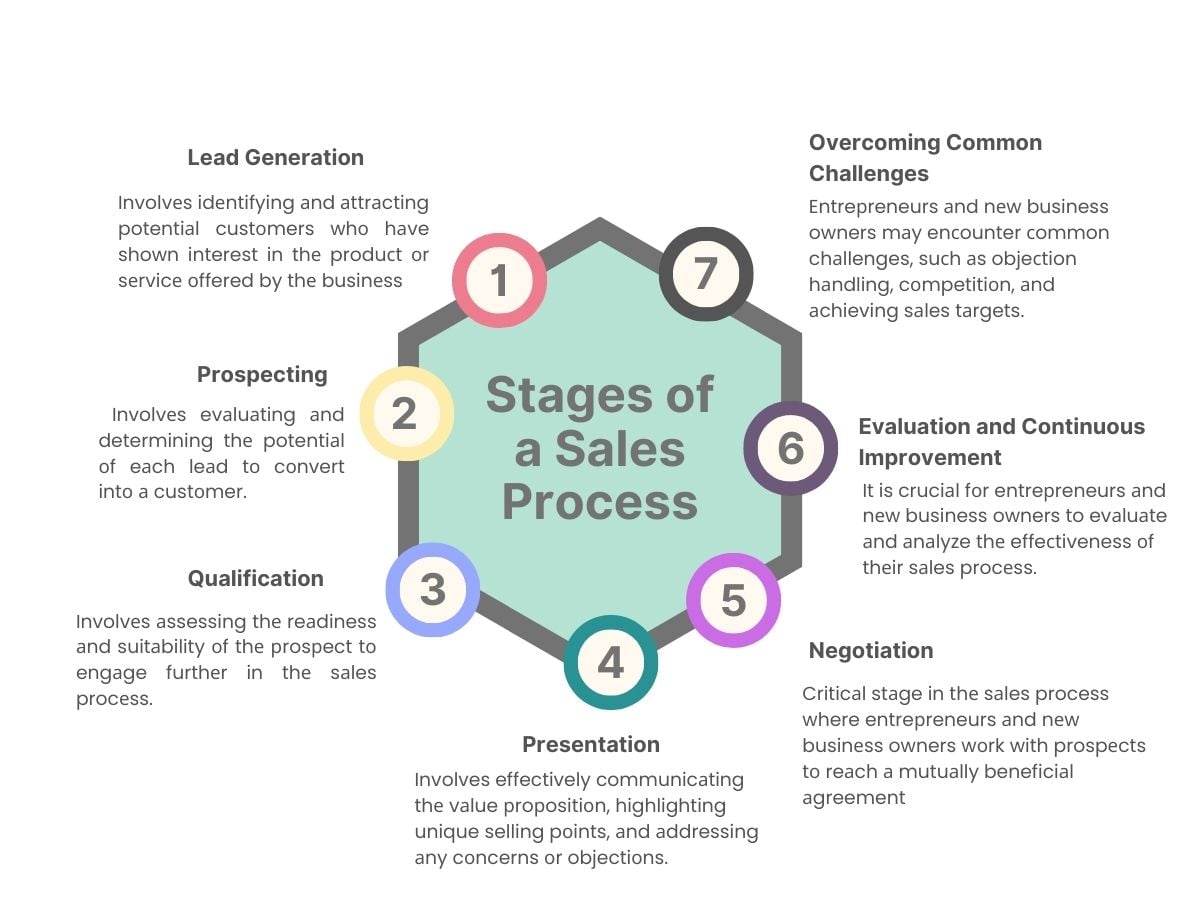
The Stages of a Typical Sales Process
a) Lead Generation
The first stage of the sales process is lead generation. This involves identifying and attracting potential customers who have shown interest in the product or service offered by the business. Entrepreneurs and new business owners can leverage various strategies such as content marketing, social media, and networking events to generate leads. It is crucial to focus on targeting the right audience and creating compelling content that resonates with their needs and preferences.
Practical Tip:
Build a strong online presence through search engine optimization (SEO) techniques to enhance lead generation efforts. By optimizing your website and creating valuable content, you can attract organic traffic and generate high-quality leads.
b) Prospecting
Once leads are generated, the next stage is prospecting. This involves evaluating and determining the potential of each lead to convert into a customer. Entrepreneurs and new business owners should focus on understanding the needs, pain points, and goals of their prospects. By conducting thorough research and segmentation, business owners can tailor their sales approach to match the specific needs of each prospect.
Practical Tip:
Invest in a customer relationship management (CRM) system to track and manage prospects effectively. A CRM system enables entrepreneurs to organize prospect data, track communications, and prioritize leads based on their potential.
c) Qualification
The qualification stage involves assessing the readiness and suitability of the prospect to engage further in the sales process. Entrepreneurs and new business owners should aim to identify the prospects with a genuine interest, budget, and decision-making authority. By qualifying prospects, businesses can allocate resources efficiently and focus on prospects with the highest likelihood of conversion.
Practical Tip:
Implement a lead scoring system to objectively evaluate and rank prospects based on predetermined criteria. This allows entrepreneurs to prioritize their efforts and focus on high-potential leads.
d) Presentation
The presentation stage is where entrepreneurs showcase their product or service to prospects. This involves effectively communicating the value proposition, highlighting unique selling points, and addressing any concerns or objections. Entrepreneurs should adopt persuasive communication techniques, such as storytelling and empathy, to engage prospects and create a compelling case for their product or service.
Practical Tip:
Create visually appealing and informative sales materials, such as presentations or product demo videos, to enhance the impact of your presentation. These materials should clearly communicate the benefits and features of your product or service.
e) Negotiation
Negotiation is a critical stage in the sales process where entrepreneurs and new business owners work with prospects to reach a mutually beneficial agreement. Effective negotiation skills are essential in ensuring a win-win outcome and building strong relationships with customers. Entrepreneurs should focus on understanding the needs and priorities of the prospect and be prepared to make concessions if necessary.
Practical Tip:
Prioritize relationship-building over short-term gains during negotiations. By fostering open and transparent communication, entrepreneurs can establish trust and lay the foundation for long-term partnerships.
The final stage of the sales process is closing the deal. This involves obtaining the prospect's commitment to purchase the product or service. Entrepreneurs should be proactive in guiding prospects through the closing process, addressing any remaining concerns or objections, and sealing the deal.
Practical Tip:
Follow up promptly with prospects after the negotiation stage to keep the momentum and ensure a smooth transition to the closing stage. Personalized follow-up emails or phone calls can significantly increase the chances of closing a deal.
f) Evaluation and Continuous Improvement
To ensure ongoing success, it is crucial for entrepreneurs and new business owners to evaluate and analyze the effectiveness of their sales process. By regularly assessing key metrics, such as conversion rates and customer feedback, businesses can identify areas for improvement and make necessary adjustments.
Practical Tip:
Implement a data-driven approach by using analytics tools to measure the performance of your sales process. By monitoring key metrics, entrepreneurs can gain insights into the effectiveness of their sales efforts and make data-informed decisions.
g) Overcoming Common Challenges
During the sales process, entrepreneurs and new business owners may encounter common challenges, such as objection handling, competition, and achieving sales targets. By adopting proactive strategies and solutions, these challenges can be overcome effectively.
Practical Tip:
Invest in sales training programs or seek mentorship from experienced sales professionals. By continuously developing sales skills, entrepreneurs can build confidence and overcome sales challenges more effectively.
From Humble Beginnings to Sales Superstars: Real-world Examples of Winning Sales Processes
We've talked about the why, now let's dive into the how! Seeing real-life examples of successful sales processes can be incredibly inspiring for entrepreneurs. Here's how some businesses have mastered the art of the sale:
- The Subscription Box Boom: Remember the explosion of subscription box services? Companies like Dollar Shave Club disrupted the shaving industry by offering a convenient and affordable subscription model. Their sales process? Focus on building relationships! Dollar Shave Club used funny and engaging online content to connect with customers, build brand awareness, and highlight the benefits of their subscription service.
- The Power of Social Selling: Social media isn't just for cat videos anymore! Businesses like Warby Parker have leveraged the power of social media platforms to connect with potential customers directly. They use social media to showcase their products, answer customer questions, and build a community around their brand through social media Marketing. This approach allows them to target their ideal audience in a fun and interactive way.
- The Customer Service Superstar: Zappos, the online shoe retailer, is famous for its exceptional customer service. Their sales process isn't just about the initial sale; it's about building long-term customer loyalty. They empower their sales staff to focus on customer needs, offering free returns and exceptional service. This focus on customer satisfaction has turned Zappos into a customer service legend, driving repeat business and positive word-of-mouth recommendations.
These are just a few examples, but they illustrate the power of a well-defined sales process. By understanding your target audience, building relationships, and focusing on customer value, you too can create a sales process that propels your business towards success.
Practical Tip: Entrepreneur Inspiration Stations!
- Consider featuring interviews with successful entrepreneurs who've built winning sales teams.
- Include case studies of businesses that have mastered their sales process.
- Highlight specific strategies and tactics that have driven sales growth for these businesses.
By showcasing these success stories, you can provide valuable insights and inspire entrepreneurs to apply similar strategies in their own ventures. Remember, every entrepreneur's journey is unique, but there's always something to learn from others' experiences!
Benefits of Adapting and Customizing the Sales Process
Lastly, it is essential to highlight the benefits of adapting and customizing the sales process to suit specific industries or target markets. Every business operates in a unique environment, and by tailoring the sales process to align with industry-specific nuances, entrepreneurs can maximize their sales efforts.
Practical Tip:
Conduct market research and study industry trends to identify unique selling propositions and positioning strategies. By customizing the sales process, entrepreneurs can stand out from the competition and address the specific needs of their target market.
Mastering the sales process is a fundamental aspect of entrepreneurship and business success. By adopting a systematic approach, entrepreneurs and new business owners can navigate the sales journey with confidence and unlock their full potential.
The insights and strategies shared in this article aim to provide valuable guidance, practical tips, and real-life examples to help entrepreneurs excel in the sales process. Embrace the power of a well-executed sales process, and watch your business thrive with increased revenue, customer loyalty, and sustainable growth. Take action today and start mastering the sales process to pave the way for remarkable success.
Closing the Deal on Sales Success
So, you've learned why a sales process is crucial, how to navigate the typical stages, and even got inspired by real-world examples. Now it's your turn to take action! Remember, there's no one-size-fits-all approach, so adapt these tips to your unique business and target audience.
By embracing a well-defined sales process, you'll be well on your way to achieving sales goals, building a loyal customer base, and growing your business. Don't wait any longer - start mastering your sales process today and pave the path to remarkable success!
Discover the Right Tools for Your Startup
Take our 2-minute quiz to find tools tailored to your specific needs and goals.
Take the QuizTakes only 2 minutes


