
Sales Strategy for B2B: Maximize Revenue & Growth
Unlock the secrets to B2B sales success! This guide dives deep into target audience analysis, effective techniques, leveraging technology, and overcoming common challenges. Equip yourself with actionable tips and strategies to drive revenue and propel your business forward.

In today's competitive landscape of B2B businesses, having a clear and effective sales strategy is vital for driving revenue and ensuring sustained growth.
This article serves as a valuable resource for budding entrepreneurs and startup owners, offering practical insights and guidance on developing a winning sales approach.
We'll explore various aspects of crafting a successful sales strategy, from identifying target customers to leveraging effective sales techniques. By understanding the unique dynamics of B2B sales and learning from proven strategies, you can position your business for long-term success in the market.
Whether you're just starting out or looking to refine your existing sales strategy, this article provides actionable tips and strategies to help you navigate the complexities of B2B selling and achieve your business goals."
Executive Summary: Navigating the B2B Landscape with a Winning Sales Strategy
The Challenge: In today's competitive B2B arena, a robust sales strategy is your lifeline for driving revenue and achieving sustainable growth. This guide empowers budding entrepreneurs and startup owners with practical insights to craft a winning sales approach.
The Solution: We delve into key aspects of B2B sales success, from pinpointing your ideal customers to wielding impactful sales techniques. By understanding the nuances of B2B dynamics and harnessing proven strategies, you'll position your business for long-term market triumph.
For Whom: Whether you're launching your venture or optimizing an existing strategy, this guide equips you with actionable tips and strategies to navigate the intricacies of B2B selling and conquer your business goals.
Takeaways:
- Target Audience: Discover how to accurately identify and reach your ideal B2B customers.
- Effective Techniques: Master proven sales tactics specifically tailored to the B2B landscape.
- Competitive Edge: Learn how to differentiate your offering and stand out from the crowd.
- Actionable Steps: Gain practical guidance and strategies to implement immediately.
Empower Your B2B Sales Journey: Equip yourself with the knowledge and tools to craft a winning sales strategy and propel your business to success. Dive into the full article to unlock your B2B sales potential!
Understanding Your Target Audience
Conducting Market Research and Analysis for a Winning B2B Sales Strategy
Delving Deep into Your Target Audience:
Crafting a B2B sales strategy that resonates requires a laser focus on understanding your ideal customers. Here's how robust market research and analysis pave the way:
1. Identifying Potential Customers:
📝Industry Landscape: Dive into industry reports, competitor analyses, and market size assessments to pinpoint lucrative segments and high-growth areas.
📝Target Account Profiling: Define your ideal customer's size, location, industry, and decision-making structure. Utilize firmographic databases and industry insights to create detailed buyer personas.
📝Competitor Analysis: Examine your competitors' target markets, strengths, weaknesses, and value propositions to identify differentiation opportunities.
2. Uncovering Pain Points and Challenges:
📝Conduct Customer Surveys: Design targeted surveys to gather quantitative data on customer needs, challenges, and buying preferences.
📝Engage in In-Depth Interviews: Conduct qualitative interviews with key decision-makers to gain deeper insights into their pain points, frustrations, and unmet needs.
📝Monitor Social Media and Industry Forums: Analyze online conversations and discussions to understand industry trends, emerging challenges, and competitor perceptions.
3. Transforming Knowledge into Actionable Insights:
📝Analyze Data and Identify Patterns: Analyze your collected data to identify trends, common pain points, and unmet needs within your target market.
📝Quantify the Opportunity: Estimate the potential market size and revenue based on your findings.
📝Develop Value Propositions: Craft targeted value propositions that address your ideal customers' specific needs and differentiate your offering from competitors.
Additional Tools and Techniques:
📝Customer Journey Mapping: Chart the steps your target customers take in their buying process to identify opportunities for engagement and influence.
📝Win-Loss Analysis: Analyze past sales wins and losses to identify factors influencing buying decisions and refine your messaging and approach.
📝Social Listening Tools: Leverage social listening platforms to track industry trends, brand mentions, and competitor activity in real-time.
Investing in comprehensive market research and analysis, you gain a competitive edge. You'll understand your target audience like never before, allowing you to tailor your sales strategy for maximum impact, drive conversions, and achieve sustainable growth in the B2B landscape.

Key Elements of an Effective B2B Sales Strategy
a) Lead Generation Techniques and Strategies:
✏️Content Marketing: Leverage insightful blog posts, white papers, case studies, and ebooks tailored to your target audience's pain points. Utilize content marketing automation tools to personalize content experiences and nurture leads.
✏️Social Media Marketing: Build an active presence on platforms like LinkedIn, Twitter, and industry-specific forums. Share valuable content, engage in relevant conversations, and participate in industry events to attract potential leads.
✏️Networking Events: Attend industry conferences, trade shows, and workshops to connect with potential clients and decision-makers. Utilize your sales experience to build rapport, understand their needs, and offer valuable insights.
✏️Paid Advertising: Leverage targeted ads on LinkedIn, industry publications, and search engines to reach a wider audience. Utilize the knowledge gained from sales experience to tailor ad copy and targeting for maximum impact.
b) Nurturing Client Relationships: Building Trust and Long-Term Partnerships:
✏️Personalized Experiences: Utilize sales experience to tailor communication and offerings to each client's individual needs and challenges. Create targeted email campaigns, offer consultations, and demonstrate genuine interest in their business.
✏️Exceptional Customer Service: Proactively address client concerns, go the extra mile to resolve issues, and exceed expectations. Encourage your sales team to leverage their experience to anticipate client needs and offer proactive solutions.
✏️Consistent Value Delivery: Deliver on your promises and demonstrate the tangible value your product or service brings. Leverage case studies, customer testimonials, and data-driven insights to substantiate your claims.
Regular Communication and Feedback Loops: Schedule regular check-in calls, engage in open communication, and actively solicit feedback. Utilize sales experience to build trust and rapport through transparency and responsiveness.
c) Closing Deals: Overcoming Objections and Sealing the Deal:
✏️Objection Handling Skills: Train your sales team to anticipate and address common objections effectively. Utilize sales experience to develop persuasive counter-arguments, highlight customer testimonials, and showcase the unique value proposition.
✏️Value Proposition Alignment: Clearly demonstrate how your solution aligns with the client's specific needs, challenges, and business goals. Leverage sales experience to tailor your pitch and emphasize the potential return on investment.
✏️Negotiation Tactics: Equip your sales team with strong negotiation skills based on data, market insights, and competitor analysis. Utilize sales experience to strike a win-win deal that satisfies both parties.
✏️Building Urgency and Scarcity: When appropriate, emphasize limited-time offers or potential competitor threats to encourage timely decision-making. Use sales experience to create a sense of urgency without resorting to pressure tactics.
By incorporating these key elements and leveraging your sales experience, you can build a B2B sales strategy that attracts high-quality leads, fosters trustful relationships, and consistently closes deals, propelling your business to long-term success.
Leveraging Technology: Supercharging Your B2B Sales Strategy
In today's tech-driven landscape, incorporating the right tools can significantly boost your B2B sales strategy. Here's a deeper dive into how technology can unlock your team's potential:
1. Customer Relationship Management (CRM) Software:
👉🏼Streamlined Lead Management: Capture, qualify, and track leads efficiently through automated workflows and lead scoring. Utilize intelligent routing to assign leads to the best salesperson based on expertise and fit.
👉🏼Enhanced Customer Interactions: Gain a 360-degree view of each customer, including past interactions, communication history, and purchase behavior. Leverage this data to personalize communication, offer relevant recommendations, and foster stronger relationships.
👉🏼Valuable Analytics: Generate insightful reports on sales performance, key metrics, and customer trends. Leverage these insights to identify areas for improvement, optimize your sales approach, and make data-driven decisions.
2. Sales Automation Tools:
👉🏼Automate Repetitive Tasks: Free up your sales team's valuable time by automating manual tasks like data entry, email scheduling, and follow-up sequences.
👉🏼Personalized Outreach: Utilize email automation tools to send targeted campaigns based on customer segments and interests. Personalize messaging with dynamic content and automate lead nurturing sequences.
👉🏼Improved Efficiency: Simplify processes like quote generation, contract management, and order tracking. This streamlines the sales cycle, allows for faster deal closure, and improves overall team productivity.
3. Social Selling Platforms:
👉🏼Connect with Decision-makers: Utilize platforms like LinkedIn to build relationships with key decision-makers, engage in industry discussions, and showcase your expertise.
👉🏼Targeted Prospecting: Leverage advanced search filters and social listening tools to identify and engage with high-potential leads.
👉🏼Content Sharing and Brand Building: Share valuable content, participate in relevant conversations, and establish your brand as a thought leader within the industry.
4. Artificial Intelligence (AI) and Machine Learning (ML):
👉🏼Predictive Lead Scoring: Leverage AI to identify leads with the highest conversion potential based on historical data and behavioral patterns.
👉🏼Personalized Recommendations: Utilize ML to recommend products, services, and content that are most relevant to each individual customer.
👉🏼Data-Driven Insights: Gain deeper insights into customer sentiment, buying behavior, and market trends through advanced analytics powered by AI and ML.
5. Video Conferencing and Collaboration Tools:
👉🏼Enhanced Communication: Connect with clients and prospects globally through video conferencing, fostering more personal and engaging interactions.
👉🏼Real-time Collaboration: Facilitate collaboration within your sales team, allowing for smoother handoffs, faster problem-solving, and improved deal velocity.
👉🏼Remote Sales Enablement: Empower your team to sell effectively from anywhere, fostering flexibility and agility in a geographically diverse market.
Strategically integrating these technologies into your B2B sales strategy, you can create a more efficient, personalized, and data-driven sales process. This ultimately leads to higher conversion rates, stronger customer relationships, and sustained growth for your business.
Actionable Tips and Best Practices for Implementing a Winning B2B Sales Strategy
Implementing a winning B2B sales strategy requires careful planning and execution. Here are some actionable tips and best practices to consider:
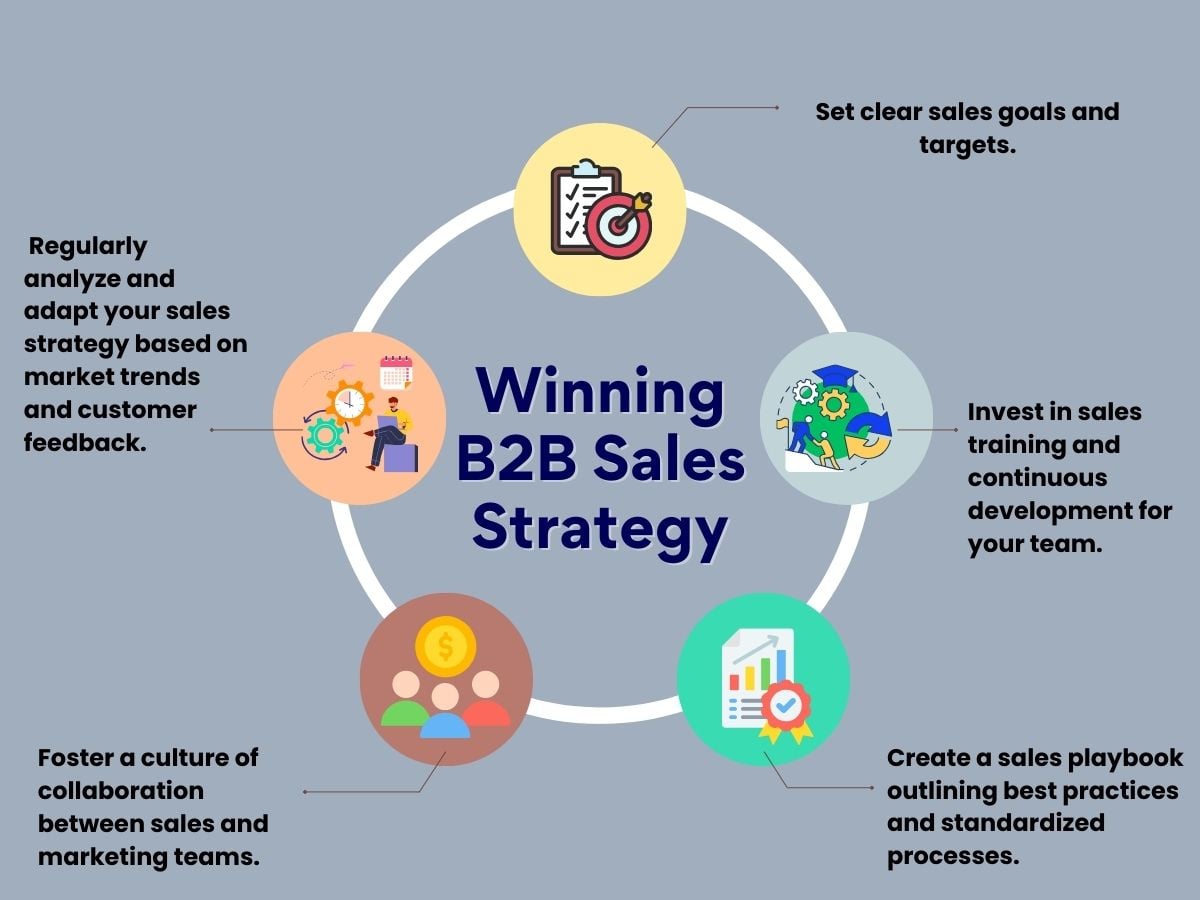
📌Set clear sales goals and targets.
📌 Invest in sales training and continuous development for your team.
📌 Create a sales playbook outlining best practices and standardized processes.
📌 Foster a culture of collaboration between sales and marketing teams.
📌 Regularly analyze and adapt your sales strategy based on market trends and customer feedback.
Navigating the B2B Landscape: Overcoming Common Challenges with Strategic Planning
The B2B world is brimming with opportunities, but also presents distinct challenges that can test even the most seasoned entrepreneur. Here's a deeper look at common roadblocks and innovative solutions you can incorporate into your sales strategy and planning:
1. Limited Resources:
👆Bootstrapping Savvy: Utilize free and low-cost marketing tools like social media, email marketing, and content creation to build brand awareness and generate leads.
👆Strategic Partnerships: Collaborate with complementary businesses to share resources, expand reach, and offer bundled solutions.
👆Outsource Strategically: Delegate non-core tasks like administrative work or data entry to free up your team's valuable time for sales activities.
2. Intense Competition:
👆Unique Value Proposition: Articulate what sets your offering apart from competitors. Be specific, quantify value, and address your target audience's pain points directly in your sales strategy.
👆Market Differentiation: Niche down to a specific segment or offer a specialized service to avoid direct competition with industry giants.
👆Agile Sales Tactics: Stay ahead of the curve by monitoring competitor activity, adopting new technologies, and continuously refining your sales approach.
3. Complex Sales Cycles:
👆Content Marketing: Educate potential customers through valuable content like blog posts, case studies, and white papers. Nurture leads by addressing their concerns and demonstrating expertise.
👆Multi-stage Sales Process: Create a well-defined sales funnel with clear touchpoints throughout the buyer's journey. Tailor your sales messages and outreach strategies to each stage.
👆Relationship Building: Invest in developing genuine connections with potential clients. Understand their needs, challenges, and decision-making processes to become a trusted advisor.
Additional Strategies for B2B Success:
👆Stay Informed: Remain up-to-date on industry trends, technological advancements, and competitor activity. Adapt your sales strategy and planning accordingly.
👆Network Extensively: Attend industry events, connect with potential partners, and leverage online communities to expand your reach and gain valuable insights.
👆Be Flexible: Remain adaptable to changing market conditions, customer feedback, and unforeseen circumstances. Regularly reassess your sales strategy and plan to ensure continued effectiveness.
By proactively addressing these challenges with creative solutions and incorporating these tips into your sales strategy and planning, you'll be well-equipped to navigate the B2B landscape and achieve sustainable success for your entrepreneurial venture. Remember, a well-defined and dynamic sales strategy is your roadmap to navigating the B2B terrain and reaching your business goal
Key Takeaways and Empowering Entrepreneurs to Excel in B2B Sales
Crafting an effective sales strategy is essential for B2B businesses to maximize revenue and achieve sustainable growth. By understanding their target audience, incorporating key elements, leveraging technology, and implementing best practices, entrepreneurs can excel in B2B sales. Continuously adapting and improving the sales strategy based on market dynamics will ensure long-term success in the competitive B2B landscape.
Discover the Right Tools for Your Startup
Take our 2-minute quiz to find tools tailored to your specific needs and goals.
Take the QuizTakes only 2 minutes


