
Sales Tools for Entrepreneurs: What to Use & Why
Discover sales tools essential for empowering entrepreneurs to optimize sales, enhance customer relations, and grow their business. Propel success today!

Starting a new business is an exciting journey, but it comes with its fair share of challenges. Among these challenges, mastering the art of sales stands out as a critical aspect of achieving entrepreneurial success. To thrive in today's competitive market, entrepreneurs and startups need more than just a great product or service—they need the right tools for sales.
In this comprehensive guide, we'll explore the essential tools for sales that empower entrepreneurs to navigate the complex world of selling, connect with potential customers, and drive revenue growth. Whether you're a seasoned entrepreneur or just starting your business journey, these tools can make a significant difference in your sales efforts.

Challenges in the Sales Process:
Before we delve into the essential sales tools, it's crucial to understand the challenges that entrepreneurs often encounter in the sales process. These challenges include:
Limited Resources: Many startups operate on tight budgets, making it challenging to invest in expensive sales and marketing efforts. A newly launched digital marketing agency, for example, may find it hard to finance premium tools required for SEO analysis, social media management, and paid advertisements due to budget constraints.
Lead Generation: Identifying and attracting potential customers can be a daunting task, especially for those new to the market. Despite offering unique, tailored experiences, they might struggle to reach their target audience amidst dominant online travel platforms.
Time Constraints: Entrepreneurs often wear multiple hats in their businesses, leaving limited time for focused sales activities. An entrepreneur operating a small online clothing store, for instance, may have to divide their time between sourcing clothes, managing inventory, handling deliveries, and conducting sales activities, thus stretching their time thin for each area.
Competition: In crowded markets, standing out and convincing potential customers to choose your offering can be tough. Consider a wellness coach aiming to promote their online courses in a heavily saturated market. The competition from established wellness platforms and fellow coaches poses a significant challenge.
Scaling: As a business grows, managing and nurturing customer relationships become more complex. Take, for example, an organic skincare product brand that gained popularity and experienced a sudden increase in customers. Trying to maintain personalized relationships with a continually increasing client base could prove to be a formidable task.
Essential Sales Tools:
Now, let's explore the essential tools for sales that can help entrepreneurs overcome these challenges and build successful businesses:
Customer Relationship Management (CRM) Software and Business Planning:
In the context of business planning and marketing strategy, CRM software plays a vital role in managing customer relationships and driving growth. Tools like Salesforce, HubSpot, or Zoho CRM enable businesses to manage customer data, track interactions, and streamline sales processes. These platforms contribute to an efficient and effective marketing strategy by offering the following features:
Organizing Leads: CRM software helps businesses segment their customer base and manage leads effectively. This organization enables better targeting and helps sales teams prioritize high-potential leads, leading to improved conversion rates.
Automating Tasks: To save time and resources, CRM platforms automate repetitive tasks like follow-up emails, lead scoring, and data entry. This automation allows businesses to focus more on closing deals and building relationships with customers, rather than managing administrative work.
Nurturing Relationships: CRM tools allow companies to monitor customer interactions and preferences, thereby personalizing communication and improving relationships. By synchronizing marketing efforts across the entire customer journey, businesses can boost trust, and in turn, improve customer loyalty and satisfaction.
Data Analysis and Reporting: CRM software provides a comprehensive overview of customer data, sales performance, and other crucial analytics. These insights help businesses adjust their marketing strategy and business planning format to identify gaps and focus on areas that drive maximum returns.
Integration Capabilities: Several CRM platforms offer integrations with various applications like marketing automation, social media management tools, and other productivity-enhancing solutions. These seamless integrations allow businesses to manage their sales and marketing efforts in a unified, cohesive way, leading to operational efficiency and better results.
In summary, Customer Relationship Management (CRM) software is essential for businesses at any stage of growth. The tools facilitate better lead management, task automation, relationship nurturing, data analysis, and integration with other marketing tools - all contributing to a more effective marketing strategy and a successful business planning format.
Sales Prospecting Tools:
In the business planning format, sales prospecting tools are essential for identifying and connecting with potential customers. Software like LinkedIn Sales Navigator, Hunter, or ZoomInfo provides valuable insights into prospects, allowing businesses to tailor their outreach efforts according to each prospect's preferences, needs, or interest. For example, a startup in the software development space can use LinkedIn Sales Navigator to filter potential clients by their industry, company size, and job title - honing in on relevant prospects.
Email Marketing Platforms:
Email marketing platforms, such as Mailchimp and Constant Contact, help businesses create and automate email campaigns. By nurturing leads, sharing product updates, and maintaining regular communication with their audience, these platforms streamline marketing efforts. A graphic design agency, for instance, can use Mailchimp to send targeted email campaigns to prospects that showcase their latest projects, driving customer engagement and potentially converting them into clients.
Sales Analytics and Reporting Tools:
Tools like Google Analytics and SalesLoft provide valuable data on website traffic, email open rates, and sales performance. These insights help entrepreneurs make data-driven decisions and refine their marketing strategies. For example, a clothing e-commerce store could use Google Analytics to track the success of an advertising campaign, allowing them to focus their efforts on the channels with the most significant results.

Here's a step-by-step guide on utilizing these tools:
Choose Your Platform: Assess your business needs and decide whether a universal tool like Google Analytics or a sales-focused software like SalesLoft is more applicable. Both offer detailed insights but have different areas of focus.
Set Up the Tool: Once chosen, set up your account. For Google Analytics, add a tracking code to your website. For SalesLoft, sign up, then configure your platform by indicating what sales data you want to track.
Define Your Key Metrics: Decide on what metrics are most important for your business. These could include website traffic, email open rates, click-through rates (CTR), or conversion rates.
Track Your Campaigns: Launch your advertising or sales campaigns. Use the tool to monitor the performance of your campaigns in real-time. For Google Analytics, this may mean tracking website traffic from different channels (social media, email marketing, etc.). In SalesLoft, you can track email opens and sales performance.
Analyze Your Results: After your campaign, review and analyze the data collected by your tool. Pay attention to the metrics you've defined as important for your business. Understanding these results helps you to make data-driven decisions for future campaigns.
Refine Your Strategy: Based on your analysis, adjust your marketing and sales strategies to improve performance. If Google Analytics shows that most traffic to your ecommerce store comes from Instagram, consider focusing more resources on Instagram marketing.
Sales Enablement Platforms:
Incorporating sales enablement platforms like Seismic or Highspot into a business planning format can provide teams with content management and sales training capabilities. This access to up-to-date, relevant content and training materials ensures sales teams are equipped with the resources they need to succeed.
An example might include a pharmaceutical sales company, which uses Seismic to manage product information sheets and provide sales representatives with regular updates concerning new medications, changes in regulations, or intellectual property developments.
Sales Outreach and Automation:
Tools like Outreach.io and SalesLoft assist in automating email outreach and follow-ups, helping entrepreneurs stay organized and maintain consistent communication with prospects. These tools can manage personalized sales outreach without becoming too time-consuming. A startup offering an online project management tool could use SalesLoft to establish automated outreach campaigns, sending personalized emails to a targeted list of prospects and following up at appropriate intervals.

Businesses should incorporate these key elements (sales prospecting, email marketing, sales analytics and reporting, sales enablement, and sales outreach and automation) into their business planning format. This integration will help businesses to better protect their intellectual property, ensuring they have the necessary tools and resources to succeed.
Case Studies and Real-Life Examples:
To illustrate the impact of these essential sales tools, let's take a look at a couple of real-life examples:
Zendesk: Zendesk, a customer service software company, used CRM and sales analytics tools to improve their sales process. By leveraging CRM data and analytics, they optimized lead scoring, resulting in a 34% increase in lead-to-opportunity conversion rates.
Zoom Video Communications: Zoom, a video conferencing platform, successfully utilized email marketing and sales outreach tools. Their automated email campaigns and personalized outreach contributed to rapid customer acquisition and revenue growth.
Selecting the Right Tools:
Choosing the right sales tools for your business plays a fundamental role in achieving your sales and marketing objectives, fostering your customer relationships, and driving your company's growth.
Especially with the element of research and development in the equation, taking the time to choose the right tools can help refine your sales processes, optimise your marketing efforts, and streamline your operations.
Finding the best fit, however, could be a challenging feat due to the multitude of options available in the market.
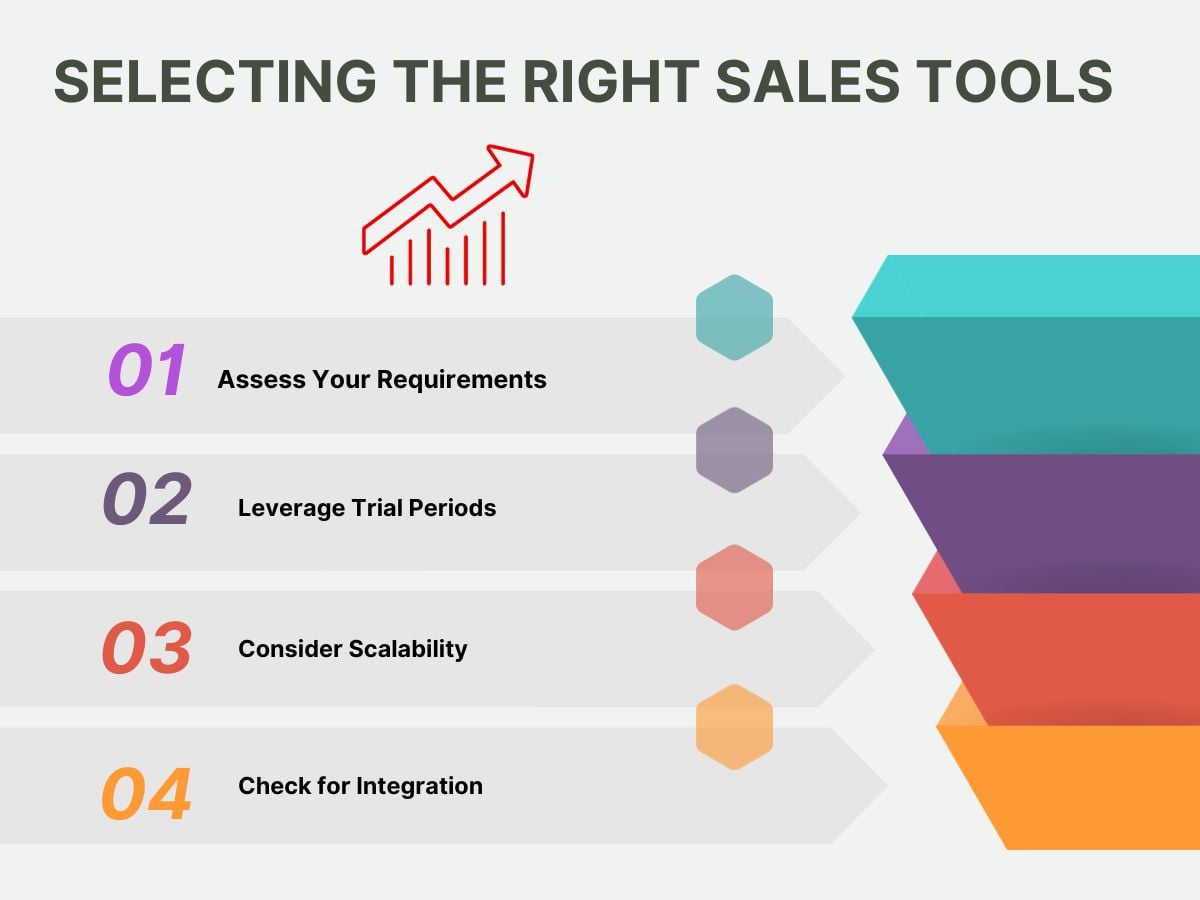
Here are some pragmatic tips to help you select the tools that best suit your business needs and budget:
Assess Your Requirements:
Before investing in any sales tools, take a step back to identify your specific sales challenges and goals. Understanding whether you need a CRM system, lead generation tools, or email marketing solutions, for example, will help you bridge the gap between your business goals and the tools required to achieve them.
Leverage Trial Periods:
Many sales tools offer trial periods to allow businesses to test their efficacy and compatibility with their operations. Use these trials as an opportunity to evaluate whether the tool provides the features, benefits, and outcomes your business requires. For instance, if you're considering an email marketing platform like MailChimp, take advantage of the trial period to create a test campaign and evaluate its elements like user interface, features, and campaign analytics.
Consider Scalability:
As your business grows, ideally, your sales tools should grow with it. Consider whether the tools you select can accommodate increased customer volumes as your business expands. Suppose you're contemplating a CRM tool like Salesforce; ensure it can handle a larger customer base and more complex sales processes as your company scales.
Check for Integration:
Compatibility is vital when choosing sales tools. Look for tools that can seamlessly integrate with your existing systems and workflows, such as your website or other software. For example, can your prospecting tool integrate with your CRM? Or will your email marketing software sync with your website analytics?
A well-thought-out selection process for sales tools can significantly bolster your business's sales and marketing efforts, assisting not only in the current operations but also contributing to the overall strategy, including areas like research and development.
Competitive Advantage through Sales Tools:
Amid today's intense competitive business arena, equipping your startup or long-established enterprise with the right sales tools can be the game-changer that brings you ahead of the pack.
In the context of a business planning format, incorporating suitable sales tools into your overall strategy can be what differentiates successful startups from those struggling to keep up. With the market teeming with innovation and new businesses, it's easy to get lost amidst it all.
As entrepreneurs and business owners, the driving force behind what we do is often the aspiration to realize our visions and reach new heights. Selecting the right tools is a small, yet potent step towards achieving those goals as they enhance the reach, efficiency, and impact of your sales efforts.
Acquiring proficiency in sales tools usage is integral to entrepreneurial success. Whether you're a bright-eyed startup founder or a seasoned business owner, integrating impactful sales tools into your business strategy can significantly enhance your connection with potential customers, close deals more efficiently, and ultimately, nurture steady business growth. Maintain your competitive advantage, start leveraging the power of sales tools now, and watch your business achieve new milestones.
Don't just dream of success, grab the tools that make it happen! Sales tools are your launchpad to the moon – use them wisely, work hard, and watch your business become the brightest star in the sky!
Remember what Mark Zuckerberg, the Facebook founder, said? "The biggest risk is not taking any risk." When it comes to sales tools, playing it safe won't make your business soar.
Discover the Right Tools for Your Startup
Take our 2-minute quiz to find tools tailored to your specific needs and goals.
Take the QuizTakes only 2 minutes


