
The Art of Crafting an Effective Sales Pitch
This article explores the art of crafting an effective sales pitch, including different approaches for various situations, key ingredients for success, and actionable tips to hone your pitching skills.

A well-crafted sales pitch is a powerful tool that can attract customers and boost sales. Whether you're starting a new business or trying to improve your sales skills, mastering the art of creating a compelling sales pitch is crucial. This article will explore the techniques, tips, and strategies that can help you create an effective sales pitch and improve your chances of success.
Crafting a great sales pitch involves understanding your audience, highlighting the benefits of your product or service, and communicating your message clearly and persuasively. By focusing on these key elements and practicing your pitch, you can engage potential customers and convince them to take action. With the right approach, you can increase your sales and achieve your business goals
Mastering the Art of the Sales Pitch: Different Approaches for Different Situations
In the world of business, the ability to deliver a compelling sales pitch is crucial. It's all about effectively communicating the value of your product or service to potential customers andleaving a lasting impression. But with so many different scenarios and audiences, a one-size-fits-all approach just won't work. Here's a breakdown of some common types of sales pitches, each tailored to specific situations:
1. The Elevator Pitch: Making the Most of a Brief Encounter
Imagine you have a chance encounter with a potential investor or partner, but only a short window of time (like an elevator ride) to grab their attention. This is where the elevator pitch shines. It's a concise and impactful presentation, typically lasting under a minute, that highlights the essence of your offering.
✦ Key points to remember for an elevator pitch:
- Keep it short and sweet: Aim for under 60 seconds.
- Start with a hook: Grab their attention with a captivating opening line.
- Explain your value proposition: Clearly state what your product or service does and who it benefits.
- Focus on the benefits: Highlight how your offering solves a problem or improves their situation.
- End with a call to action: Clearly state what you want them to do next, whether it's scheduling a meeting, visiting your website, or trying your product.
2. The Cold Call Pitch: Making a First Impression Over the Phone
Reaching out to potential customers who haven't heard of you before requires a different approach. This is where the cold call pitch comes in. It's your chance to introduce your company, product, or service and spark their interest in learning more.
✦ Tips for a successful cold call pitch:
- Research your audience: Tailor your pitch to their specific needs and interests.
- Start with a friendly introduction: Be polite and professional, and explain who you are and why you're calling.
- State your value proposition quickly: Briefly explain what you offer and how it benefits them.
- Listen actively: Address their concerns and answer any questions they might have.
- Offer next steps: Suggest a follow-up call, email, or meeting to provide more information.
3. The Product Presentation: Diving Deeper into the Details
When you have a scheduled meeting or presentation, you have the opportunity to delve deeper into the details of your product or service. This is where the product presentation comes into play. It's a more formal pitch that allows you to showcase your offering in a comprehensive manner.
✦ Elements of a strong product presentation:
- Captivating introduction: Grab their attention and set the stage for your presentation.
- Problem and solution: Clearly define the problem your product or service addresses and how it provides the solution.
- Features and benefits: Explain what your product or service does and how it benefits the customer.
- Competitive advantages: Highlight what sets your offering apart from the competition.
- Social proof: Showcase testimonials, case studies, or data to build trust and credibility.
- Call to action: Clearly state what you want the audience to do next, whether it's making a purchase, signing up for a trial, or contacting you for more information.
By understanding the different types of sales pitches and tailoring your approach to each situation, you can significantly increase your chances of success and leave a lasting impression on potential customers.

Building a Winning Sales Pitch: Key Ingredients for Success
Crafting a sales pitch that resonates and converts requires careful consideration of several key elements. Here's a breakdown of what makes a pitch truly impactful:
✔️ A Compelling Value Proposition:
At the heart of any successful pitch lies a strong value proposition. This concise statement clearly articulates the unique benefits and advantages your product or service offers. It should answer the fundamental question: "Why should I care?".
✦ Tips for crafting a compelling value proposition
- Focus on the customer's needs: Don't just list features; explain how your offering solves their specific problems or improves their situation.
- Quantify your impact: Whenever possible, use numbers and data to showcase the positive outcomes associated with your product or service.
- Keep it clear and concise: Aim for a clear, concise statement that is easy to understand and remember.
✔️ Understanding Your Audience
An effective pitch is tailored to your target audience. By understanding their needs, preferences, and pain points, you can tailor your message to resonate with them. This involves:
- Researching your target market: Gain insights into their demographics, challenges, and buying habits.
- Emphasizing relevant benefits: Highlight features that directly address their specific needs and concerns.
- Speaking their language: Use terminology and examples that resonate with your audience.
✔️ Addressing Concerns and Building Trust
A good salesperson doesn't just talk; they listen. Anticipate potential questions and address them proactively in your pitch. Additionally:
- Demonstrate empathy: Acknowledge their challenges and show genuine interest in their situation.
- Offer social proof: Share testimonials, case studies, or data that builds trust and credibility.
- Be transparent and honest: Avoid making exaggerated claims or promises that you can't keep.
Leverage the power of a pitch deck. This visual presentation tool, often consisting of slides, can effectively summarize your message, showcase key information, and enhance your pitch's impact.
By incorporating these key elements and tailoring your approach to each audience, you can craft impactful sales pitches that capture attention, build trust, and ultimately drive conversions.
The Power of a Well-Crafted Sales Pitch: Examples That Shine
Ever wonder what makes a sales pitch truly effective? Let's look at some real-world examples that demonstrate the power of clear messaging and understanding your audience.
1. Tesla: Driving Sustainability and Performance
Brand strategy: Tesla emphasizes the environmental benefits of their electric vehicles, appealing to customers who prioritize sustainability. They also highlight long-term cost savings and a luxurious driving experience, attracting buyers who value both eco-friendliness and high performance.
🌟 Key points:
Focus on the values that resonate with your target audience (sustainability in this case).
Highlight both emotional benefits (luxury experience) and practical benefits (cost savings).
2. Airbnb: Living Like a Local
Brand strategy: Airbnb's pitch revolves around the concept of "live like a local." They emphasize unique and authentic experiences guests can have by staying in local homes, differentiating themselves from traditional hotels and appealing to travelers seeking a personalized and immersive experience.
🌟 Key points:
Differentiate your offering by focusing on unique value propositions.
Understand your audience's desires and tailor your message accordingly (personalized travel experiences).
These examples showcase how strong brand strategies are built into effective sales pitches. By understanding your target audience's values and needs, and crafting a message that resonates with them, you can create compelling pitches that convert.
It's not just about the product or service itself, but how it connects with your audience on an emotional and practical level.
Fitting Your Sales Pitch to Different Industries: Speak Their Language
Not all sales pitches are created equal! Different industries have their own challenges and ways of speaking. To truly connect with your audience, tailor your sales pitch to their specific world:
📤Understanding the Needs:
Each industry faces unique challenges and pain points. Healthcare, for example, prioritizes patient well-being and cost savings, while technology solutions focus on efficiency and return on investment.
By understanding these industry-specific needs, you can tailor your message to resonate with your audience on a deeper level.
📤Speaking the Right Language:
Imagine talking to a doctor and a tech expert. They likely use different terms and care about different things.
Tailor your language to match the industry you're targeting. This doesn't mean using complex jargon, but rather using terms and phrases they understand and connect with.
📤Benefits Over Features:
Don't just list features of your product or service. Explain how they address the specific needs and challenges faced in that industry.
For instance, instead of simply saying your software is "fast," highlight how it helps businesses in that industry save time and be more productive.
Understanding the industry's specific needs and tailoring your message accordingly, you can create sales pitches that truly connect with your audience and lead to success. Remember, it's all about speaking their language and demonstrating how your offering solves their unique problems.
Avoiding Common Stumbles on the Sales Pitch Path
Even the best sales strategies can fall short if you hit some common roadblocks. Here are a couple of mistakes to keep in mind when crafting your pitch:
1. Feature Frenzy vs. Benefit Bonanza
It's easy to get caught up in listing all the amazing features your product or service has. But remember, your audience cares more about what those features do for them.
Solution: Instead of just saying your software has "200 features," explain how it saves them time, increases efficiency, or solves a specific problem they face. Focus on the benefits and value your offering provides, not just the technical details.
2. Jargon Jungle vs. Clear Communication
Dropping technical terms and industry jargon might sound impressive, but it can also leave your audience lost and confused. Remember, your goal is to connect with them, not sound like a dictionary.
Solution: Use clear and concise language that your audience can easily understand. Explain complex concepts in simple terms and avoid using jargon unless absolutely necessary.
By staying mindful of these potential pitfalls and focusing on the benefits you offer in clear language, you can ensure your sales pitch resonates with your audience and contributes to a successful sales strategy and planning process.
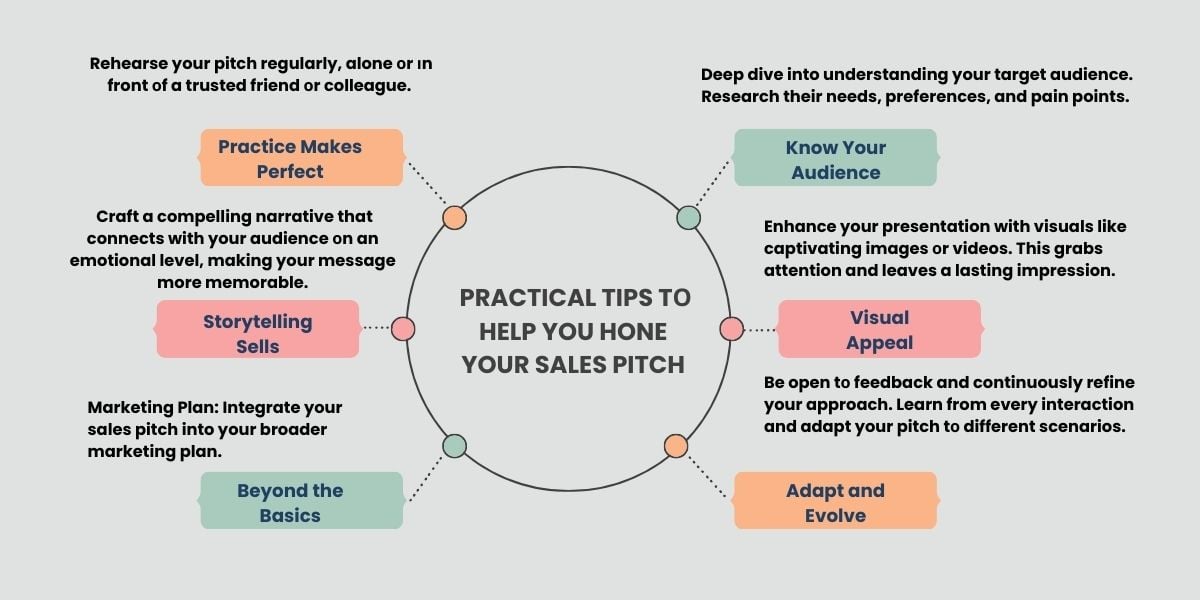
Sharpen Your Pitch: Actionable Tips for Success
Crafting a winning sales pitch is a superpower for entrepreneurs and anyone looking to boost their sales. Here are some practical tips to help you hone your pitching skills and elevate your game:
🔖Practice Makes Perfect:
Rehearse your pitch regularly, alone or in front of a trusted friend or colleague. This builds confidence and allows you to refine your delivery.
🔖Know Your Audience:
Deep dive into understanding your target audience. Research their needs, preferences, and pain points. Knowing their world helps you tailor your pitch to resonate with them.
🔖Storytelling Sells:
Weave storytelling techniques into your pitch. Craft a compelling narrative that connects with your audience on an emotional level, making your message more memorable.
🔖Visual Appeal:
Enhance your presentation with visuals like captivating images or videos. This grabs attention and leaves a lasting impression.
🔖Adapt and Evolve:
Be open to feedback and continuously refine your approach. Learn from every interaction and adapt your pitch to different scenarios.
🔖Beyond the Basics:
Marketing Plan: Integrate your sales pitch into your broader marketing plan. Ensure your message aligns with your overall marketing strategy and reaches the right audience.
"The key is not to sell products. It is to create customers who believe in you and your product." - Simon Sinek, Author and Motivational Speaker
Effective pitching is a journey, not a destination. By practicing, understanding your audience, and continuously refining your approach, you can develop compelling pitches that drive sales and achieve your business goals.
Discover the Right Tools for Your Startup
Take our 2-minute quiz to find tools tailored to your specific needs and goals.
Take the QuizTakes only 2 minutes


